BREAST AUGMENTATION SURGERY IN DUBAI
Fuller. More Proportionate. Completely You.
Breast Augmentation is one of the most personal decisions a woman can make — and one of the most commonly misunderstood. It’s not about going bigger. It’s about proportion. It’s about feeling balanced in your body, confident in your clothes, and comfortable in your own skin.
Whether you’ve lost volume after pregnancy, want to address natural asymmetry, or simply want a shape that better reflects how you feel — there are more options available today than ever before. And the right option depends entirely on your anatomy, your lifestyle, and your goals.
Breast Augmention
WHAT IS A BREAST AUGMENTATION SURGERY
Breast Augmentation — medically called Augmentation Mammoplasty — is a surgical procedure that enhances breast volume, shape, and symmetry. It can be achieved through implants, through fat transfer using your own body fat, or through a combination of both.
It’s not one size fits all. The implant type, size, shape, plane of placement, and incision location are all chosen specifically for your body — not from a catalogue.
Your Options — Implants, Fat Transfer, or Both?
Silicone Implants: The most commonly used option. Modern silicone gel implants have a soft, natural feel that closely mimics breast tissue. They come in a wide range of sizes and profiles — from subtle to significant — and are available in round or anatomical (teardrop) shapes. Highly durable, long-lasting, and the most predictable option for volume and shape.
Fat Transfer to the Breast (Natural Augmentation): Uses your own purified fat — harvested from the abdomen, flanks, or thighs — and injected into the breast tissue for a natural, subtle enhancement. Typically achieves a half to one cup size increase per session. No implant, no foreign material, and the added benefit of body contouring from the donor site. Ideal for patients who want modest, natural-looking fullness — particularly in the upper pole — or for refining shape rather than dramatically increasing size.
Hybrid Augmentation (Implant + Fat Transfer): Combines an implant for the core volume increase with fat micro-grafting around the implant to soften edges, improve the upper pole transition, correct asymmetry, and create a more natural feel overall. The best of both — the predictable volume of an implant with the natural finish of fat.

Implant Choices — Size, Shape, Profile, and Surface
Round vs Anatomical (Teardrop)
Round implants provide fullness throughout the breast — including the upper pole — and are the most commonly used. Anatomical implants are shaped to mimic a natural breast profile, with more fullness at the bottom and a gradual slope at the top. They can look very natural but require precise pocket creation to prevent rotation.
Profile
The profile refers to how far the implant projects forward from the chest wall. Low, moderate, high, and extra-high profiles are available — chosen based on your chest width, breast base diameter, and the look you’re going for. Getting this right is what makes the result look proportionate on your specific frame.
Size
Size is planned by measurements — not by cup size labels, which vary between brands and mean nothing clinically. I use your chest width, breast base diameter, skin stretch, and existing tissue thickness to determine the size range that’s safe and appropriate for your anatomy. Within that range, we discuss your goals and decide together.
Implant Surface
Implant surface affects how the implant interacts with surrounding tissue. There are two main types used in modern breast augmentation:
Smooth — the most widely used surface. Smooth implants move naturally within the pocket, feel soft, and have an excellent long-term safety profile. They are associated with a lower risk of BIA-ALCL compared to textured implants.
Nano-textured — a micro-surface texture that is significantly finer than traditional textured implants. Designed to reduce implant movement and encourage tissue integration while maintaining the safety advantages of a near-smooth surface. Motiva’s SmoothSilk® and NanoSurface® implants fall into this category — combining the safety profile of smooth implants with improved stability in the pocket.
I use Motiva implants — which combine ergonomic design with advanced surface technology for a natural feel, natural movement, and an excellent safety record.
Where Is the Implant Placed?
The plane of implant placement affects how natural the result looks, how it feels, and how it behaves over time. There is no single best plane — the right choice depends on how much of your own breast tissue you have.
- Subglandular (Over the Muscle) — the implant sits between the breast tissue and the chest muscle. Appropriate for patients who have enough of their own breast tissue to cover and camouflage the implant naturally. Recovery is generally faster and less painful, and there is no implant distortion when the chest muscle contracts.
- Dual Plane (Partially Under the Muscle) — the implant sits partially beneath the pectoralis major muscle. The upper portion is covered by muscle, the lower portion by breast tissue. My preferred approach for patients with less tissue — particularly flatter-chested patients — where the muscle provides extra coverage and support, reducing the risk of visible implant edges or rippling. Gives a more natural upper pole slope.
- Subfascial / Preservation Approach — the implant is placed under the fascia — the connective tissue layer over the muscle — offering some coverage benefits without going fully under the muscle. Used selectively in appropriate candidates, particularly with the Preservé technique.
The right plane is chosen after a proper physical examination — not from a preference or a protocol.
Incision Options — Where Is the Scar?
- Inframammary Fold (IMF) — the most commonly used approach. The incision sits in the natural crease beneath the breast, hidden in a bra or swimwear. Gives the most direct access to the pocket and allows precise implant placement. My preferred approach in most cases.
- Periareolar — the incision runs along the lower border of the areola, hidden in the natural colour change of the skin. A good option for patients who want the scar in a less visible location, though it passes through breast tissue and may have implications for nipple sensation and breastfeeding.
- Transaxillary (Armpit) — the incision is placed in the axillary crease with no scar on the breast at all. Used with the Mia Femtech minimally invasive approach. Ideal for patients who want absolutely no visible scar on the breast.
Mia Femtech and Preservé — The Future of Minimally Invasive Breast Augmentation
This is one of the most exciting developments in breast augmentation in recent years — and something I offer in my practice for the right candidates.
Mia Femtech — The Minimally Invasive Technique
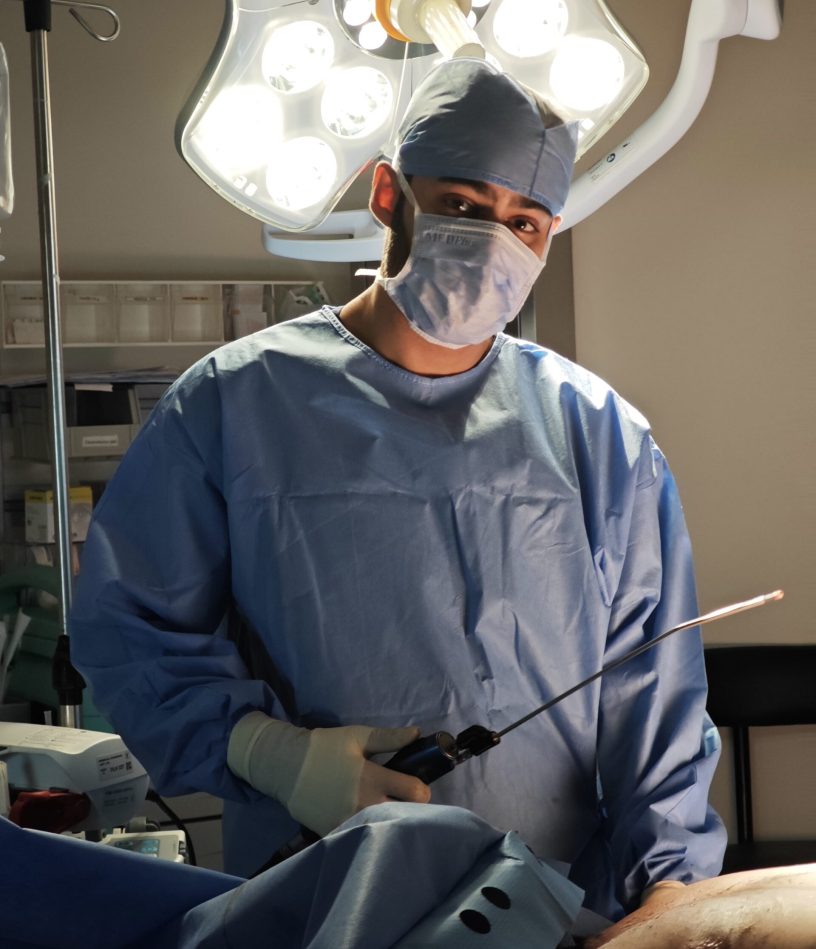
Mia Femtech is a minimally invasive breast augmentation system that uses specialized instruments and an endoscopic approach to create the implant pocket with significantly less trauma than traditional surgery. The key innovation is the transaxillary access — a small incision in the armpit, with no scar on the breast whatsoever. Using illuminated retractors and purpose-built dissection tools, the pocket is created under direct vision with precision and minimal tissue disruption. The result is less bleeding, less post-operative swelling, faster recovery, and no visible breast scar.
Mia Femtech is particularly well suited to patients who want absolutely no scarring on the breast itself, and for active patients — including athletes and bodybuilders — who need to return to training quickly.
Preservé by Motiva — Tissue-Preserving Augmentation
Preservé is a specific branded technique by Motiva that takes the minimally invasive philosophy further — using specialized instruments designed to maximize the preservation of native breast tissue, nerves, glandular structures, and lymphatics during pocket creation. Combined with the Motiva SmoothSilk Ergonomix2 implant — an ergonomic implant that adapts to body position, feeling soft when lying down and maintaining shape when upright — the result is a more natural nesting of the implant within the breast.
Key features of the Preservé technique:
- 5cm incision — discreet, hidden in the breast fold
- Recovery in 48–72 hours — most patients return to daily activities within 3–5 days
- Tissue preservation — native breast tissue, nerves, and lymphatics are respected
- Maintained nipple sensation — designed to protect nerve supply to the nipple
- Preserved breastfeeding potential — glandular structure is kept intact
- Natural feel and movement — the Ergonomix2 implant moves with the body
- Reversibility — designed to be easily reversible, with special Motiva coverage for added peace of mind
Preservé is ideal for primary breast augmentation in patients seeking a natural-looking increase of 1–2 cup sizes (typically 150cc–315cc) — particularly those with firm skin, little to no pre-existing sag, and an active lifestyle.
Breast Augmentation for Bodybuilders — A Special Consideration
This deserves its own section — because breast augmentation in a female bodybuilder or serious athlete is genuinely different from standard augmentation, and I want to address it directly.
Training and low body fat reduce natural breast tissue significantly. Many female athletes want to restore volume without compromising their training, their physique, or their performance. Here’s what makes this patient different:
- Tissue coverage. With low body fat and highly developed pectoral muscles, there’s often minimal native breast tissue to cover an implant. Dual plane placement is often the right approach — using the muscle for upper coverage while allowing natural lower pole drape.
- Implant distortion with muscle contraction. Any implant placed partially under the pectoralis major will shift when the muscle contracts — more visible in patients with very developed chest muscles. We discuss this honestly before surgery so there are no surprises.
- The Preservé / Mia Femtech advantage for athletes. For bodybuilders and active patients wanting a modest, natural augmentation with minimal downtime and preserved tissue integrity — the Preservé technique is often the best fit. Back to training in days, not weeks. No disruption to the muscle. A natural result that doesn’t interfere with chest development.
- Sizing for proportion. The goal in an athletic patient is rarely to go large. Most of my bodybuilder patients want proportionate volume that complements a lean, muscular physique. We plan size based on chest width, muscle development, and the aesthetic goals of the athlete.
- Timing around training. Surgery timing matters. I’ll guide you on when to have the procedure relative to your training cycle, how long to stay out of the gym, and how to return to upper body work without compromising the result.

Are You a Good Candidate?
Breast augmentation is a great fit if:
- You want fuller, better-proportioned breasts
- You’ve lost volume after pregnancy, breastfeeding, or significant weight loss
- You have naturally small or asymmetrical breasts
- You’re at a stable weight and in good overall health
- You’re a non-smoker — or willing to stop ahead of surgery
- You have realistic expectations about what augmentation can achieve
If you’re planning future pregnancies, it’s worth discussing timing. Pregnancy and breastfeeding after augmentation are safe, but they can affect the result. I’ll have that conversation openly during your consultation.

What Happens Before Your Surgery
A measurements-based assessment.
I don’t plan augmentations from photos or cup size requests. I measure your chest width, breast base diameter, skin stretch, and tissue thickness — and use those measurements to determine the safe implant range for your anatomy. Within that range, we discuss your goals together.
Implant selection.
We decide on type, size, shape, profile, surface, and plane of placement together — based on your measurements, your goals, and your lifestyle. For Preservé or Mia Femtech candidates, we discuss the technique in detail.
Medical clearance.
Routine bloodwork to confirm you’re fit for anesthesia and surgery.
Clinical photos and measurements.
Standardized and fully confidential. Essential for planning and comparing results.
Full consent discussion.
Every option, every risk, every realistic outcome — explained clearly before you sign anything. Including an honest conversation about implant longevity, future replacements, and what to expect over time.
Anesthesiologist meeting.
Every patient meets the anesthesiologist before the procedure. No exceptions.
HOW THE PROCEDURE IS PERFORMED
Step 1: Marking
Markings are made while you’re standing — breast fold position, implant footprint, incision placement, and midline reference points for symmetry.
Step 2: Anaesthesia
General anaesthesia is administered for comfort and precision throughout the procedure.
Step 3: Pocket Creation
Through the chosen incision, a precise pocket is created in the planned plane — subglandular, dual plane, subfascial, or using the Preservé / Mia Femtech technique. Meticulous haemostasis and pocket irrigation are performed to reduce contamination risk and support implant longevity.
Step 4: Implant Placement
The implant is inserted using a no-touch sleeve technique — minimizing skin contact and reducing contamination risk. Position and symmetry are checked with you sitting upright on the table before closure.
Step 3: Closure
Incisions are closed in layers with fine sutures. A surgical bra is applied immediately for support and to maintain implant position during early healing.

Recovery — What to Expect
- Days 1–3: Tightness and swelling. Rest is the priority. Pain is generally very manageable with prescribed medication.
- Week 1: Light movement and daily activities resume. Avoid lifting, straining, or raising arms above shoulder height.
- Weeks 2–3: Most patients return to desk work. Surgical bra worn throughout. Non-dissolvable stitches removed if used.
- Weeks 4–6: Gradual return to the gym. Upper body and chest work comes back last.
- Month 3 onwards: Final shape and softness achieved as implants settle and swelling fully resolves.
For Preservé patients: return to daily activities in 48–72 hours. Most patients are back to full activity within 3–5 days.
Aftercare includes:
- Surgical bra for 4–6 weeks
- Lymphatic drainage for swelling reduction
- Scar management — silicone therapy and optional laser treatments
- Regular follow-ups for symmetry and implant position checks
Can Breast Augmentation Be Combined With Other Procedures?
Yes — and in many cases, combining makes a lot of sense. Common combinations include:
- Breast Lift (Mastopexy) — for patients who want both volume and lift
- Tummy Tuck — commonly combined as part of a Mommy Makeover
- VASER Liposuction — for body contouring alongside breast enhancement
- Mommy Makeover — full post-pregnancy restoration in one surgical plan
- Fat Transfer — hybrid augmentation for a more natural result
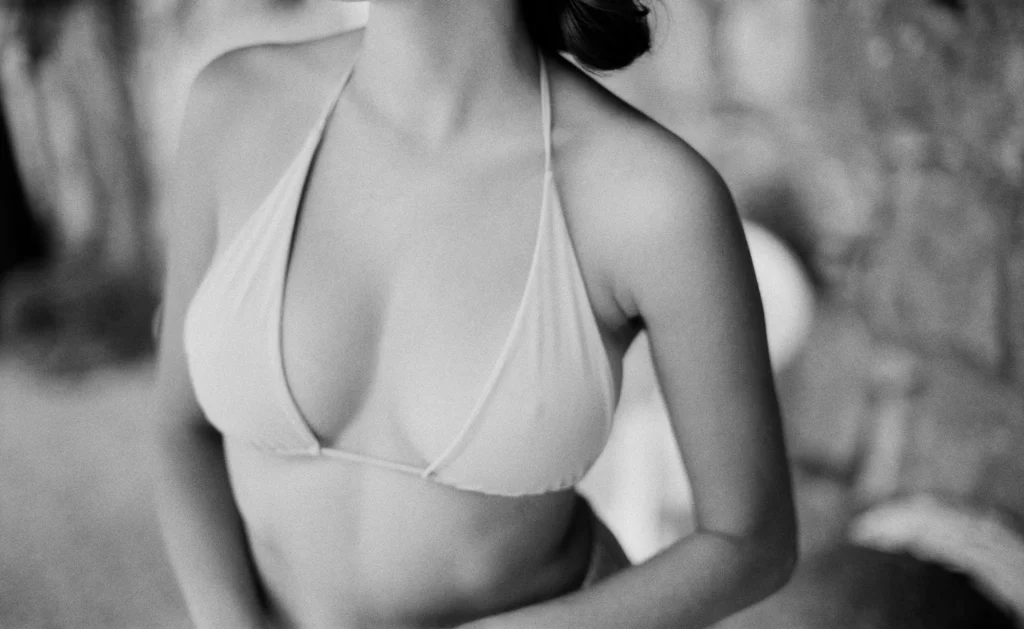
Breast Augmention
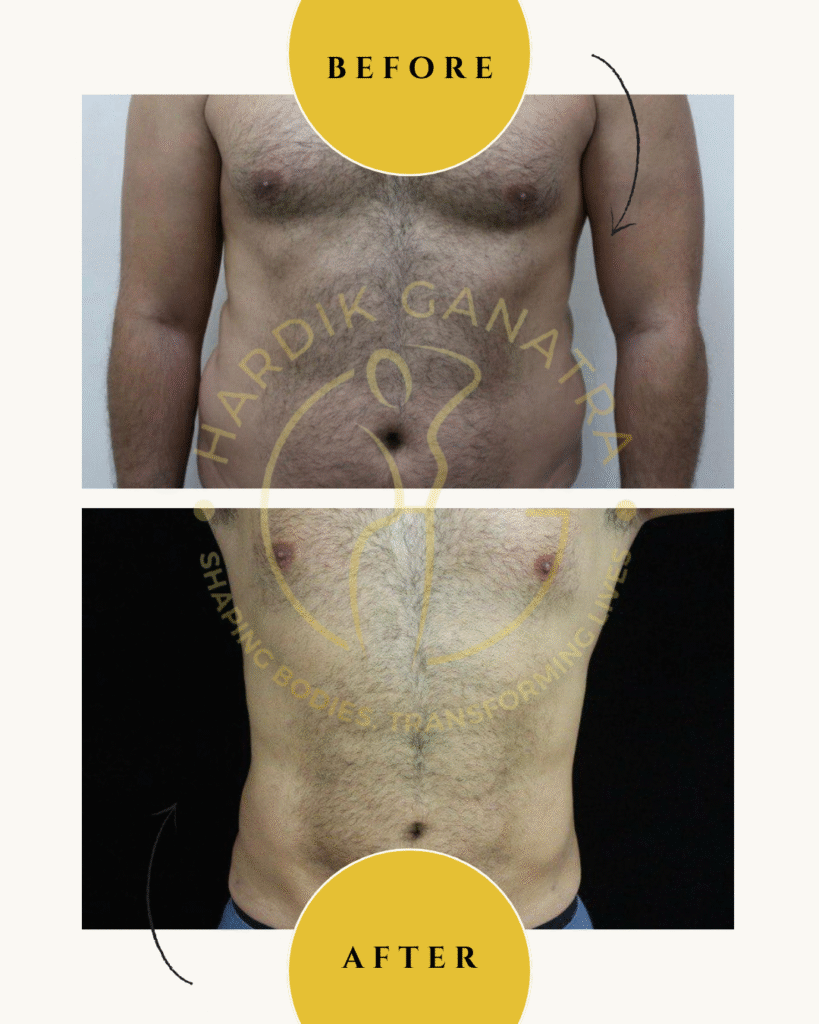
Before & After
Each Breast Augmentation performed by Dr. Hardik Ganatra highlights his commitment to natural results and aesthetic precision.

What OUR Patients are saying ?
“Confidence in every outfit.”
“After two pregnancies, I wanted to feel like myself again. Dr. Ganatra guided me through the entire process with so much care. The results look natural and proportionate — I finally feel confident in any outfit.”
— M.R., 31, Kenya
“Natural look, exactly what I wanted.”
“I was worried about looking ‘overdone’, but Dr. Hardik understood my goals perfectly. My augmentation looks completely natural, and my self-esteem has skyrocketed.”
— S.L., 28, Dubai
Breast Augmentation Dubai Frequently Asked Questions
1. Implants or fat transfer — which is better?
Neither is universally better — they solve different problems. Implants give predictable, significant volume increase. Fat transfer gives modest, natural enhancement with no foreign material. For patients who want a meaningful size increase, implants — or hybrid augmentation — are the right answer. For subtle refinement or upper pole softening, fat transfer is excellent. I’ll recommend the right approach based on your goals and anatomy.
2. What is the Preservé / Mia Femtech technique?
Mia Femtech is a minimally invasive instrument system for breast augmentation — using specialized tools and a transaxillary (armpit) approach to create the implant pocket with minimal trauma and no scar on the breast. Preservé by Motiva is a specific branded technique that uses tissue-preserving instruments alongside the Motiva Ergonomix2 implant for a 2.5cm inframammary incision, 48–72 hour recovery, and maximum preservation of native breast tissue, nerves, and glandular structure. Both are ideal for active patients and athletes wanting natural results with minimal downtime.
3. Will I be able to breastfeed after augmentation?
In most cases, yes. Inframammary and dual plane approaches have the least impact on breastfeeding potential. Periareolar approaches pass through breast tissue and may have more impact. The Preservé technique is specifically designed to preserve glandular structure and breastfeeding potential.
4. How long do implants last?
Modern implants are highly durable but are not lifetime devices. Many patients go 15–20 years without issue — but you should plan for the possibility of replacement at some point. I discuss this honestly at every consultation.
5. Will I need to change size in the future?
Not necessarily. Many patients are happy with their result long-term. Some choose to change size after significant life events — pregnancy, weight changes, or a change in preference. This is always possible with a revision procedure.
6. What about implant safety — are they linked to cancer?
Modern silicone implants have an excellent safety record. There is a very rare association between certain textured implants and BIA-ALCL — a type of lymphoma. I use smooth and nano-textured Motiva implants, which carry a significantly lower risk profile. I discuss implant safety in full during every consultation.
7. Is breast augmentation painful?
Traditional augmentation — particularly dual plane — has a real recovery with several days of tightness and discomfort. The Preservé technique significantly reduces this. Most patients describe the discomfort as manageable and say it was less than they expected.
8. What cup size will I be after surgery?
Cup sizes vary by brand and mean nothing clinically. We plan by measurements and proportions, not labels. Tell me your desired look and I’ll match it to your anatomy safely — giving you a realistic picture of what’s achievable for your frame.
9. What is the difference between round and anatomical implants?
Round implants provide fullness throughout the breast including the upper pole. Anatomical (teardrop) implants mimic a natural breast profile with more fullness at the bottom and a gradual slope at the top. Both can look natural — the right choice depends on your anatomy, existing breast shape, and goals.
10. What is dual plane placement?
Dual plane means the implant sits partially under the pectoralis major muscle — the upper portion covered by muscle, the lower portion by breast tissue. It’s my preferred approach for patients with less native breast tissue, as the muscle provides extra coverage and reduces the risk of visible implant edges or rippling.
11. Can I exercise after breast augmentation?
Light walking from day one. Light cardio at around 2 weeks. Upper body and chest training comes back last — typically at 4–6 weeks, depending on the technique and plane used. Preservé patients can often return to full activity within 3–5 days. I’ll give you a specific, realistic timeline.
12. Will there be visible scarring?
The inframammary incision sits in the natural breast fold and is hidden by the breast. The periareolar scar sits in the colour change of the areola. The transaxillary (Mia Femtech) approach leaves no scar on the breast at all. With proper scar management — silicone therapy, sun protection — scars fade significantly over 6–12 months.
13. What is capsular contracture and how is it prevented?
Capsular contracture is when the natural scar tissue capsule around the implant tightens and hardens — causing firmness, distortion, or discomfort. It’s the most common long-term complication of breast implants. Modern smooth and nano-textured implants, meticulous pocket creation, antibiotic irrigation, and the no-touch insertion technique all help reduce the risk.
14. How soon will I see the final result?
You’ll see an immediate change in size and shape. The final result — after swelling has resolved and implants have settled into their natural position — is typically clear by 3 months. The upper pole softens and the implant drops slightly into its final position during this time.
15. How much does breast augmentation cost in Dubai?
Depends on the technique, implant type and brand, whether fat transfer is combined, and operating time. You’ll receive a personalized quote after your consultation with Dr. Ganatra in Dubai.