Expert Post-Pregnancy Body Restoration in Dubai
Mommy Makeover in Dubai: Correcting What Pregnancy Leaves Behind
I hear the same sentence in my clinic almost every week: "I lost the weight, I started exercising, but my body still doesn't feel like mine."
Here's why that happens — the problem usually isn't just fat.
Pregnancy stretches your skin. It can pull your abdominal muscles apart. It changes the shape of your belly button. It leaves your C-section scar looking indented. And it often leaves stubborn fat sitting around your waist, flanks, or back that simply won't leave, no matter how clean you eat.
A mommy makeover isn't the easy way out. I want to be clear about that. It's about properly correcting what pregnancy actually changed — your skin, your fat, your abdominal muscles, your scars, your belly button, your pubic area, your overall shape.
I don't build mommy makeovers as a standard package. I build them around the body in front of me. Some women need a full tummy tuck. Some need it extended. Some need muscle repair with VASER Lipo 360. Some need J-Plasma to tighten skin on the back or flanks. Some need fat transferred to improve hip or buttock shape.
The operation has to match the body. Not the other way around.
What Is a Mommy Makeover?
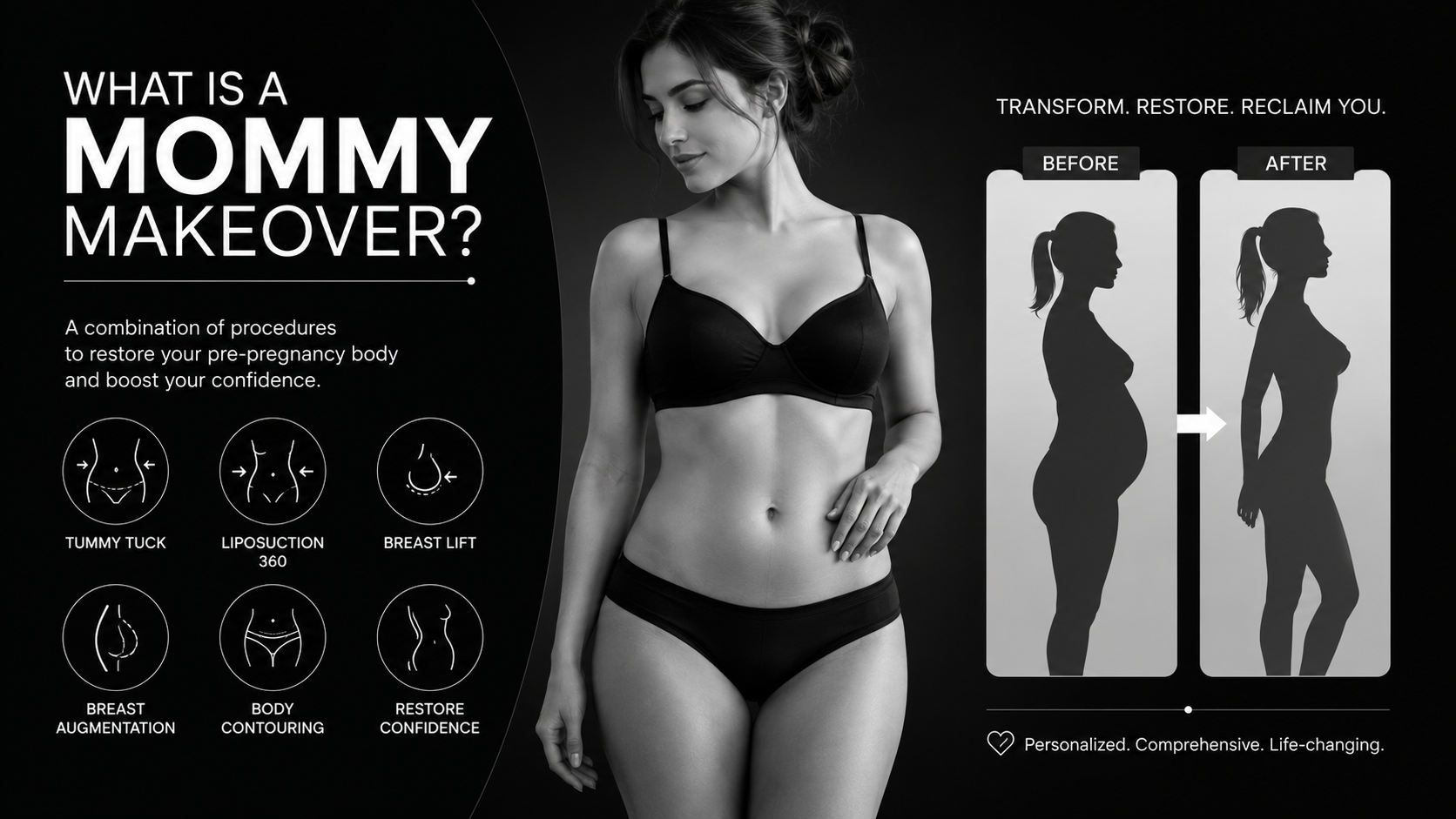
A mommy makeover is a combination of surgeries that help restore the body after pregnancy. Traditionally, it can include the torso, the breasts, and the genital area — depending on what's changed and what you want fixed.
In my practice, I focus mainly on the body-contouring side of things. That can include a full tummy tuck, an extended tummy tuck, two-layer muscle repair, VASER liposuction, VASER Lipo 360, J-Plasma skin tightening when needed, belly button reshaping, neo-umbilicoplasty when required, mons pubis contouring, C-section scar correction, fat transfer to the hip dips or buttocks, and cellulite correction in selected patients.
Breast surgery can be part of a traditional mommy makeover — but it doesn't have to happen at the same time. If a tummy tuck with muscle repair and liposuction is already several hours long, adding another major surgery isn't always the safest choice.
A mommy makeover shouldn't be about doing everything at once. It should be about doing the right things, safely.
Pregnancy Changes the Body in Different Ways
No two women go through pregnancy the same way, and no two bodies change the same way afterward.
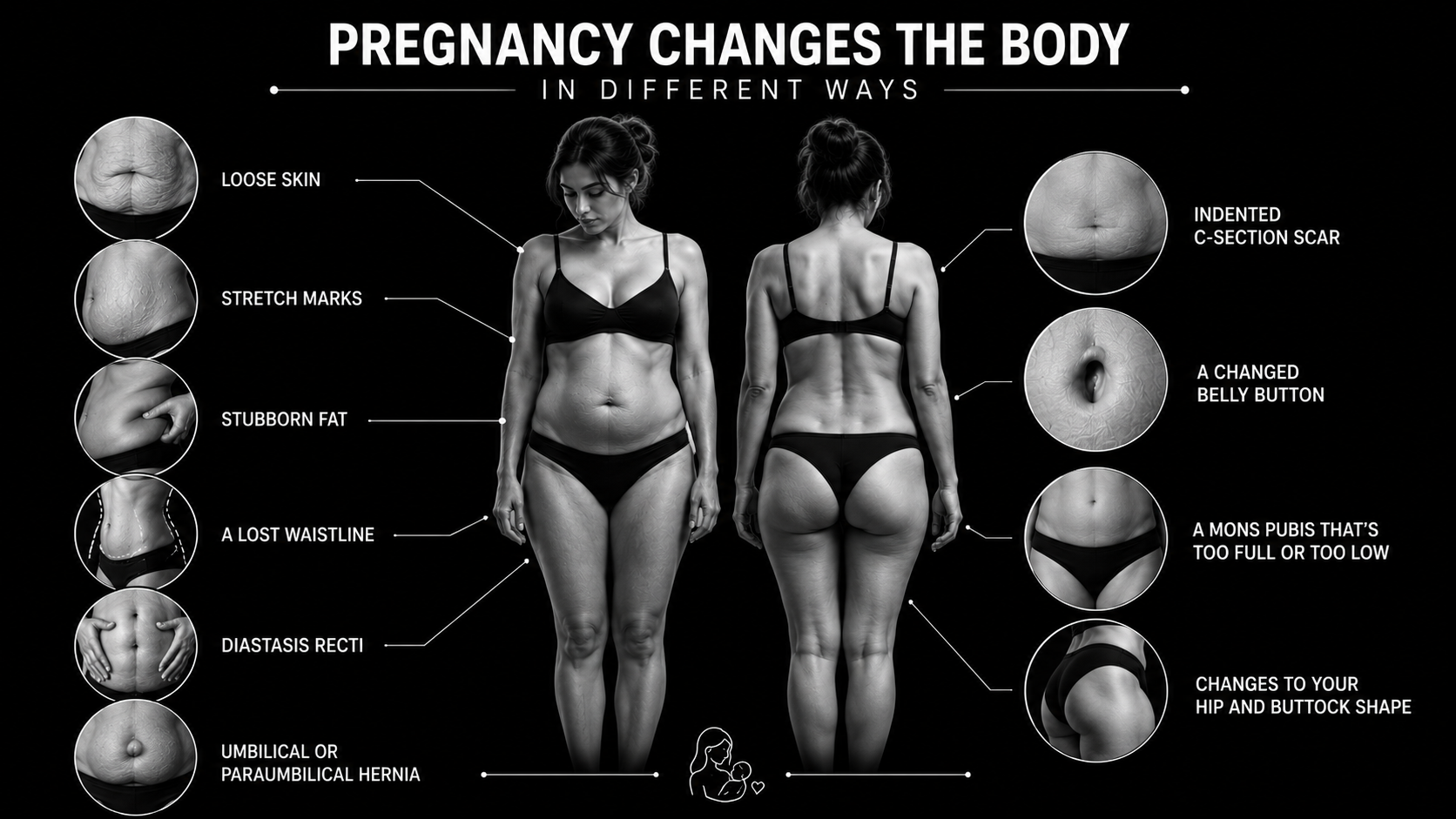
Some women mainly deal with loose skin. Some have a bulge that stays even after the weight comes off. "My belly still looks pregnant, especially after I eat" — I hear that constantly. Some are bothered by stretch marks. Some feel like their waist has simply disappeared. Some are slim everywhere else, but their lower abdomen feels weak, stretched, or unsupported.
That's exactly why I never start a consultation by saying "you need a tummy tuck." I start by understanding what pregnancy actually did to you: loose skin, stretch marks, stubborn fat, a lost waistline, diastasis recti, an umbilical or paraumbilical hernia, an indented C-section scar, a changed belly button, a mons pubis that's too full or too low, or changes to your hip and buttock shape.
Once we know what actually happened, the solution becomes clear.
Loose Skin and Stretch Marks After Pregnancy
Your skin stretches during pregnancy to make room for your baby.
In some women, it tightens back up well after delivery. In others, it stays loose, wrinkled, or stretched — and that's not because you did anything wrong. Sometimes skin simply stretches beyond the point where it can recover on its own.
Now let's talk about stretch marks honestly, because I get asked this constantly. A tummy tuck only removes stretch marks from the skin that's actually removed — usually the lower abdomen. Stretch marks higher up, or on skin that gets pulled down during the procedure, will still be there afterward.
So when a patient asks me, "Will all my stretch marks go away?" — my honest answer is no. Some will go with the tummy tuck. The rest may need lasers, skin treatments, or in some cases, medical tattooing to fade them further.
Stubborn Fat, Waistline Changes, and VASER Lipo 360
Pregnancy doesn't just add fat — it moves it to different places.
"I lost the weight, but my waist still feels thick." "My back and love handles never went back to normal." I hear versions of this every week. This is exactly where VASER liposuction becomes useful.
VASER treats stubborn fat in the upper and lower abdomen, waist, flanks, love handles, lower back, bra rolls, and — when it's bulky — the mons pubis too.
When the abdomen, waist, flanks, and back all need attention together, I use VASER Lipo 360. Here's the simplest way to understand it: the tummy tuck tightens the front. VASER Lipo 360 shapes the rest of the body around it
This matters more than most people realize. If we only fix the front and ignore the sides and back, you end up flat from the front but not from any other angle. Your body is three-dimensional. Your surgery plan should treat it that way.
Diastasis Recti: Muscle Separation After Pregnancy
This is one of the most common reasons your abdomen still bulges after pregnancy — and it's something most women have never had properly explained to them.
Diastasis recti means your abdominal muscles have separated down the middle.
You've probably said one of these to yourself: "I lost the weight but my belly still sticks out." "I feel bloated even when I've barely eaten." "My stomach looks worse by evening." "I can actually feel a gap down the middle."
This is not just a fat problem. When your abdominal muscles separate, you lose the internal support that used to hold your stomach in properly. That shows up as a rounded belly, poor core support, discomfort, and a feeling that your tummy isn't tight from the inside — no matter how lean you get.
Exercise can help some women manage the symptoms. But it usually can't fully close a true separation. And here's something most people don't expect — aggressive crunches or badly done sit-ups can actually make things worse by adding pressure to an already weak abdominal wall.
When the separation is significant, surgical repair is usually the only reliable fix.
Two-Layer Muscle Repair
During a tummy tuck, I bring your separated abdominal muscles back together in the middle. I use a two-layer repair.
That means the separation is closed using two layers of strong internal stitches, not one. This gives much better support to your abdominal wall and clearly reduces the chance of the separation opening again later.
Most people assume a tummy tuck is only about removing loose skin. It isn't. For many of my mommy makeover patients, the muscle repair matters just as much as the skin removal — sometimes more.
The skin is what you see in the mirror. The muscle repair is what holds everything together underneath.
Umbilical and Paraumbilical Hernia
I check for an umbilical or paraumbilical hernia at every consultation. It's especially important if your belly button looks pushed out, distorted, weak, painful, or stretched.
These hernias can often be repaired at the same time as your tummy tuck. But I want to be upfront — in some cases, especially where the hernia sits close to the belly button, the original belly button cannot be saved during repair. When that happens, we create a new one. This is called neo-umbilicoplasty.
I always explain this to patients before surgery. Nobody should be surprised about what happened to their belly button after waking up.
Belly Button Reshaping
The belly button is not a small detail in a tummy tuck. It is the center point of your abdomen
You can have a beautifully tightened stomach and still end up with a belly button that looks awkward or unnatural. That's how much it matters.
Pregnancy can stretch or change it in different ways — wide, shallow, pulled to one side, round and flat, or affected by a hernia. During a tummy tuck, the belly button is usually brought out through a new opening in the tightened skin. It normally stays attached to your abdominal wall — what changes is the skin around it.
Shape and position need real planning. Some patients want a vertically oval belly button because it makes the abdomen look slimmer. Some want it rounder. Some want a slight hood, some want none at all.
There isn't one correct belly button shape for every patient. The goal is a belly button that actually suits your abdomen.
What Is Neo-Umbilicoplasty?
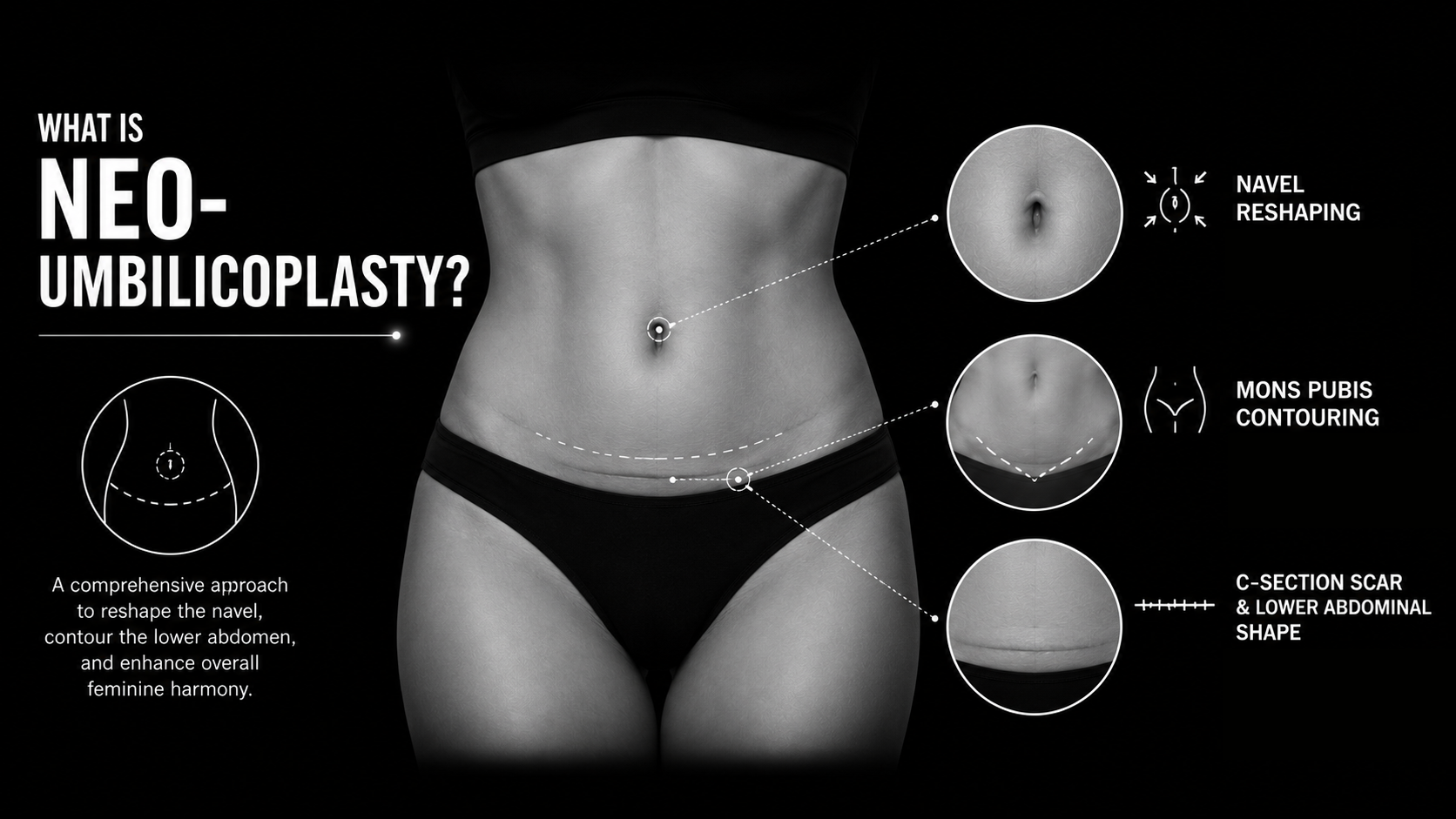
Neo-umbilicoplasty simply means creating a new belly button.
This is needed when the original one cannot be safely kept — because of a hernia, poor tissue quality, previous surgery, or damage that's too extensive to repair.
When it's needed, the new belly button is shaped from the abdominal skin itself, positioned to look natural and to suit your new abdomen.
Mons Pubis Contouring
The mons pubis — the soft area above your genitals — is one area almost nobody thinks about before their tummy tuck. But it matters more than you'd expect.
After pregnancy, weight changes, or a previous C-section, this area can become bulky, droopy, or out of proportion with the rest of your lower abdomen. If we flatten your lower belly but leave this area heavy or sagging, the whole result looks unbalanced. You'll be looking in the mirror thinking, "My stomach is flat, so why does this area still stick out?"
That's why I assess the mons pubis at the same time as planning your tummy tuck. If it's too full, liposuction reduces it. If it's low or loose, it may need lifting. Sometimes both are needed.
A mommy makeover shouldn't stop at your belly button or your scar line. Your lower abdomen and pubic area need to look balanced together.
C-Section Scar and Lower Abdominal Shape
If you've had a C-section, you already know the complaints: the scar looks indented, there's a fold of skin hanging over it, or no matter how much weight comes off, the lower belly still looks uneven.
This happens because of scar tissue, loose skin, fat sitting above the scar, or simply how the tissue healed after your C-section.
During a tummy tuck, your old C-section scar is usually removed entirely, along with the lower abdominal skin. The area is then tightened and closed much more smoothly than it healed the first time. In select cases, I also add scar revision to the plan.
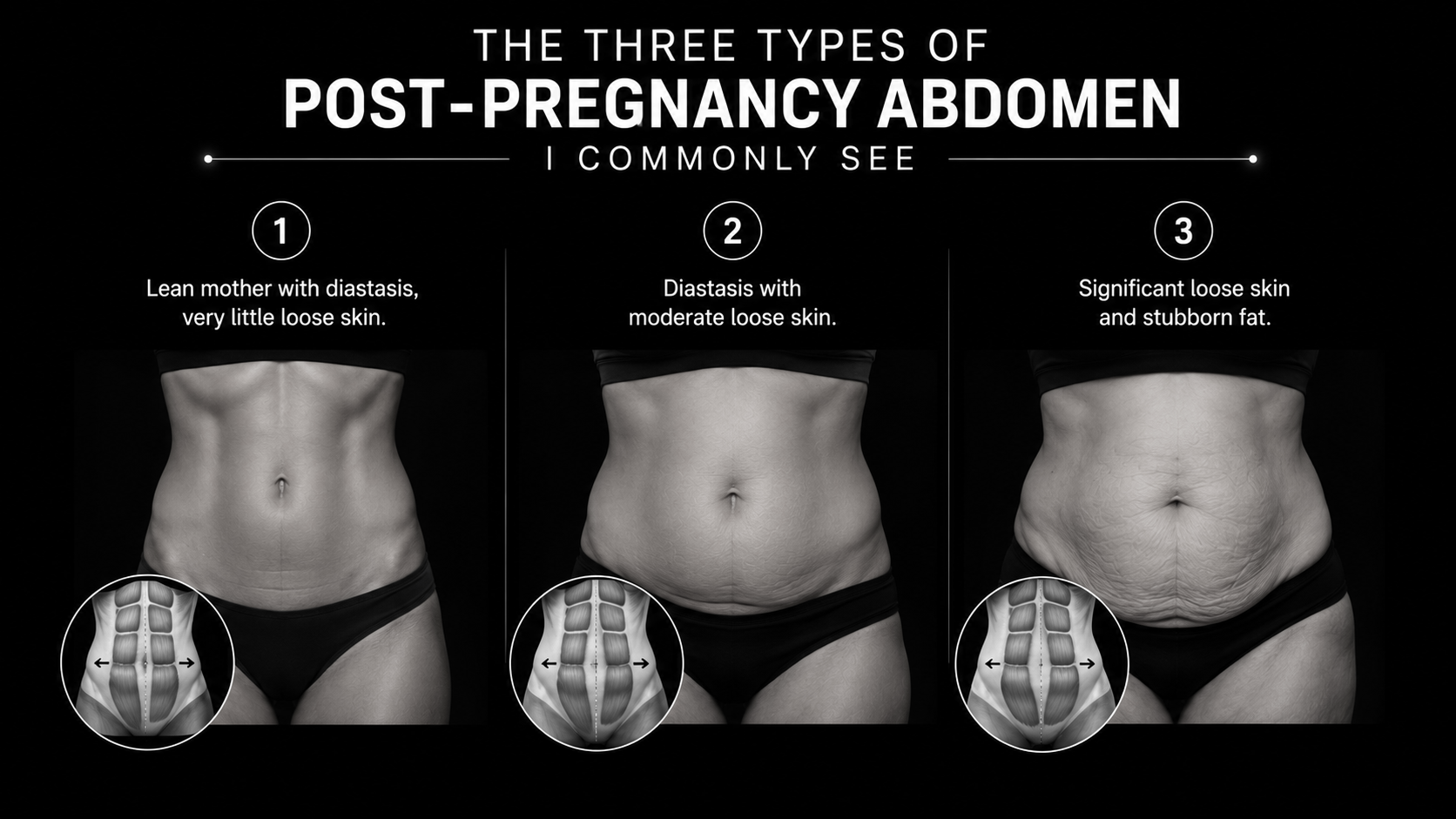
The Three Types of Post-Pregnancy Abdomen I Commonly See
Not every mother needs the same operation. This is one of the most important things I explain in a consultation. Three patterns come up again and again.
Full Tummy Tuck After Pregnancy
A full tummy tuck is the most common procedure in a mommy makeover.
It corrects loose lower abdominal skin, lower stretch marks, diastasis recti, abdominal bulging, an indented C-section scar, a distorted belly button, general lower abdominal looseness, and mons pubis imbalance when it's addressed properly.
Here's the process: the excess lower abdominal skin is removed, your muscles are repaired, the belly button is reshaped, and everything is closed carefully in layers. VASER liposuction is added when the waist, flanks, back, or upper abdomen also need shaping.
A tummy tuck after pregnancy isn't just "pulling skin down." It's repairing the abdominal wall, removing damaged skin, giving your belly button a new position, improving the lower abdominal shape, and restoring balance to your entire torso.
Extended Tummy Tuck After Pregnancy
An extended tummy tuck is needed when your loose skin doesn't stay only on the front of your abdomen — it extends toward your sides, flanks, or lower back. The scar ends up longer than a standard tummy tuck, but you get proper correction of that side looseness in return.
I usually reserve a full 360° or circumferential tummy tuck for massive weight-loss patients. For post-pregnancy mommy makeover patients, it's usually a choice between the full or extended version.
Extended is the right choice when you're telling me: "The front is loose, but so are my sides." "My love handles bother me just as much as my stomach." "I don't want my abdomen fixed while my sides get left behind."
If there's stubborn fat on the sides and back, I combine this with VASER Lipo 360. If there's mild skin looseness in the same areas, J-Plasma joins the plan.
When a Small Vertical Scar May Be Needed
This one genuinely surprises patients, so let me explain it clearly.
During a tummy tuck, your old belly button opening is normally removed along with the lower abdominal skin. But in some lean mothers, there simply isn't enough spare skin to remove that opening completely. If I try to pull extra skin just to avoid this scar, your main tummy tuck scar can end up sitting too high, or the closure can end up too tight. Neither result is worth it.
In that situation, the old belly button opening is closed as a small vertical scar between your new belly button and the tummy tuck scar itself.
This isn't a mistake on my part. It's often the safest, most honest way to treat a lean mother whose main problem is muscle separation rather than excess skin. It usually fades to a faint line over time. But you need to know about it before surgery — not after.
VASER Liposuction and VASER Lipo 360 in Mommy Makeover
VASER liposuction is very useful in a mommy makeover whenever stubborn fat remains around the abdomen, waist, flanks, and back.
Pregnancy changes your entire torso, not just the front of your abdomen. That's exactly why a tummy tuck alone is sometimes not enough. The tummy tuck tightens the front. VASER liposuction shapes everything around it
VASER Lipo 360 is used when we need to treat the abdomen, waist, flanks, love handles, and back together — which avoids the common problem where the front looks flat but the sides and back still look heavy.
I prefer VASER because it loosens stubborn, fibrous fat before removal, which makes the process smoother and the results more controlled. VASER is still just a tool, though — the final result depends on planning, careful markings, choosing the right patient, and technique.
J-Plasma for Skin Laxity After Pregnancy
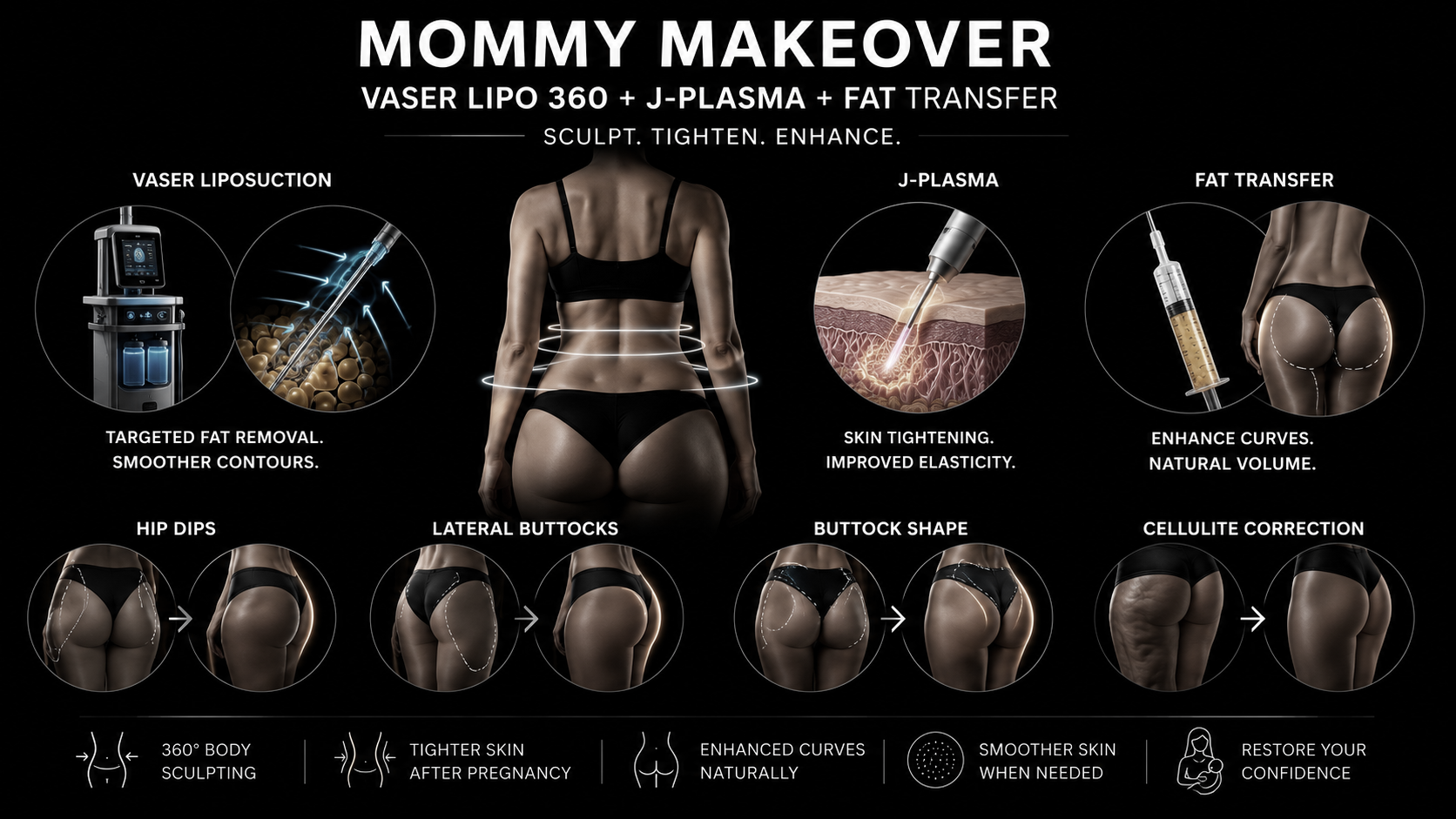
J-Plasma may be added when there is mild to moderate loose skin in areas we're already treating with liposuction — especially the back, flanks, waistline, or sides.
Your tummy tuck tightens the front of your abdomen, but it does not tighten the entire back. So if you have stubborn back fat with some skin looseness, VASER liposuction alone may not be enough. In those cases, I add J-Plasma for extra skin tightening.
One important point: J-Plasma is not a replacement for skin removal. If the skin is very loose, hanging, or significantly damaged, surgery to remove skin is the honest answer — not a promise of tightening from a device that has real limits.
Fat Transfer to Hip Dips, Lateral Buttocks, and Buttock Shape
Some mothers don't only lose shape in the abdomen after pregnancy. They also feel that their hips, buttocks, or waist-to-hip transition has changed.
Fat removed during your VASER liposuction can sometimes be purified and transferred to improve shape in specific areas — hip dips, lateral buttocks, upper buttock shape, full buttock enhancement in select patients, small dents or contour irregularities, or better waist-to-hip balance.
This isn't needed for every mommy makeover. But in the right patient, fat transfer makes the result look more balanced and natural.
If fat is transferred to the buttocks, positioning after surgery becomes very important. You'll need to avoid too much pressure on the treated areas during early healing.
Cellulite Correction When Needed
Cellulite is not fixed by liposuction alone. This is important to understand.
Some patients have cellulite, dimpling, or skin waviness around the buttocks and thighs. If fat transfer or lower body contouring is being planned, cellulite may need to be assessed separately.
In select patients, cellulite correction may be combined with the mommy makeover plan — using subcision, Avéli, biostimulators, or other cellulite treatments depending on your case.
The key is getting the diagnosis right. Fat, loose skin, and cellulite are three different problems, and treating one won't fix the other two.
How the Surgery Is Performed
Every mommy makeover is planned differently, but here's the usual sequence of steps.
Step 1: Consultation and Assessment
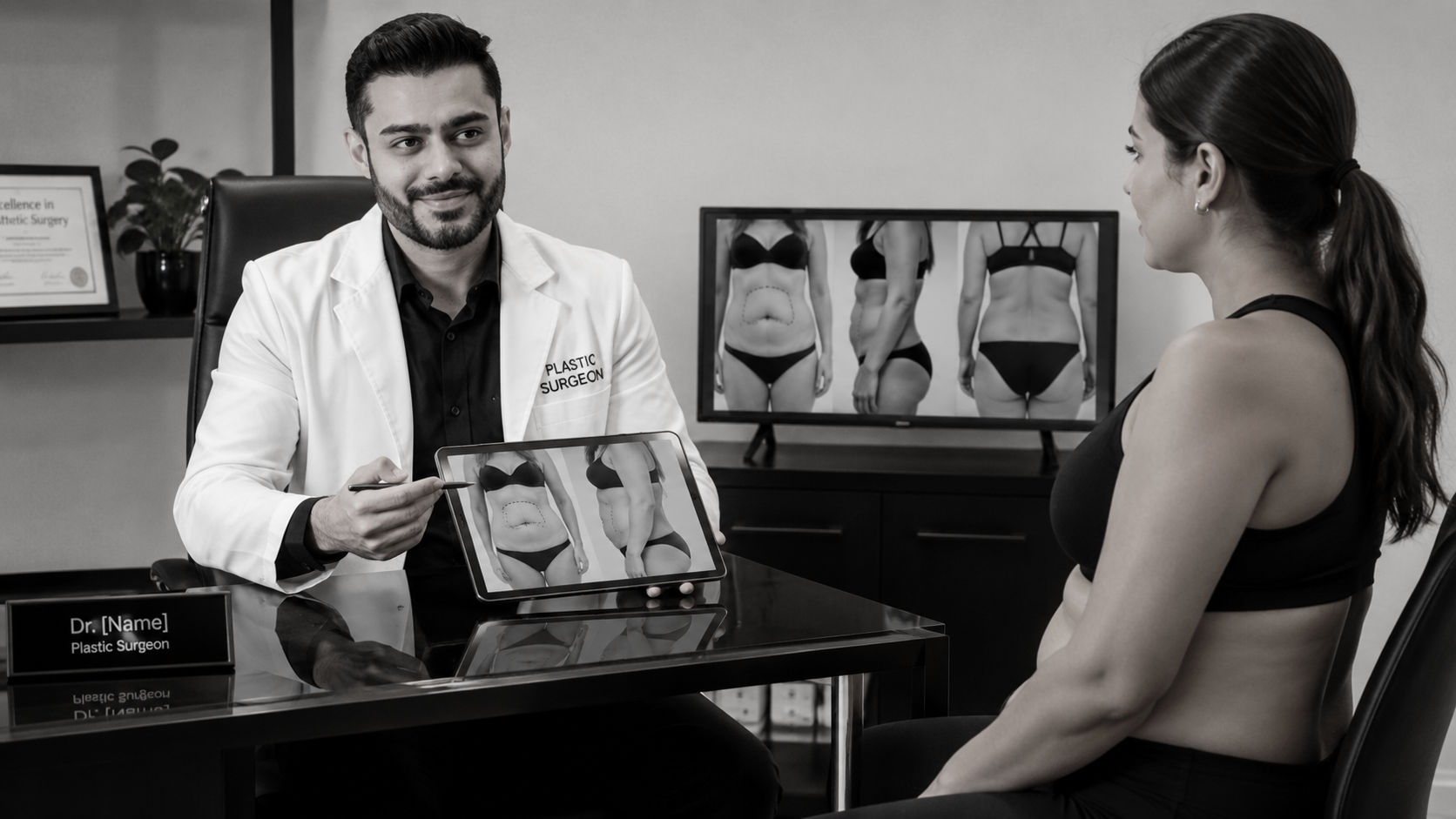
I assess your skin, fat, abdominal muscles, belly button, C-section scar, mons pubis, waistline, back, and overall shape. I also check for diastasis recti and umbilical or paraumbilical hernia.
Step 2: Marking
Done while you're standing. Loose skin, fat pockets, waist shape, and proportions look completely different lying down than they do standing up.
Step 3: Anaesthesia
Most mommy makeover procedures are performed under general anaesthesia, in a hospital setting.
Step 4: VASER Liposuction or VASER Lipo 360
If liposuction is part of the plan, VASER loosens stubborn fat before removal. The abdomen, waist, flanks, back, and love handles are treated based on your specific plan.
Step 5: Tummy Tuck Incision
A low incision, usually positioned around your underwear or swimwear line. For an extended tummy tuck, it extends further toward the sides.
Step 6: Muscle Repair
Your separated abdominal muscles are repaired with a two-layer closure using strong internal stitches.
Step 7: Hernia Assessment and Repair
If an umbilical or paraumbilical hernia is present, it's addressed here. If the original belly button cannot be safely kept, neo-umbilicoplasty happens at this stage.
Step 8: Skin Removal and Belly Button Reshaping
Excess lower abdominal skin is removed. Your belly button is reshaped or recreated, depending on your case.
Step 9: Mons Pubis Contouring
Liposuction if it's too full. A lift if it's low or loose.
Step 10: Layered Closure
The incision is closed carefully in multiple layers with internal stitches. A glue and mesh dressing protects the incision.
Step 11: Drains, Garment, and Binder
Drains are placed in both flanks and exit through the pubic area — deliberately, so there's nothing visible on your abdomen. A compression garment and abdominal binder are used to support healing.
Drains, Garments, Binder, and Lymphatic Massage
I usually place drains after tummy tuck surgery. They sit in both flanks and exit through the pubic area on purpose — no visible scars on your abdomen from them
Your compression garment is usually worn for 6 to 8 weeks. The abdominal binder may continue for up to 3 months, especially where a strong diastasis repair was needed. It supports the repair while your body finishes healing.
Lymphatic massage usually starts around day 7. I generally recommend 10 to 15 sessions, on alternate days, depending on swelling, comfort, and how much liposuction was performed.
Your recovery plan is not separate from the surgery. It is part of the result.
Recovery After Mommy Makeover
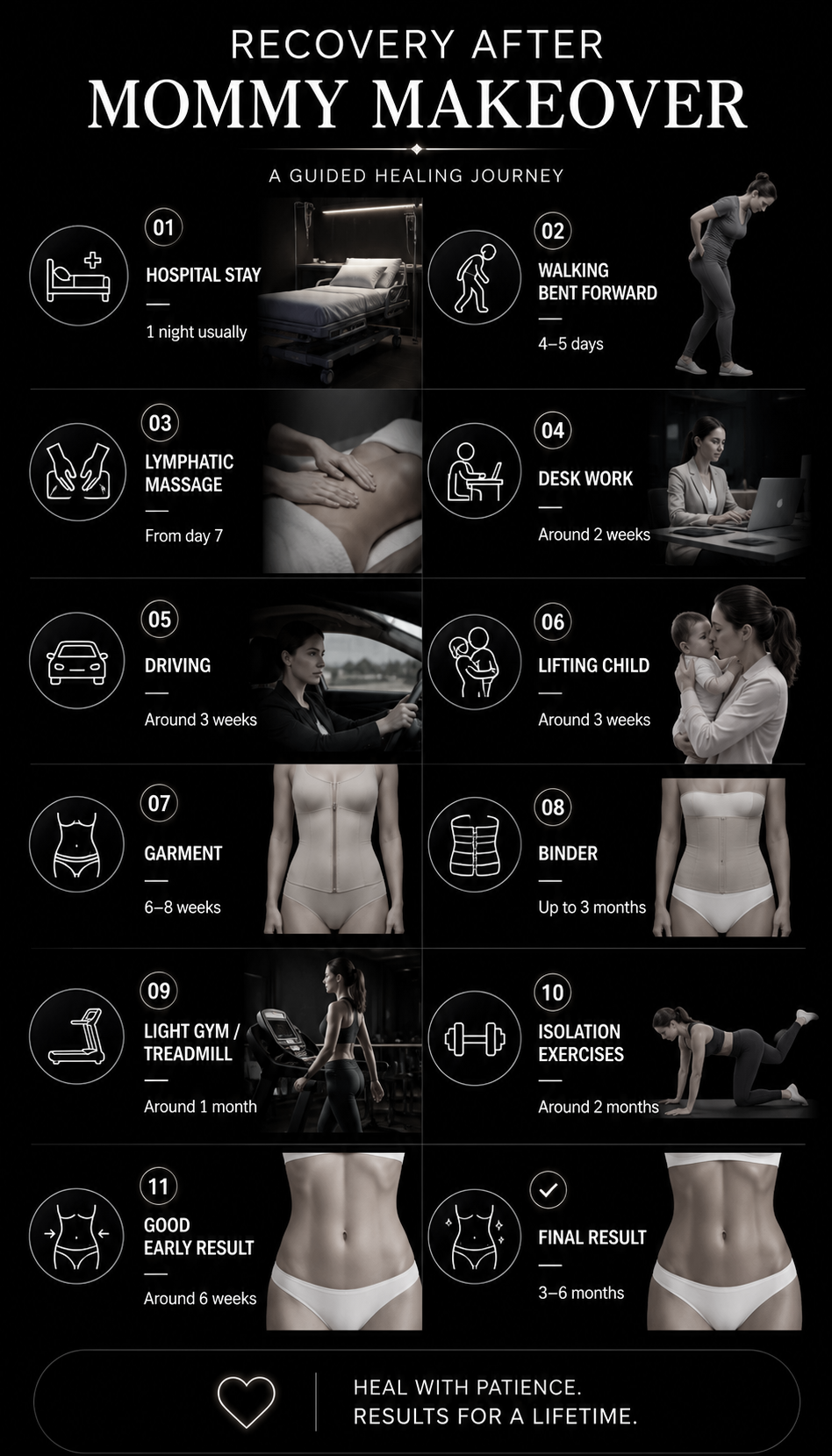
Recovery depends on how extensive the surgery was, but here's the general timeline.
Most patients stay one night in hospital. A second night may be needed for bigger cases or extra observation.
For the first 4 to 5 days, you'll likely walk slightly bent forward — this is normal and expected, not a sign of anything wrong. Desk work is usually possible around 2 weeks. Driving is usually allowed around 3 weeks, once you can move comfortably, react quickly, wear a seatbelt properly, and you're off strong pain medication.
Lifting your child should wait at least 3 weeks. Light treadmill walking or gentle gym activity can usually start around 1 month. Isolation exercises and structured resistance training usually start around 2 months, depending on healing and comfort.
You'll see a good early result around 6 weeks — but the final result takes 3 to 6 months as swelling settles and tissues soften into place.
| Recovery milestone | Usual timing |
|---|---|
| Hospital stay |
|
| VASER Lipo 360 |
|
| VASER back liposuction |
|
| VASER Double Chin Liposuction |
|
| VASER face and neck liposuction |
|
| VASER Thigh Liposuction | Starting from AED 30,000 |
Scar Positioning, Layered Closure, and Scar Care
A tummy tuck scar cannot be avoided. But it can be planned, closed carefully, protected, and treated well.
I place the scar as low as possible, usually around the same area as your C-section scar, so it can be hidden under underwear or swimwear.
The wound is closed in multiple internal layers, so there are no external stitch marks. After closure, I use a glue and mesh dressing to protect the incision.
The scar stays covered for the first 10 days. Once the dressing is removed, scar ointment begins. Silicone gel tape is usually used for around 3 months. Laser treatment can start as early as 1 month after surgery if needed, especially around the lower abdominal scar or belly button scar.
Everyone heals a little differently. But careful planning and proper aftercare make a real difference to the final result.
Cost of Mommy Makeover in Dubai
The cost depends on what you need. As a guide:
| Full tummy tuck with muscle repair |
|
| Tummy tuck with muscle repair + VASER Lipo 360 |
|
| Extended tummy tuck + VASER 360 liposuction + muscle repair |
|
Final pricing depends on skin laxity, muscle separation, hernia repair, liposuction areas, J-Plasma, fat transfer, hospital stay, and overall complexity. A final quote is given after your consultation and examination.
Why Choose Dr. Hardik Ganatra for Mommy Makeover in Dubai?
I focus only on body contouring. This matters in mommy makeover surgery, because the abdomen cannot be treated as one flat surface. The skin, fat, muscles, waistline, belly button, scar, mons pubis, back, and overall proportions all need to be planned together.
A good mommy makeover is not just a tummy tuck. It is not just liposuction. It is not just muscle repair. It's the combination of many small decisions that make the result look natural, balanced, and safe.
I regularly perform tummy tucks, extended tummy tucks, VASER Lipo 360, J-Plasma liposuction, revision body contouring, fat transfer, and post-weight-loss contouring. This experience helps me plan your surgery as one complete body-contouring procedure, not a standard package.
My goal is simple: to help mothers feel comfortable, confident, and at home in their own body again — while keeping the result safe, natural, and proportionate.
Liposuction
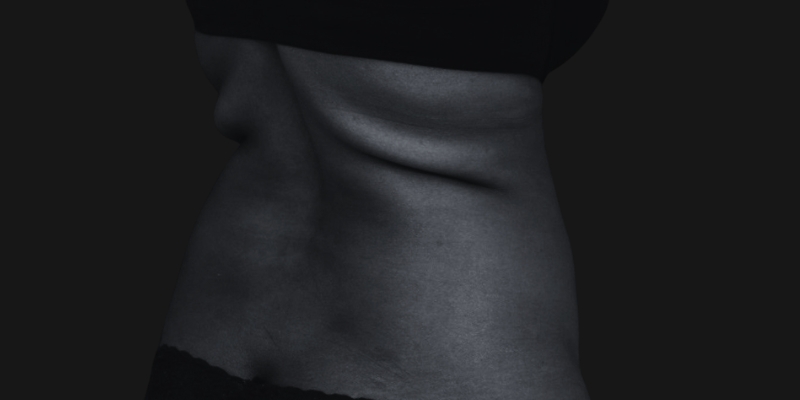
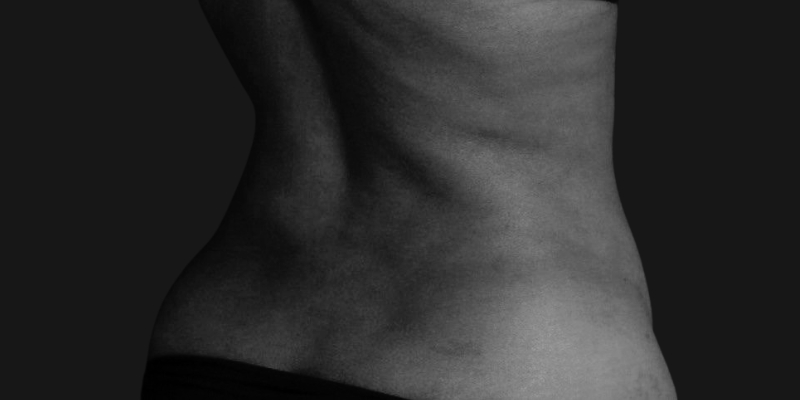
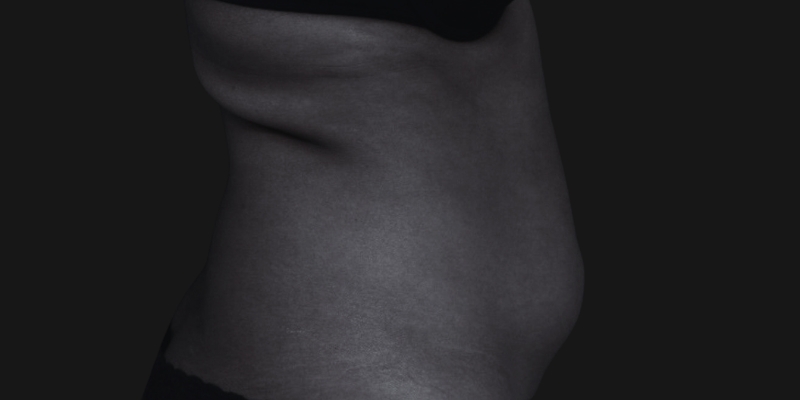
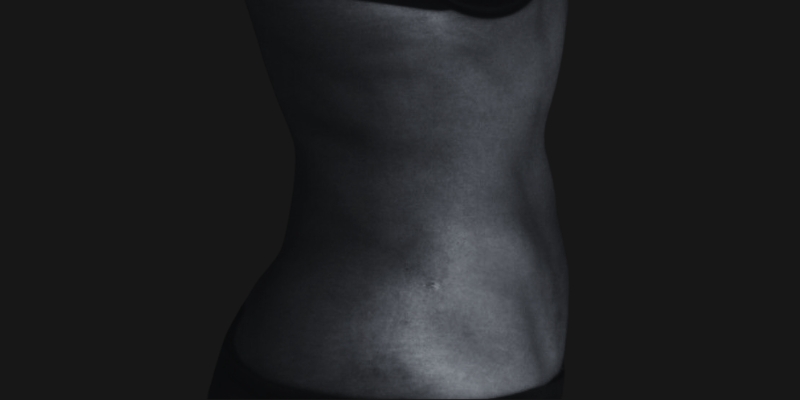
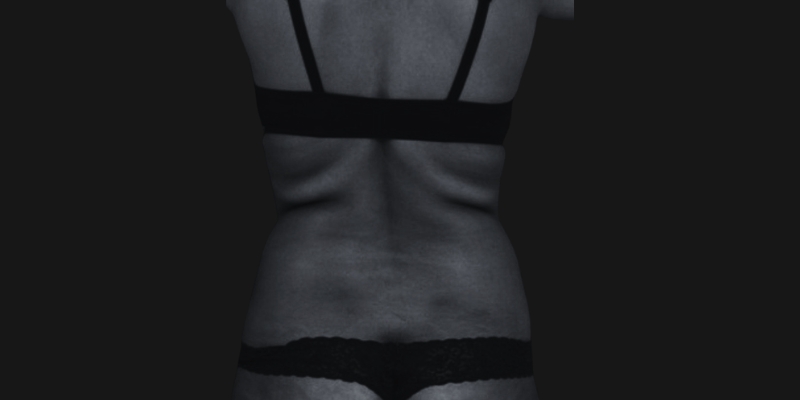
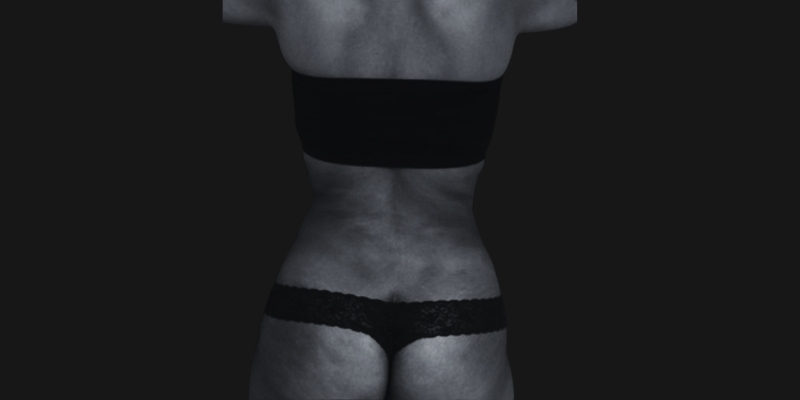
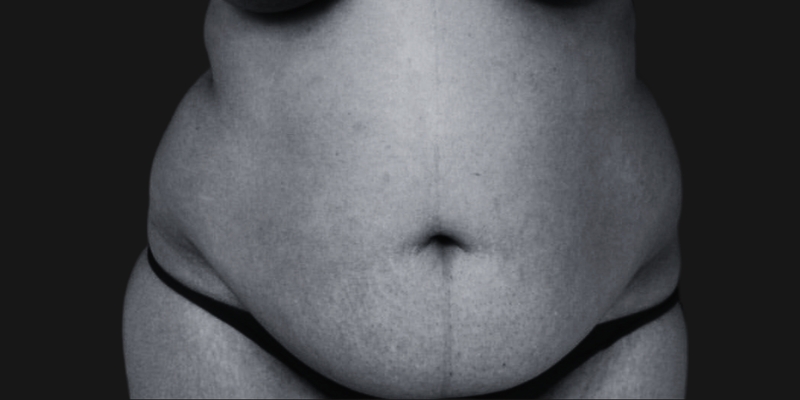
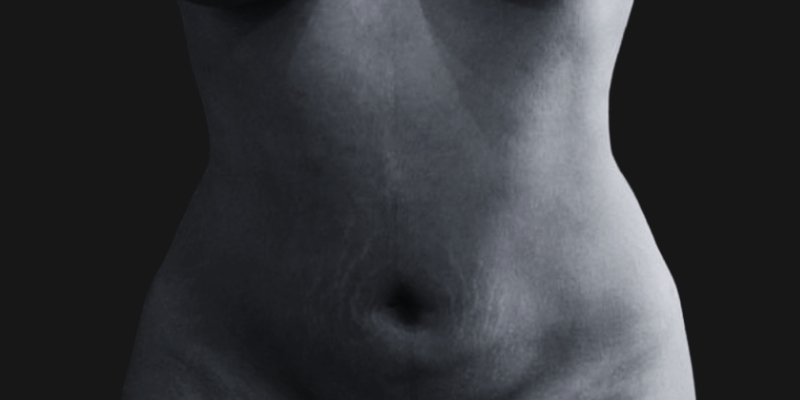
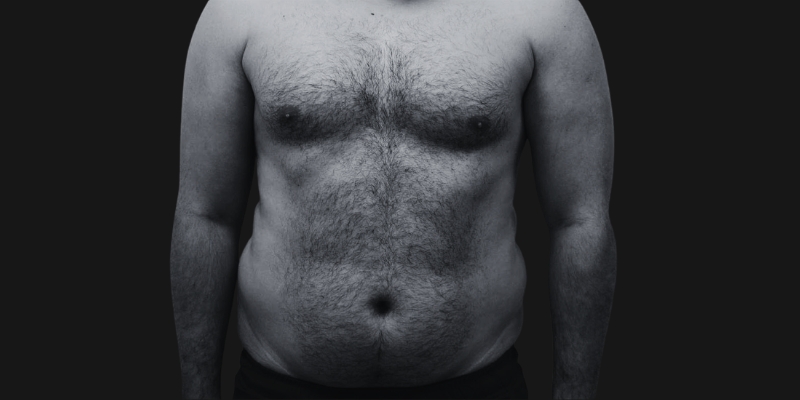
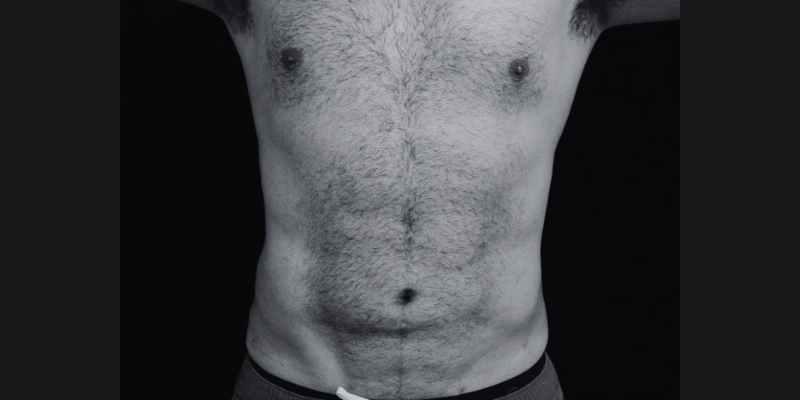
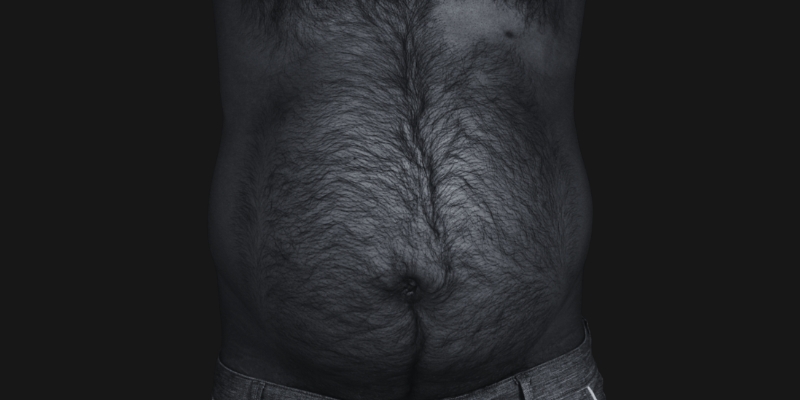
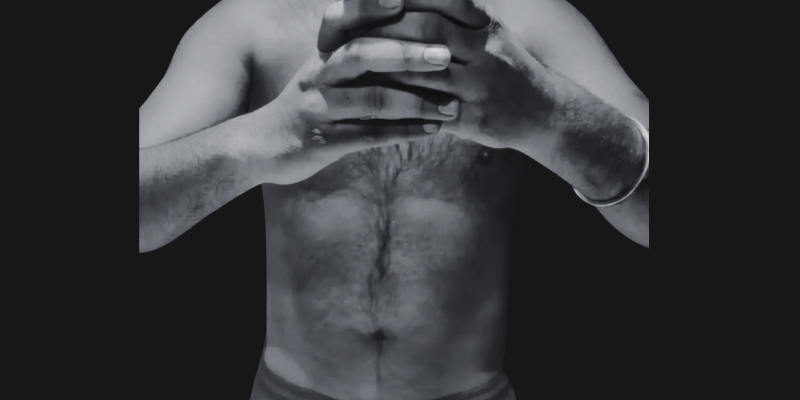
Before & After
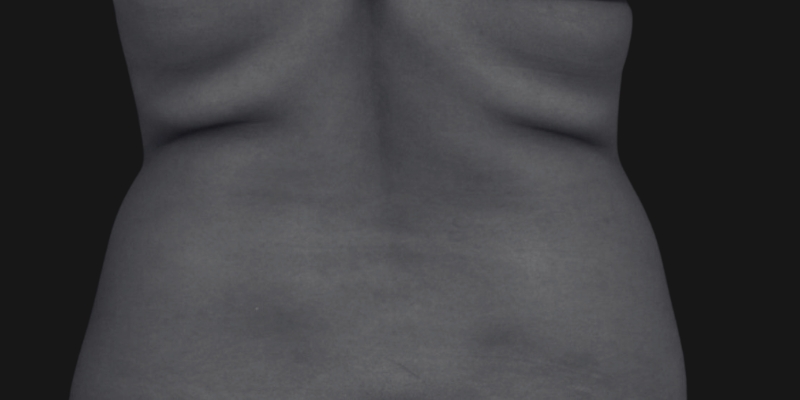
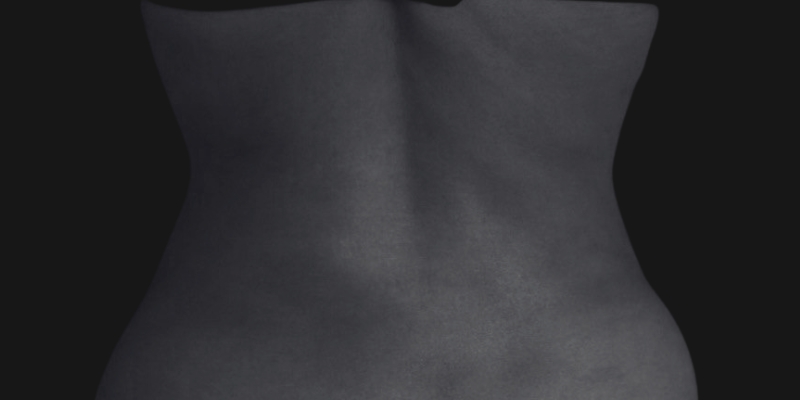
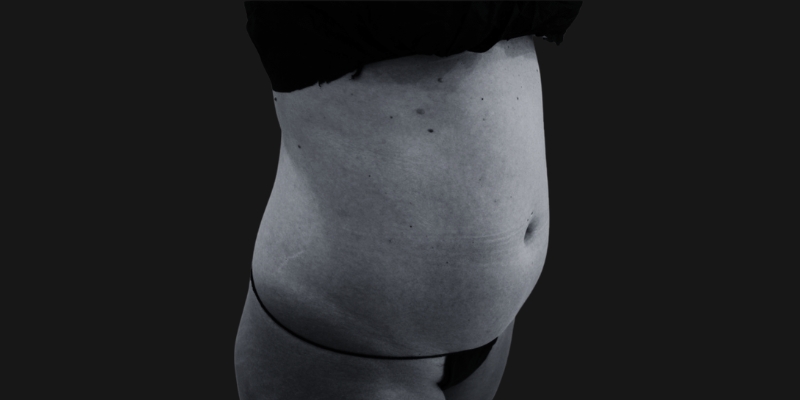
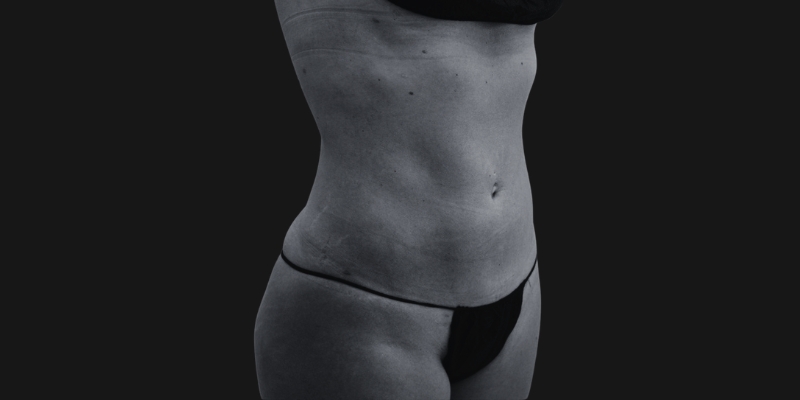
View real transformations that showcase natural definition and proportionate shape enhancement. Each result represents thoughtful contouring, not overcorrection.
Frequently Asked Questions About VASER Liposuction in Dubai
Is liposuction a weight-loss surgery?
No. I explain this very clearly during consultation. Liposuction is for contouring, not weight loss. It removes fat under the skin and improves shape; it does not replace diet, exercise, or medical weight management.
Who is a good candidate for liposuction?
I look for stubborn fat deposits, reasonable skin quality, stable weight, good health, and realistic expectations. If the problem is loose skin or visceral fat, liposuction alone may not be the right answer.
Can liposuction remove visceral belly fat?
No. Liposuction removes subcutaneous fat — the fat under the skin. Visceral fat sits deeper, around the organs, and needs weight loss and lifestyle management.
What is VASER liposuction?
VASER uses ultrasound energy to soften fat before removal. I use it when it genuinely helps — especially in fibrous areas, high-definition cases, revision liposuction, and body sculpting.
Does VASER liposuction tighten skin?
VASER may support skin retraction in selected patients, but it is not a skin removal procedure. If the skin is loose, I may discuss J-Plasma, BodyTite, or skin removal surgery.
What is J-Plasma liposuction?
J-Plasma is used after fat removal to help the skin contract in selected patients. I usually consider it when there is mild to moderate skin laxity.
Is J-Plasma or BodyTite worth adding to liposuction?
It can be, if the patient has fat plus mild skin looseness. I don’t use these devices as magic solutions. If the skin is significantly loose, a lift or tummy tuck is the more honest answer.
Can liposuction replace a tummy tuck?
No. Liposuction removes fat. A tummy tuck removes loose skin and repairs muscle separation when needed. If the abdomen has hanging skin or diastasis, liposuction alone will disappoint.
Can liposuction make loose skin worse?
VASER (Vibration Amplification of Sound Energy at Resonance) is an ultrasound-assisted liposuction technique. The ultrasound energy helps loosen fat cells so they can be removed more smoothly through small cannulas.
What is slim-down liposuction?
VASER (Vibration Amplification of Sound Energy at Resonance) is an ultrasound-assisted liposuction technique. The ultrasound energy helps loosen fat cells so they can be removed more smoothly through small cannulas.
What is high-definition liposuction?
VASER (Vibration Amplification of Sound Energy at Resonance) is an ultrasound-assisted liposuction technique. The ultrasound energy helps loosen fat cells so they can be removed more smoothly through small cannulas.
What is Lipo 360?
VASER (Vibration Amplification of Sound Energy at Resonance) is an ultrasound-assisted liposuction technique. The ultrasound energy helps loosen fat cells so they can be removed more smoothly through small cannulas.
How much does liposuction cost in Dubai?
VASER (Vibration Amplification of Sound Energy at Resonance) is an ultrasound-assisted liposuction technique. The ultrasound energy helps loosen fat cells so they can be removed more smoothly through small cannulas.
How much fat can be removed with liposuction?
VASER (Vibration Amplification of Sound Energy at Resonance) is an ultrasound-assisted liposuction technique. The ultrasound energy helps loosen fat cells so they can be removed more smoothly through small cannulas.
Can fat come back after liposuction?
VASER (Vibration Amplification of Sound Energy at Resonance) is an ultrasound-assisted liposuction technique. The ultrasound energy helps loosen fat cells so they can be removed more smoothly through small cannulas.
Why do I look swollen after liposuction?
VASER (Vibration Amplification of Sound Energy at Resonance) is an ultrasound-assisted liposuction technique. The ultrasound energy helps loosen fat cells so they can be removed more smoothly through small cannulas.
When will I see my final liposuction result?
VASER (Vibration Amplification of Sound Energy at Resonance) is an ultrasound-assisted liposuction technique. The ultrasound energy helps loosen fat cells so they can be removed more smoothly through small cannulas.
Is liposuction painful?
VASER (Vibration Amplification of Sound Energy at Resonance) is an ultrasound-assisted liposuction technique. The ultrasound energy helps loosen fat cells so they can be removed more smoothly through small cannulas.
What is the downtime after liposuction?
VASER (Vibration Amplification of Sound Energy at Resonance) is an ultrasound-assisted liposuction technique. The ultrasound energy helps loosen fat cells so they can be removed more smoothly through small cannulas.
How long do I need to wear compression garments after liposuction?
VASER (Vibration Amplification of Sound Energy at Resonance) is an ultrasound-assisted liposuction technique. The ultrasound energy helps loosen fat cells so they can be removed more smoothly through small cannulas.
Are lymphatic massages necessary after liposuction?
VASER (Vibration Amplification of Sound Energy at Resonance) is an ultrasound-assisted liposuction technique. The ultrasound energy helps loosen fat cells so they can be removed more smoothly through small cannulas.
Is it normal to have hard lumps after liposuction?
VASER (Vibration Amplification of Sound Energy at Resonance) is an ultrasound-assisted liposuction technique. The ultrasound energy helps loosen fat cells so they can be removed more smoothly through small cannulas.
What is fibrosis after liposuction?
VASER (Vibration Amplification of Sound Energy at Resonance) is an ultrasound-assisted liposuction technique. The ultrasound energy helps loosen fat cells so they can be removed more smoothly through small cannulas.
Can liposuction cause dents or irregularities?
VASER (Vibration Amplification of Sound Energy at Resonance) is an ultrasound-assisted liposuction technique. The ultrasound energy helps loosen fat cells so they can be removed more smoothly through small cannulas.
Can botched liposuction be fixed?
VASER (Vibration Amplification of Sound Energy at Resonance) is an ultrasound-assisted liposuction technique. The ultrasound energy helps loosen fat cells so they can be removed more smoothly through small cannulas.
When should I consider revision liposuction?
VASER (Vibration Amplification of Sound Energy at Resonance) is an ultrasound-assisted liposuction technique. The ultrasound energy helps loosen fat cells so they can be removed more smoothly through small cannulas.
Can liposuction treat cellulite?
VASER (Vibration Amplification of Sound Energy at Resonance) is an ultrasound-assisted liposuction technique. The ultrasound energy helps loosen fat cells so they can be removed more smoothly through small cannulas.
Can liposuction be done on the arms?
VASER (Vibration Amplification of Sound Energy at Resonance) is an ultrasound-assisted liposuction technique. The ultrasound energy helps loosen fat cells so they can be removed more smoothly through small cannulas.
Can liposuction be done on the thighs?
VASER (Vibration Amplification of Sound Energy at Resonance) is an ultrasound-assisted liposuction technique. The ultrasound energy helps loosen fat cells so they can be removed more smoothly through small cannulas.
Can liposuction be done for lipedema?
VASER (Vibration Amplification of Sound Energy at Resonance) is an ultrasound-assisted liposuction technique. The ultrasound energy helps loosen fat cells so they can be removed more smoothly through small cannulas.
Can liposuction be combined with fat transfer?
VASER (Vibration Amplification of Sound Energy at Resonance) is an ultrasound-assisted liposuction technique. The ultrasound energy helps loosen fat cells so they can be removed more smoothly through small cannulas.
Is BBL fat injected into the muscle?
VASER (Vibration Amplification of Sound Energy at Resonance) is an ultrasound-assisted liposuction technique. The ultrasound energy helps loosen fat cells so they can be removed more smoothly through small cannulas.
Are liposuction scars visible?
VASER (Vibration Amplification of Sound Energy at Resonance) is an ultrasound-assisted liposuction technique. The ultrasound energy helps loosen fat cells so they can be removed more smoothly through small cannulas.
Why is fluid leaking after liposuction?
VASER (Vibration Amplification of Sound Energy at Resonance) is an ultrasound-assisted liposuction technique. The ultrasound energy helps loosen fat cells so they can be removed more smoothly through small cannulas.
When can I return to work after liposuction?
VASER (Vibration Amplification of Sound Energy at Resonance) is an ultrasound-assisted liposuction technique. The ultrasound energy helps loosen fat cells so they can be removed more smoothly through small cannulas.
When can I exercise after liposuction?
VASER (Vibration Amplification of Sound Energy at Resonance) is an ultrasound-assisted liposuction technique. The ultrasound energy helps loosen fat cells so they can be removed more smoothly through small cannulas.
Why do some people regret liposuction?
VASER (Vibration Amplification of Sound Energy at Resonance) is an ultrasound-assisted liposuction technique. The ultrasound energy helps loosen fat cells so they can be removed more smoothly through small cannulas.
How do I maintain liposuction results?
VASER (Vibration Amplification of Sound Energy at Resonance) is an ultrasound-assisted liposuction technique. The ultrasound energy helps loosen fat cells so they can be removed more smoothly through small cannulas.
How do I know which liposuction technique is right for me?
VASER (Vibration Amplification of Sound Energy at Resonance) is an ultrasound-assisted liposuction technique. The ultrasound energy helps loosen fat cells so they can be removed more smoothly through small cannulas.
Book a Consultation for VASER Liposuction in Dubai
If you’re considering VASER liposuction in Dubai, the first step is a proper consultation — not choosing a machine name or a procedure off a trending list.
During the consultation, I assess fat distribution, skin quality, body goals, previous surgeries, fibrosis, and whether VASER genuinely makes sense for your anatomy. The plan is built around what your body actually needs. The technology follows the plan — not the other way around.
Book a consultation with Dr. Hardik Ganatra to understand whether VASER liposuction is the right option for your anatomy and goals.
Medical Disclaimer
The information on this page is for general educational purposes only and should not be taken as personal medical advice. Every patient has a different anatomy, medical history, and set of goals.
A consultation with Dr. Hardik Ganatra is necessary before deciding whether VASER liposuction is suitable for you. The final treatment plan is determined after a full in-person assessment.
Results vary from patient to patient. No surgical or non-surgical procedure can guarantee a specific result.