
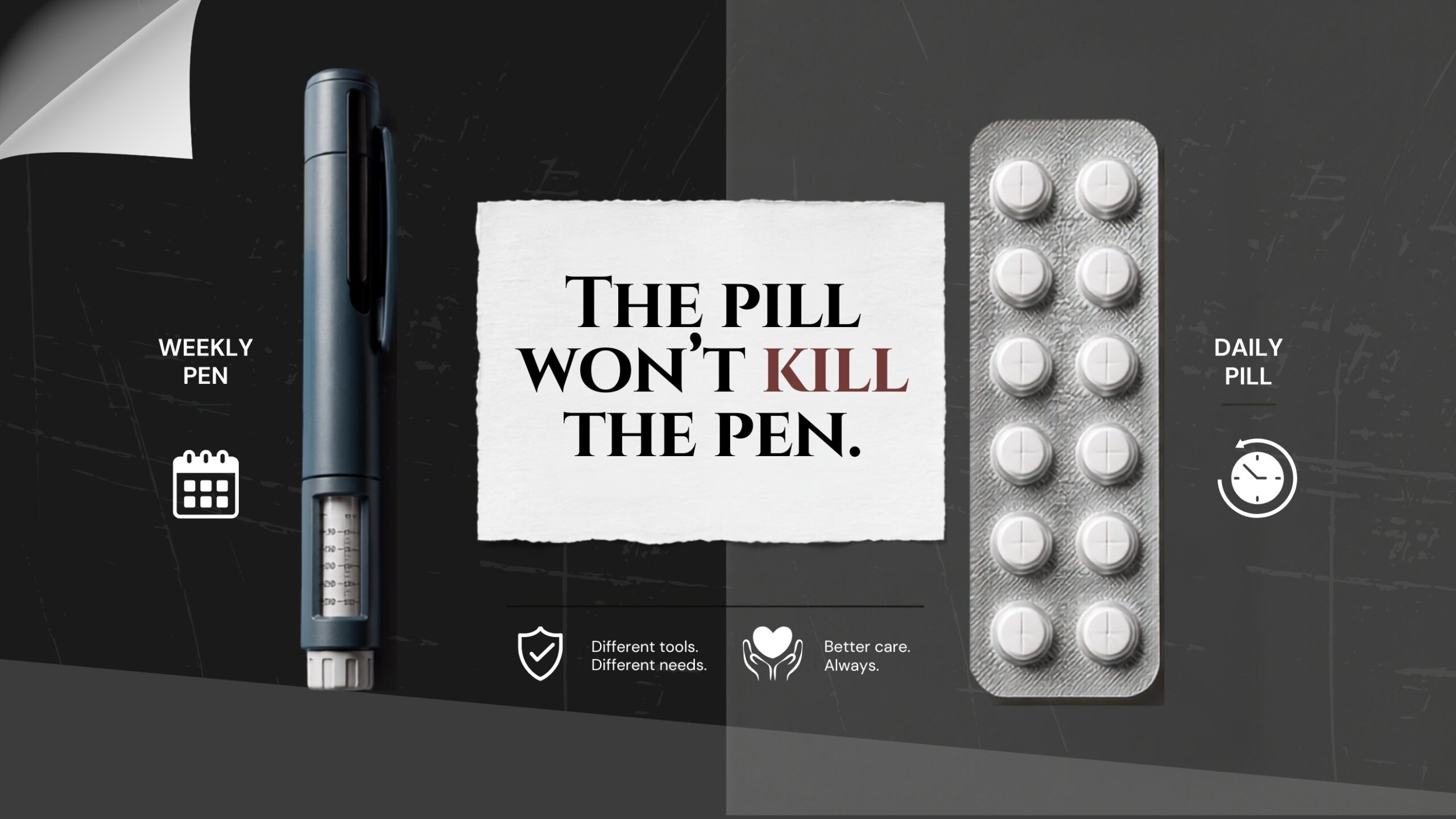
The Pill Won't Kill the Pen: Why I Do Not Think Oral GLP-1 Pills Will Beat Injections
Why do I think oral GLP-1 pills will struggle to beat weekly injections?
Every few months, the weight-loss industry finds a new word to get excited about.
Right now, that word is “oral.”
Oral GLP-1. Oral semaglutide. Oral weight-loss pill. No injections. No pens. No needles.
It sounds perfect on paper.
But honestly, I am not convinced.
In fact, I think the whole obsession with oral GLP-1 weight-loss drugs is being sold as a convenience revolution, when in reality, a lot of it feels like a commercial race to capture a piece of the obesity market.
A pill is not automatically better than an injection.
So why do I think oral pills will struggle to beat injections? Because the problem they claim to solve is no longer the biggest problem.
For years, the assumption was that patients would never accept injections for weight loss.
That assumption has already failed.
Patients accepted Ozempic, Wegovy, Mounjaro and similar drugs because they worked. The injection was tiny. The dosing was weekly. The weight loss was visible. The reduction in appetite and food noise was real.
Once patients saw results, the fear of injections became a much smaller issue.
So the idea that patients are desperately waiting for a pill because they cannot tolerate a small weekly injection is, in my opinion, exaggerated.
Patients do not hate injections when the injections work.
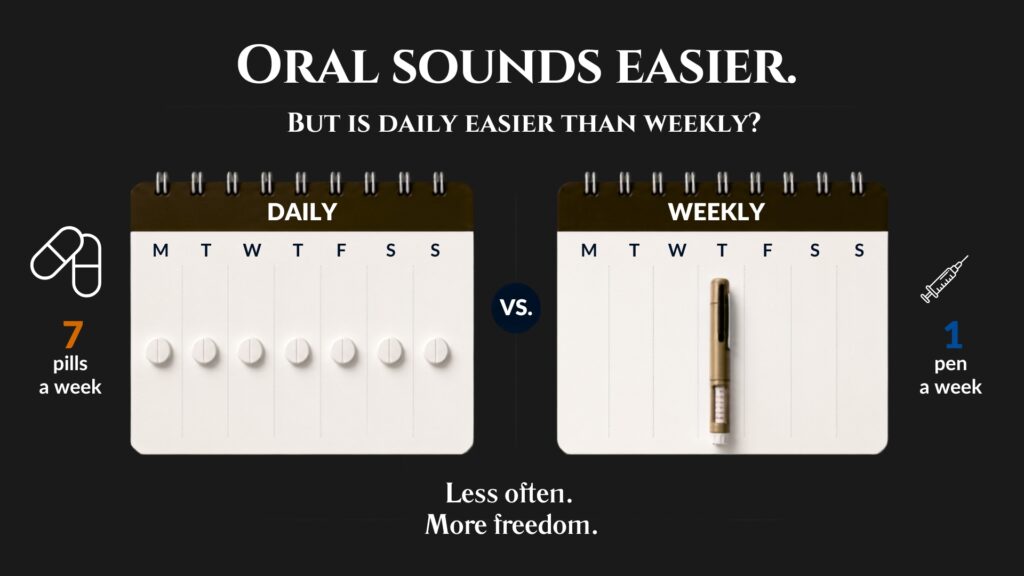
Daily pill or weekly pen: which is actually more convenient?
This is where the marketing becomes a little misleading.
A daily pill sounds more convenient than an injection. But is it really?
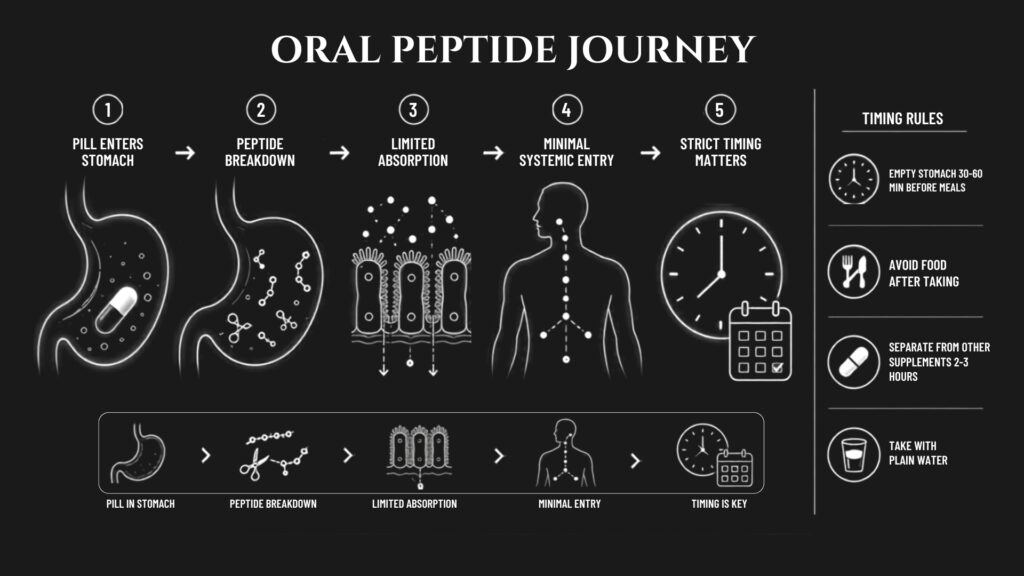
A weekly injection is taken once and then forgotten for the rest of the week. A daily tablet needs daily discipline. Some oral GLP-1 medications also come with specific rules about timing, water intake, fasting and food. So now the “easy pill” becomes a daily ritual that has to be done properly to work properly.
That is not always convenience.
Sometimes, that is just complexity in a different form.
If the next dose is missing, is there really a treatment plan?
The bigger issue, however, is dose escalation.
GLP-1 treatment is not just about starting the medication. It is about moving through the dose ladder carefully until the patient reaches a dose that actually produces meaningful results while still being tolerable.
The starter dose is usually not the treatment dose.
It is the entry point.
It is there so the body can adjust and so side effects can be managed.
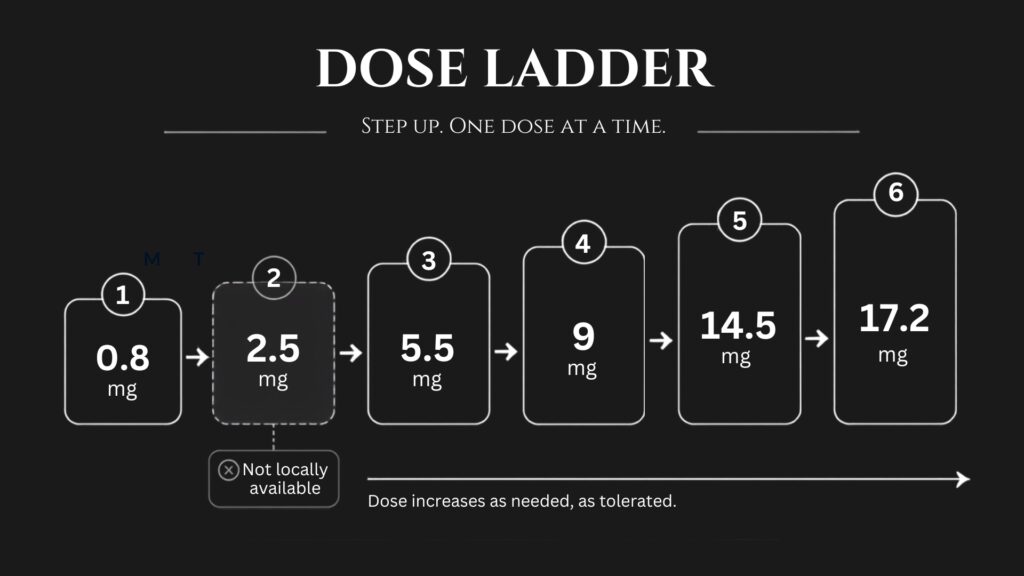
So if a drug starts at 0.8 mg, but the next recommended dose is 2.5 mg, and that 2.5 mg tablet is not even available in the market, then what exactly is the treatment plan?
There is no proper treatment plan.
That is the problem.
If a patient takes the starter dose and feels nothing, you cannot simply say, “Continue and hope.”
You also cannot safely start inventing your own dose by breaking tablets, combining random doses or creating some improvised protocol just because the proper strength is unavailable.
That is not medicine.
That is improvisation.
And in obesity treatment, especially with GLP-1 drugs, improvisation is exactly how patients end up confused, disappointed or exposed to unnecessary risk.
A starter dose without the next dose is not a weight-loss strategy. It is a half-built staircase.
You cannot ask the patient to climb if the next step is missing.
This is also why I find the excitement around oral GLP-1s a bit overdone.
Why does oral semaglutide have a biology problem?
Oral semaglutide has a biological problem. Semaglutide is a peptide, and the gut is designed to break peptides down. So making it work orally requires special absorption strategies and strict administration rules.
That does not make it useless, but it does make it less straightforward than the word “pill” suggests.
On the other hand, small-molecule oral GLP-1 drugs may be more interesting because they are designed to be tablets from the beginning. But even then, the question remains the same:
- Does the drug produce enough weight loss?
- Is it tolerable?
- Can patients escalate properly?
- Are all the doses available?
- Can it realistically compete with weekly injections that are already accepted?
Because that is the real competition.
Not the idea of injections.
The actual injectable GLP-1 market.
And that market has already won patient trust.
Patients know these drugs. They know people who have used them. They have seen the results. They understand the weekly pen. The social barrier has already been crossed.
Why do I think oral GLP-1s will not replace injections?
That is why I do not believe oral GLP-1s will replace injections for serious weight loss.
They may have a place.
- They may work for needle-averse patients.
- They may work for people who want a first step before injections.
- They may work in markets where access, cost or supply becomes an issue.
- They may become useful for primary-care prescribing.
But replacing injectable GLP-1s?
I do not see it.
The injection category has already done the hard work. It has proven that patients will accept a tiny weekly injection if the result is worth it.
And that changes everything.
The real question is no longer: “Can we make weight loss oral?”
The real question is: “Can an oral drug beat a weekly injection that already works, already has patient acceptance, and already has strong cultural momentum?”
That is a much harder question.
And right now, my answer is no.
Is this clinical innovation, or a commercial race?
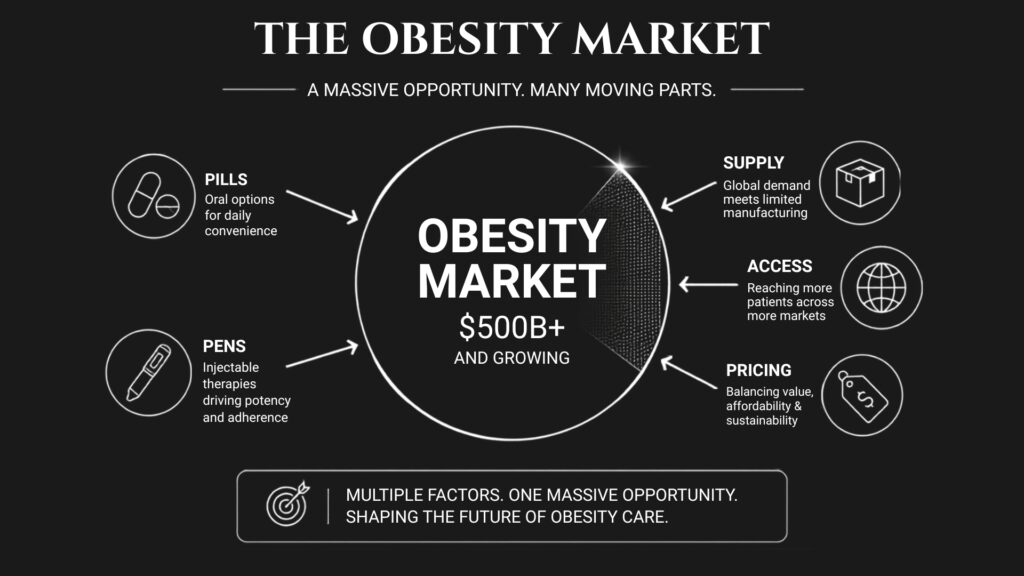
Let us also not pretend this is purely about patient convenience.
The obesity market is enormous. Every pharma company wants a part of it. A pill is easier to market. Easier to prescribe. Easier to distribute. Easier to position as less scary than injections.
But easier to sell does not always mean better for the patient.
A product can be commercially smart and still clinically underwhelming.
That is where I think many oral GLP-1 discussions become too polite.
Everyone wants to say, “This may help selected patients.”
Maybe.
But that is not the point.
The point is that oral GLP-1s are being presented as if they are the natural next step in weight-loss treatment.
I do not think they are.
I think they are a parallel product category trying to find space in a market that injections have already dominated.
And if the full dose ladder is not available, then the problem becomes even more basic.
You do not have a complete treatment.
You have a launch.
You have a starter dose.
You have a headline.
But you do not have a proper obesity-management pathway.
The pill will not kill the pen.
For serious weight loss, injections still make more sense for most patients because they are weekly, familiar, effective, and already accepted.
A pill will not win just because it is a pill.
- It has to produce results.
- It has to be easy to follow.
- It has to have a proper escalation pathway.
- It has to be available in the doses patients actually need.
Until then, I see oral GLP-1s less as a revolution and more as a commercial attempt to enter a market that is already exploding.
A weight-loss pill sounds convenient.
But serious obesity treatment is not won by sounding convenient.
It is won by results, adherence, safety, and a complete treatment pathway.
And a starter tablet without the next dose is not a revolution.
It is a product launch looking for a market.

About the Author
Dr. Hardik Ganatra | Body Contouring Specialist | Plastic Surgeon | Dubai, UAE
10+ years experience. Specialties: High Definition Liposuction, Tummy Tuck, Body Contouring for weight loss patients, Brazilian Butt Lift. Philosophy: every transformation should be life-changing, artistic, and natural. Works with patients regionally and globally.
Medical disclaimer: This article provides general educational information and does not replace an in-person medical assessment.