
DERMAL FILLERS IN DUBAI
The Right Filler, In The Right Hands, Changes Everything.
Dermal fillers are one of the most versatile tools in aesthetic medicine — and one of the most misunderstood. Done well, you shouldn’t be able to tell. The face looks refreshed, proportionate, and natural. Nobody asks “what did you have done?” — they just say you look well.
In my practice, I use hyaluronic acid fillers exclusively for aesthetic treatments. Not because they’re the easiest option — but because they’re the safest, the most reversible, and in the right hands, capable of producing results that are genuinely beautiful and long-lasting.
What Are Dermal Fillers and How Do They Work?
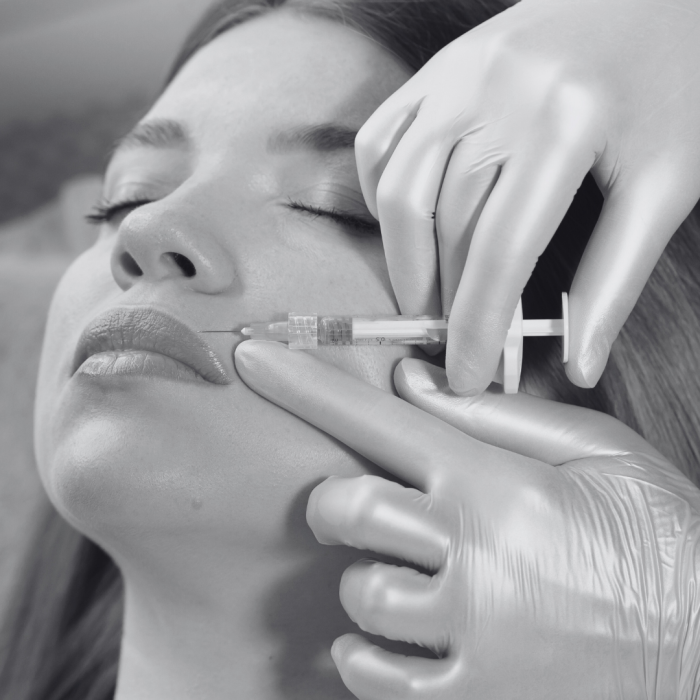
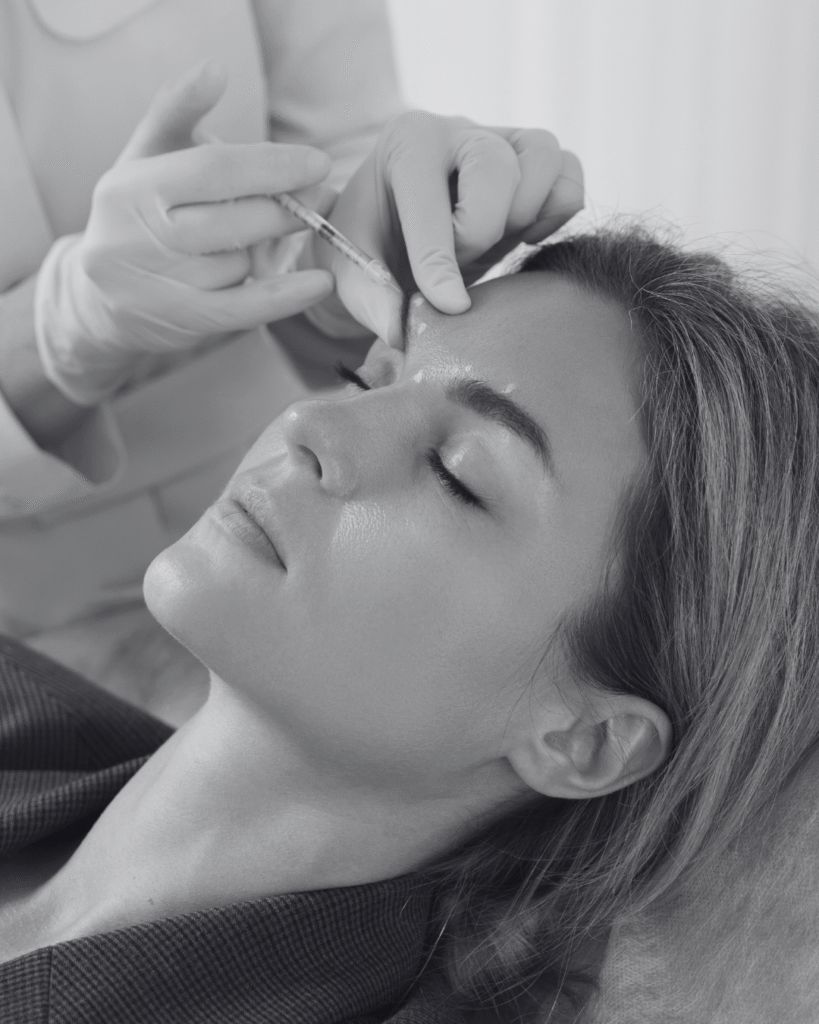
Dermal fillers are injectable gels placed beneath the skin to restore lost volume, enhance contours, smooth wrinkles, and improve facial and body proportions.
The most widely used and safest category of fillers is hyaluronic acid (HA) — a naturally occurring sugar found throughout the skin and connective tissue. HA attracts and binds water, giving skin its plumpness and elasticity. When injected as a gel, it draws in moisture, replaces lost volume, and provides immediate results that look and feel natural.
What makes HA fillers the gold standard:
- Biocompatible — your body recognises and accepts it naturally
- Reversible — if something goes wrong, or you simply don’t like the result, it can be dissolved with an enzyme called hyaluronidase
- Predictable — different formulations allow precise control over viscosity, lift, and longevity
- Temporary — duration ranges from 6 months to 2 years depending on the product, the area, and your metabolism
The Brands I Use
For the face:
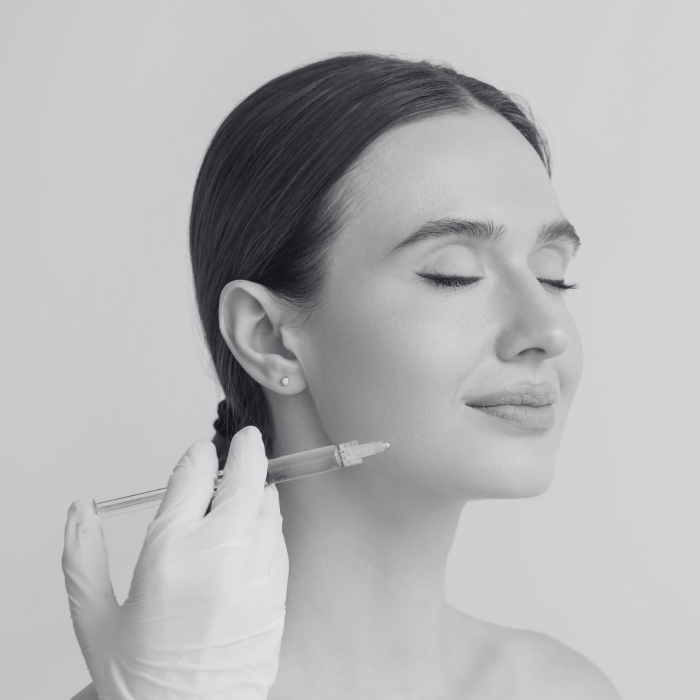
- Juvederm (Allergan) — a range of HA fillers for lips, cheeks, jawline, and deep volume restoration
- Teosyal (Teoxane) — excellent integration and natural feel, particularly for delicate areas like the lips and tear troughs
- Restylane (Galderma) — versatile range with excellent lifting capacity and a long track record
For the body:
- Hyacorp — a high-viscosity HA filler specifically formulated for large-volume body contouring — buttocks, hip dips, and body depressions
- Genefil — another high-viscosity body filler for structural support and contouring in larger areas
Each product is chosen based on the treatment area, the depth of injection, the degree of lift required, and what looks most natural for your anatomy.
Face Fillers in Dubai — Where and Why
Lips — Lip Fillers in Dubai
Lip fillers are one of the most requested treatments in my practice — and one of the most overdone in the industry. My approach is proportion. The lips need to fit the face.
I use HA fillers to add volume, define the vermilion border, correct asymmetry, and restore the natural shape that age or genetics have altered. The goal is never duck lips. It’s lips that look like yours — just fuller, more defined, and better balanced with your face.
Cheeks and Midface
Volume loss in the cheeks is often the first sign of facial aging — and one of the easiest to address. HA fillers replace the lost volume and lift the midface, reducing nasolabial folds and improving the overall facial structure. A subtle cheek filler treatment can take years off the face without changing anything dramatically.
Chin — Chin Fillers in Dubai
The chin is one of the most underappreciated features in facial proportion. A weak chin makes the nose look larger, the jaw less defined, and the profile less balanced. Chin fillers can project the chin forward, lengthen it vertically, or refine its shape — significantly improving facial balance without surgery.
Jawline — Jawline Fillers in Dubai
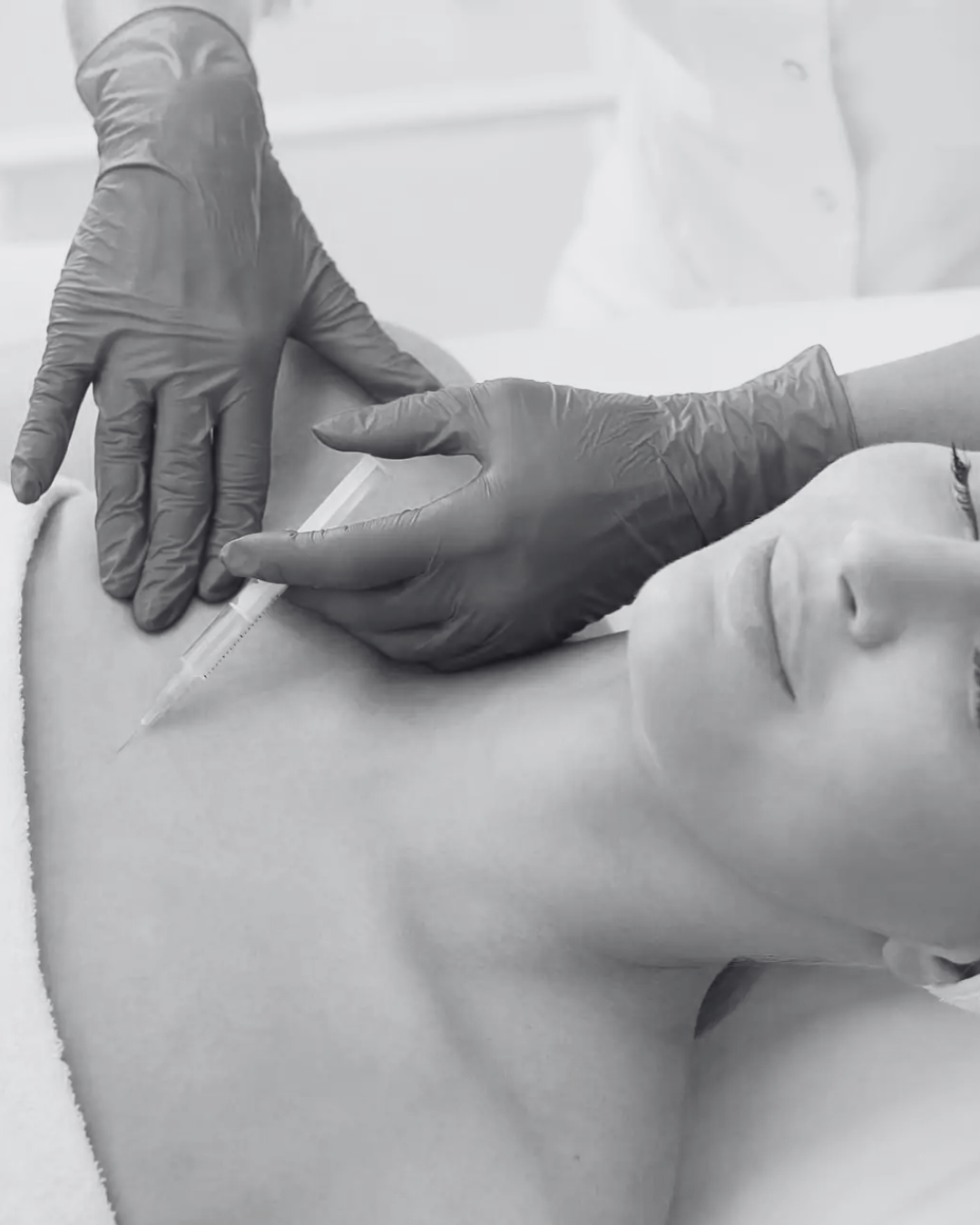
A defined jawline is one of the most sought-after aesthetic features for both men and women. HA fillers placed along the jawline create structure, definition, and a cleaner transition from jaw to neck. Often combined with masseter Botox for a comprehensive lower face refinement.
Nose — Non-Surgical Rhinoplasty
For patients who want to improve their nose shape without surgery, HA fillers can smooth bumps, lift the tip, improve symmetry, or refine the profile. This is one of the most technically demanding filler procedures — injecting near the nose carries specific vascular risks that require precise anatomical knowledge and careful technique.
Tear Troughs (Under-Eye Hollows)
Hollowing under the eyes creates a tired, aged appearance that no amount of sleep or eye cream fixes. Tear trough fillers replace the lost volume in this area, reducing the shadowing and creating a fresher, more rested look. One of the most transformative treatments I perform — when done conservatively, the change is immediate and natural.
Nasolabial Folds and Marionette Lines
The lines running from the nose to the corners of the mouth (nasolabial folds) and from the corners of the mouth downward (marionette lines) deepen with volume loss and aging. Fillers in these areas soften the lines and restore the transition between the cheek and the lower face.
Temples
Temple hollowing is one of the least discussed but most ageing features of the face. As the temporal fat pad reduces with age, the temples become sunken — creating a skeletal appearance and making the eyes and cheeks look more prominent. Temple fillers restore the smooth, full upper face contour of youth.
Forehead
Soft HA fillers in the forehead can smooth deep static wrinkles and restore volume to a flat or bony forehead — particularly in patients who have lost significant weight or who have naturally flat upper faces.
Neck and Décolletage
HA skin boosters — lighter, more fluid formulations — injected into the neck and décolletage improve skin hydration, texture, and the appearance of fine wrinkles and crepiness. Not a structural treatment — a skin quality treatment that significantly improves the appearance of the neck.
Body Fillers in Dubai — Non-Surgical Body Contouring
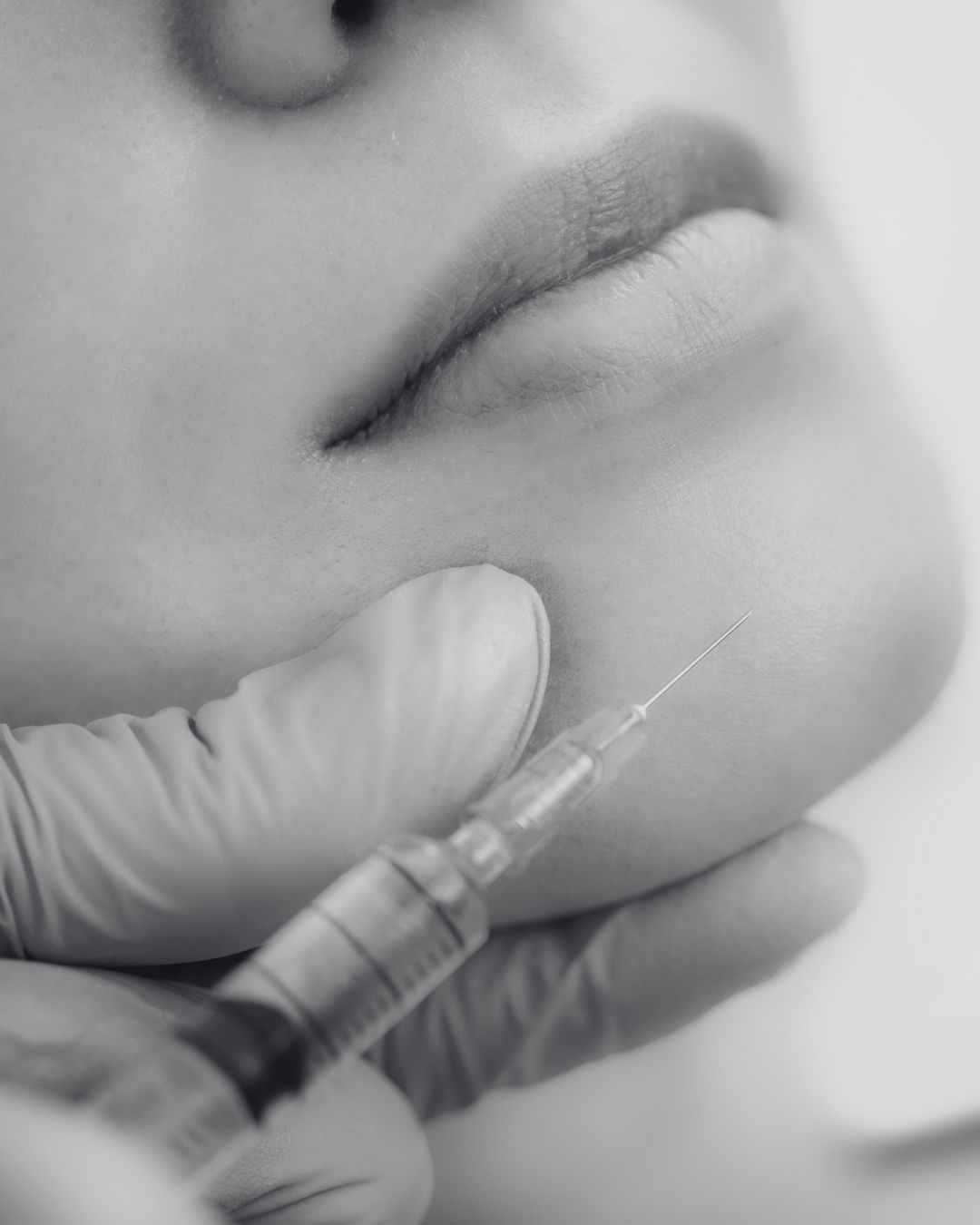
High-viscosity HA fillers have opened up a new category of non-surgical body contouring — using the same reversible, biocompatible technology as face fillers but formulated to provide structural support in larger areas.
Buttock Fillers in Dubai
Non-surgical buttock augmentation using high-viscosity HA fillers like Hyacorp is an increasingly popular alternative to surgery for patients who want modest volume enhancement without the recovery of a BBL. The filler is injected into the subcutaneous layer, providing immediate volume and shape improvement.
It’s important to be clear about what this can and can’t achieve. Buttock fillers can add modest volume, improve shape, and address hip dips or flat areas. They cannot replicate the full contouring effect of a surgical BBL — which simultaneously sculpts the donor sites through liposuction. For patients wanting dramatic transformation, surgery is still the right answer. For patients who want subtle, non-surgical enhancement — buttock fillers are a genuine option.
Hip Dip Fillers
Hip dips — the inward depression on the outer thigh just below the hip — are a common aesthetic concern. HA body fillers injected into this area create a smoother, more continuous outer thigh and hip contour. One of the most natural-looking applications of body filler.
Hand Rejuvenation
Volume loss in the back of the hands makes veins and tendons appear more prominent — one of the most telling signs of aging. HA fillers restore the soft tissue volume, softening the appearance of the hands and giving them a more youthful fullness.
Body Depressions and Contour Irregularities
High-viscosity HA fillers can also be used to fill depressions left after liposuction, trauma, or surgery — improving surface irregularities and restoring a smoother contour. Particularly useful as a non-surgical option for patients with mild post-liposuction irregularities.
Side Effects and Safety — The Honest Version
HA fillers are very safe — but they’re not without risk. Here’s what patients need to know:
- Common and expected: Mild swelling, redness, and bruising at injection sites — typically resolves within a few days. Lips tend to swell more than other areas.
- Less common: Nodules or lumps — usually from filler placed too superficially or product that hasn’t integrated evenly. Often resolves on its own or with gentle massage; occasionally requires dissolution with hyaluronidase.
- Rare but serious: Vascular occlusion — if filler is accidentally injected into or compresses a blood vessel, it can block blood supply to the surrounding tissue. This is the most serious acute complication of filler injection. It requires immediate recognition and treatment with hyaluronidase. This is why injector skill and anatomical knowledge is everything.
- What minimizes risk: Qualified, medically trained injector. Thorough knowledge of facial vascular anatomy. Conservative volumes. Correct injection planes. Hyaluronidase available at every appointment.
After Your Treatment — What to Expect
- Avoid strenuous exercise for 24–48 hours
- Apply ice gently to reduce swelling — do not apply pressure
- Avoid extreme heat (saunas, steam rooms, sun exposure) for 48 hours
- No facial massages or treatments for 2 weeks
- Initial results visible immediately — final results at 2 weeks once swelling has fully resolved
- Follow-up visit recommended at 2 weeks for review, particularly for first-time treatments
Permanent Fillers — Permanent Problems
I want to dedicate a section of this page to permanent fillers — not because I use them, but because I treat the complications from them regularly. And I think patients deserve to understand exactly what they’re getting into before anyone injects something permanent into their face or body.
What Are Permanent Fillers?
Permanent fillers are injectable substances that don’t dissolve or get broken down by the body. The most common types are:
- PMMA (Polymethylmethacrylate) — tiny plastic microspheres suspended in a carrier gel. The carrier absorbs over time, but the plastic beads remain permanently under the skin.
- PAAG (Polyacrylamide Gel) — a water-based gel widely used for breast and buttock augmentation in non-clinical settings. Known by brand names including Aquamid.
- Silicone — liquid silicone injected directly into tissue. Permanently integrates into the surrounding fat and connective tissue.
- Polyalkylimide / Bio-Alcamid — a synthetic gel used for large-volume body augmentation, particularly in buttocks and breasts.
Why I Never Use Permanent Fillers
My position is simple: permanent fillers are permanent problems.
When a temporary HA filler causes a complication — migration, lumps, inflammation, infection — we dissolve it. The problem is solved. When a permanent filler causes a complication, there is often no clean solution.
Here’s what I see regularly in patients who come to me after permanent filler treatments:
- Migration — permanent fillers move from their original injection site over time, settling in unintended locations and creating lumps, asymmetry, and distortion that was never part of the plan.
- Recurrent inflammation — permanent fillers can trigger chronic, recurring inflammatory reactions. In women, these often flare up cyclically — correlating with the menstrual cycle as hormonal changes trigger immune responses to the foreign material. Patients describe repeating episodes of swelling, redness, and pain in the treated area that they can’t explain and nobody seems able to fix.
- Infection — permanent fillers can become infected months or years after the original injection — long after the patient and original injector have moved on. When permanent filler gets infected, you can’t dissolve it. It needs to be surgically removed.
- The removal problem — this is the most important thing to understand. Permanent fillers integrate with your body’s tissue over time. The body forms a capsule around them, fibrous tissue grows through them, and they become part of you in a way that is almost impossible to completely reverse. Removal requires surgery — cutting out the filler along with surrounding tissue. And in many cases, complete removal is not possible. Patients are often left with residual material, scarring, and a result that looks worse after removal than before.
The Legal and Regulatory Position
Many of these products are not approved by the FDA or equivalent regulatory bodies for the indications they’re commonly used for. Injectable silicone is not approved for body contouring. PAAG is banned in multiple countries. PMMA carries significant regulatory warnings. The complications described above are not rare — they are well-documented in the medical literature.
If someone is offering you a permanent filler — for your face, your buttocks, your breasts, anywhere — please ask questions before you say yes. Ask what happens if something goes wrong. Ask how it would be removed. Ask whether it’s approved for that use. The answers should give you everything you need to make your decision.
Dermal Fillers Dubai Frequently Asked Questions
1. What are dermal fillers?
Injectable gels used to restore volume, smooth wrinkles, and enhance facial and body contours. The most widely used and safest type is hyaluronic acid — a substance naturally found in the skin.
2. Which face areas can be treated with fillers in Dubai?
Lips, cheeks, chin, jawline, nose (non-surgical rhinoplasty), tear troughs, temples, forehead, nasolabial folds, marionette lines, neck, and décolletage.
3. What body areas can be treated with fillers?
Buttocks, hip dips, hands, body depressions from liposuction or surgery, and contour irregularities.
4. How long do dermal fillers last?
Face fillers typically last 9–18 months depending on the product, area, and your metabolism. Body fillers with high-viscosity HA can last up to 18–24 months. Lip fillers tend to be shorter duration — around 6–9 months.
5. Are dermal fillers safe?
HA fillers, in the hands of a qualified, medically trained injector, are very safe. The key risks are bruising, swelling, and the rare but serious risk of vascular occlusion — which is why injector skill and knowledge of anatomy is everything.
6. Can fillers be dissolved?
Yes — hyaluronic acid fillers can be dissolved at any time with hyaluronidase. This is one of the most important safety features of HA fillers and one of the main reasons I use them exclusively.
7. Do fillers hurt?
Most patients experience mild discomfort. Most HA fillers contain lidocaine, and topical numbing cream is applied before treatment. The lips are the most sensitive area — but still very tolerable for most patients.
8. When will I see results?
Immediately — though the final result is visible at 2 weeks once swelling has fully resolved. I always recommend a 2-week review for new patients.
9. What are lip fillers and how do they work?
HA gel injected into the lips to add volume, define shape, and improve symmetry. The goal is natural proportion — lips that suit your face, not lips that announce themselves.
10. What are chin fillers?
HA fillers placed in the chin to improve projection, length, or shape — significantly improving facial profile and balance without surgery.
11. What are jawline fillers?
HA fillers placed along the jawline to create definition, structure, and a cleaner jaw-to-neck transition. Often combined with masseter Botox for a complete lower face refinement.
12. What are buttock fillers in Dubai?
High-viscosity HA fillers like Hyacorp injected into the buttocks for non-surgical volume enhancement and shape improvement. A good option for modest augmentation — not a replacement for a surgical BBL in patients wanting significant transformation.
13. What is non-surgical rhinoplasty?
Using HA fillers to reshape the nose — smoothing bumps, lifting the tip, or improving symmetry — without surgery. One of the most technically demanding filler procedures due to the vascular risks in the nasal area.
14. Why don’t you use permanent fillers?
Because permanent fillers are permanent problems. When they cause complications — and they do — there’s often no clean solution. Migration, chronic inflammation, infection, and removal difficulties make them a risk I’m not willing to take with my patients. I treat permanent filler complications regularly, and the cases I see reinforce this position every time.
15. What are the risks of permanent fillers?
Migration, recurrent inflammation (particularly triggered by hormonal changes in women including menstrual cycle flare-ups), infection, granuloma formation, and extremely difficult removal requiring surgery — often with incomplete results. Many permanent fillers are not approved for the uses they’re commonly marketed for.
16. What should I do if I’ve had permanent fillers and I’m having problems?
Come in for a consultation. Permanent filler complications are manageable — but they require a surgeon with specific experience in filler removal. The earlier a problem is addressed, the better the options.
17. How much do dermal fillers cost in Dubai?
Pricing depends on the product, the area treated, and the volume required. You’ll receive a clear, transparent quote at your consultation before any treatment is performed.