Tummy Tuck Scars Before and After: Why Most Patients Stop Caring About Them
By Dr. Hardik Ganatra | Plastic Surgeon & Body Contouring Specialist | Dubai, UAE
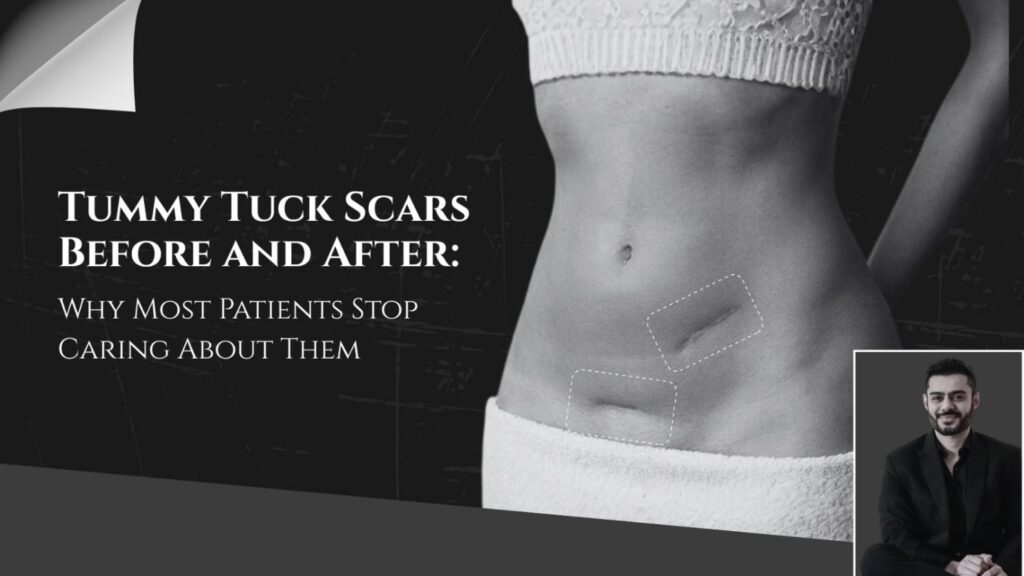
Let’s address the elephant in the room — or rather, the line across the lower abdomen. Yes, a tummy tuck leaves a scar. There’s no version of this surgery that doesn’t. And no, I’m not going to sugarcoat that. But here’s the thing: most of my patients, once they’re on the other side of their tummy tuck surgery and looking in the mirror at a flat, contoured abdomen, stop losing sleep over the scar. Not because they’re ignoring it — but because, done right, it blends into the background. Literally.
So let me walk you through everything you need to know about tummy tuck scars — from why they exist, to what determines how they look, to the rare cases where things go sideways, and how we manage them. This is the full picture, no filter.
Why a Scar Is Inevitable (And Why That’s Actually Fine)
A tummy tuck — technically called an abdominoplasty or surgical tummy tuck — involves removing excess skin and fat from the abdomen, tightening the underlying abdominal muscles, and repositioning the navel. To do all of that, an incision is made. Skin is cut. And wherever human skin is cut, a scar forms. That’s not a surgical complication — that’s basic wound biology.
The real question isn’t will I have a scar? It’s what will my scar look like, where will it be, and how well will it heal? Those answers depend on several factors — some in my control as a surgeon, some in yours as a patient, and some simply written in your DNA.
The goal of any skilled plastic surgeon in Dubai isn’t to make the scar disappear — it’s to make it irrelevant. A well-placed, well-closed scar that heals properly becomes something most patients simply stop noticing. Their clothes cover it. Their confidence is rebuilt. And the transformation they see? That takes centre stage.
For many patients comparing liposuction vs tummy tuck procedures, this is also the point where they realise that a tummy tuck is not just about fat removal surgery — it’s about reshaping the entire abdominal wall and removing excess skin that liposuction alone cannot fix.
Placement: The Single Most Important Variable
- Before we get into technique or tension, let’s talk placement — because this is where the artistry lies, and where the difference between a result you’re proud of and one you regret is often decided.
- In a standard tummy tuck in Dubai or anywhere in the world, the incision runs horizontally across the lower abdomen, from hip to hip. The precise location of this incision — how high or low it sits — determines whether your scar will be visible in a bikini bottom, hidden beneath your underwear, or somewhere in between. My rule of thumb: the scar should sit low enough to be completely concealed by your underwear or swimwear. We plan it that way from the start.
- I always ask my patients to bring in the underwear or swimwear they typically wear — not the fancy stuff, the everyday kind. Why? Because that’s where the scar needs to hide. Not on a good day. Every day.
- Poor placement — placing the incision too high — is one of the most common complaints in botched tummy tuck cases I see during revision consultations. Once the scar is placed incorrectly and healed, correcting it is significantly more complex. This is why choosing the best plastic surgeon in Dubai for your body contouring procedure isn’t just about aesthetics — it’s about surgical planning.
- Beyond the horizontal component, placement also refers to the lateral extent of the incision — how far it travels toward the hips. A longer scar may sound alarming, but it’s sometimes necessary to properly address the skin laxity on the flanks and love handles. A short scar that leaves excess skin on the sides isn’t a trade-off worth making. Again, placement over length.
Length of the Scar: Stop Fixating on It
- Patients often come in asking, “Can you make it shorter?” And I understand the impulse — shorter sounds better. But the length of your tummy tuck scar is dictated by how much skin needs to be removed and redistributed. It’s not an aesthetic choice; it’s a geometric necessity.
- Here’s what most patients don’t realise: a longer incision often means I’m also addressing the flanks — the skin that wraps around the sides of your waist. When I extend the excision laterally and remove that excess flank skin, two things happen. First, the waistline gets genuinely narrower and more defined — a result that a short incision simply cannot deliver. Second, we avoid “dog ears” — those unsightly bunched folds of excess skin that pile up at the ends of a scar when the incision has been kept artificially short.
- A longer, well-placed scar that sculpts the flanks and sits hidden beneath your underwear line will always outperform a shorter one that compromises the outcome. The scar length is a byproduct of doing the job properly — not a measure of how aggressive or conservative the surgery was.
- In extended tummy tuck cases — common in patients who’ve undergone major fat loss or weight loss body contouring — the scar may wrap further around the flanks. For these patients, that extension isn’t a downside — it’s precisely what delivers the circumferential improvement they’re looking for.
- Patients considering tummy tuck and lipo 360 procedures together often benefit the most from this approach because it allows full abdominal contouring rather than partial correction.
The Amount of Skin Removed: More Isn’t Always More
- The amount of skin removed directly influences both the outcome and the scar. Remove too little — you get a suboptimal result with lingering skin laxity. Remove too much — and you create excessive tension on the closure, which is one of the most damaging things you can do to a scar.
- During your surgery, I meticulously calculate how much skin can be safely excised while still allowing the wound edges to come together without being pulled taut. This balance is calibrated to your individual body — your skin elasticity, your anatomy, and the degree of laxity you’re presenting with.
- In patients undergoing body contouring after weight loss, or mothers seeking a mommy makeover after pregnancy or a tummy tuck after C section, the volume of excess skin can be substantial. This naturally requires a longer incision and more extensive removal. The reward, however, is profound — a body that actually reflects the transformation these patients have fought so hard for.
- Many of these patients also have diastasis recti — separation of the abdominal muscles after pregnancy — which is corrected during surgery to restore core support and contour.
Suturing Technique: The Craft That Shapes the Scar
Let me demystify this. The quality of your scar is not just about what you do on the surface — it’s about what happens in the layers beneath. A well-executed tummy tuck closure is performed in multiple layers:
- Deep sutures (absorbable) align the deeper tissue layers and take the load off the skin surface
- Subcutaneous sutures (absorbable) bring the dermis together, which is where most of the scar’s long-term appearance is determined
- Surface closure — whether sutures, staples, or surgical glue — is the final layer
I favour a layered, tension-free closure at the skin surface. The goal is for the skin edges to meet — not to be dragged together. Think of it this way: if you close a wound under high tension at the surface, you’re setting that scar up to widen, thicken, or hypertrophy.
I also use fine, absorbable intradermal sutures placed just beneath the skin surface — invisible sutures that dissolve over time, leaving no stitch marks or cross-hatching.
Tension on the Scar: The Invisible Enemy
If there’s one concept I want you to walk away understanding, it’s this: tension is the enemy of a good scar.
Tension occurs at the wound edges when too much skin has been removed, or when the closure hasn’t been properly layered. A wound closed under significant tension will heal — but it often heals wide, thick, or raised.
This is why proper layered closure and accurate skin excision calculation are so critical. When tension is appropriately offloaded from the skin surface, the body can heal that wound neatly and efficiently.
Post-operatively, patients also play a role in managing tension. Avoiding activities that stretch the abdominal area in the early weeks, sleeping in a slightly flexed position, and wearing your compression garment correctly all reduce tension on the healing scar.
This becomes even more important in combination procedures such as tummy tuck and VASER liposuction or HD liposuction, where the body has undergone more extensive contouring.
The 3 Phases of Scar Healing: What’s Actually Happening Under the Skin
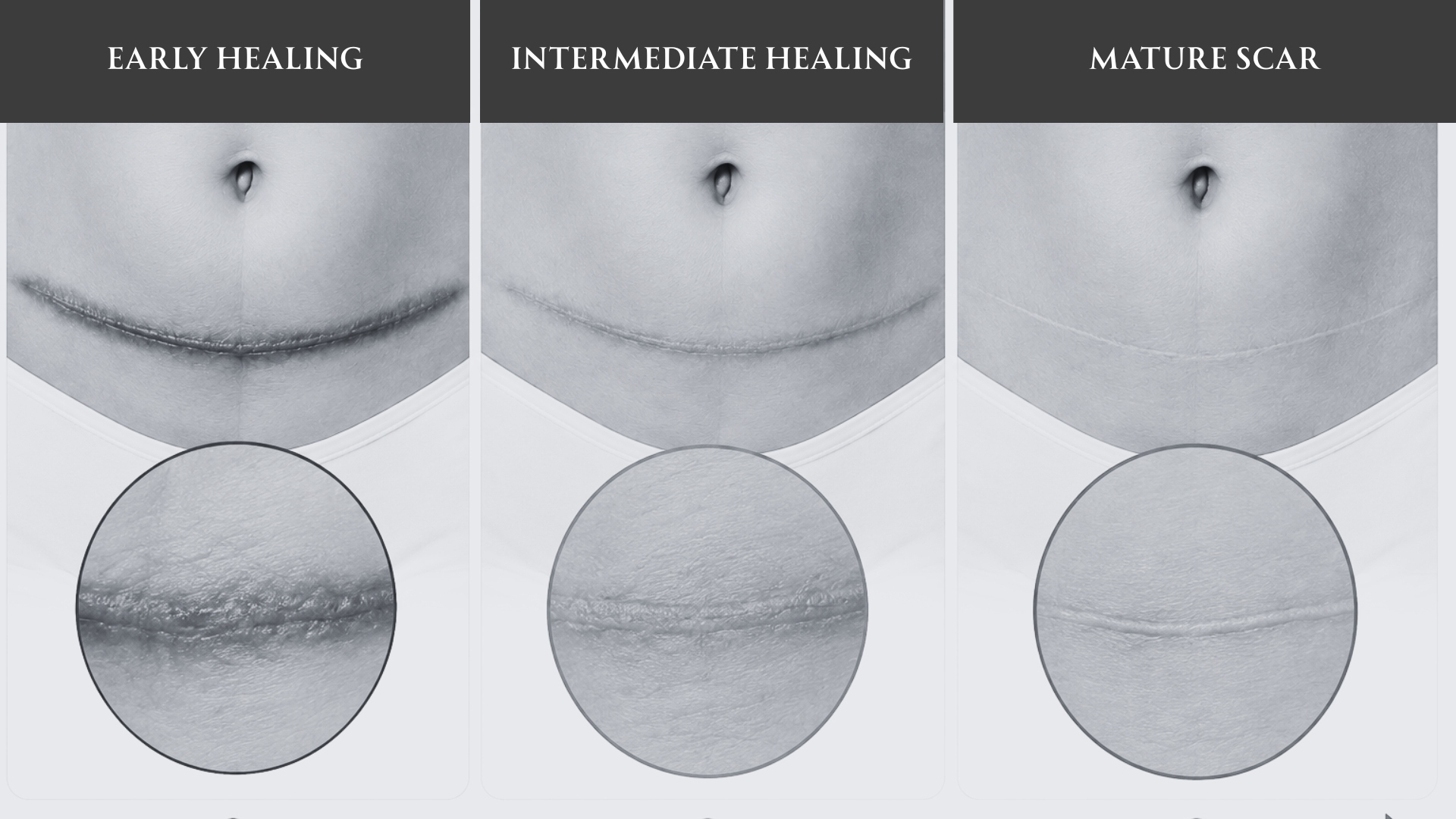
Scar healing is not a linear event. It’s a complex biological process that unfolds in three distinct phases — each with its own timeline and visual signature.
Phase 1: Inflammatory Phase (Days 1–4)
Immediately after surgery, the wound is red, swollen, and actively healing. Your body floods the area with inflammatory cells — this is normal and necessary. The scar at this stage looks its worst: raised, angry, and prominent.
Phase 2: Proliferative Phase (Up to 3 Weeks)
New collagen is being deposited rapidly during this phase. The scar may begin to feel firm or slightly raised, and the redness may deepen before it improves. This is the phase where scar management protocols — silicone sheets, SPF protection, massage — are most impactful.
Phase 3: Maturation Phase (Up to 12 Months)
This is the long game. Over the following months, the collagen fibres reorganise, the scar flattens, softens, and fades from red or pink to a pale, silvery tone that blends with the surrounding skin. The final appearance of a tummy tuck scar is typically assessed at the 12-month mark — not 6 weeks post-op. Patients judging their tummy tuck scar early in recovery are usually seeing a temporary stage, not the final outcome.
When Scars Don’t Cooperate: Hypertrophic Scars and Keloids
Most tummy tuck scars heal well. But in a subset of patients, the scar healing process goes into overdrive — producing more collagen than necessary.
Hypertrophic Scars
A hypertrophic scar is raised, thickened, and often red — but it stays within the boundaries of the original incision. These are relatively common in the first 3–6 months and often improve significantly with time and proper management.
Management includes silicone gel sheets, steroid injections, and in some cases, laser therapy.
Keloids
Keloids are different. Unlike hypertrophic scars, keloids grow beyond the original wound boundaries. They’re more common in patients with darker skin tones and have a strong genetic component.
If you or a family member has a history of keloid formation, this is a critical conversation to have before undergoing tummy tuck surgery, liposuction surgery, or any cosmetic surgery procedure.
What You Can Do to Help Your Scar Heal Well
Great scar outcomes are a collaboration. I do my part in the operating room — the rest is on you.
Here’s what the evidence supports:
- Silicone sheets or gel: One of the most evidence-backed scar interventions available
- Sun protection: SPF 50+ is essential for the first year
- Hydration and nutrition: Protein, Vitamin C, and zinc directly influence collagen synthesis
- Compression garments: Help reduce swelling and support healing
- No smoking: Nicotine severely compromises wound healing
- Gentle massage: Helps soften early fibrosis and improve scar quality
The Bottom Line
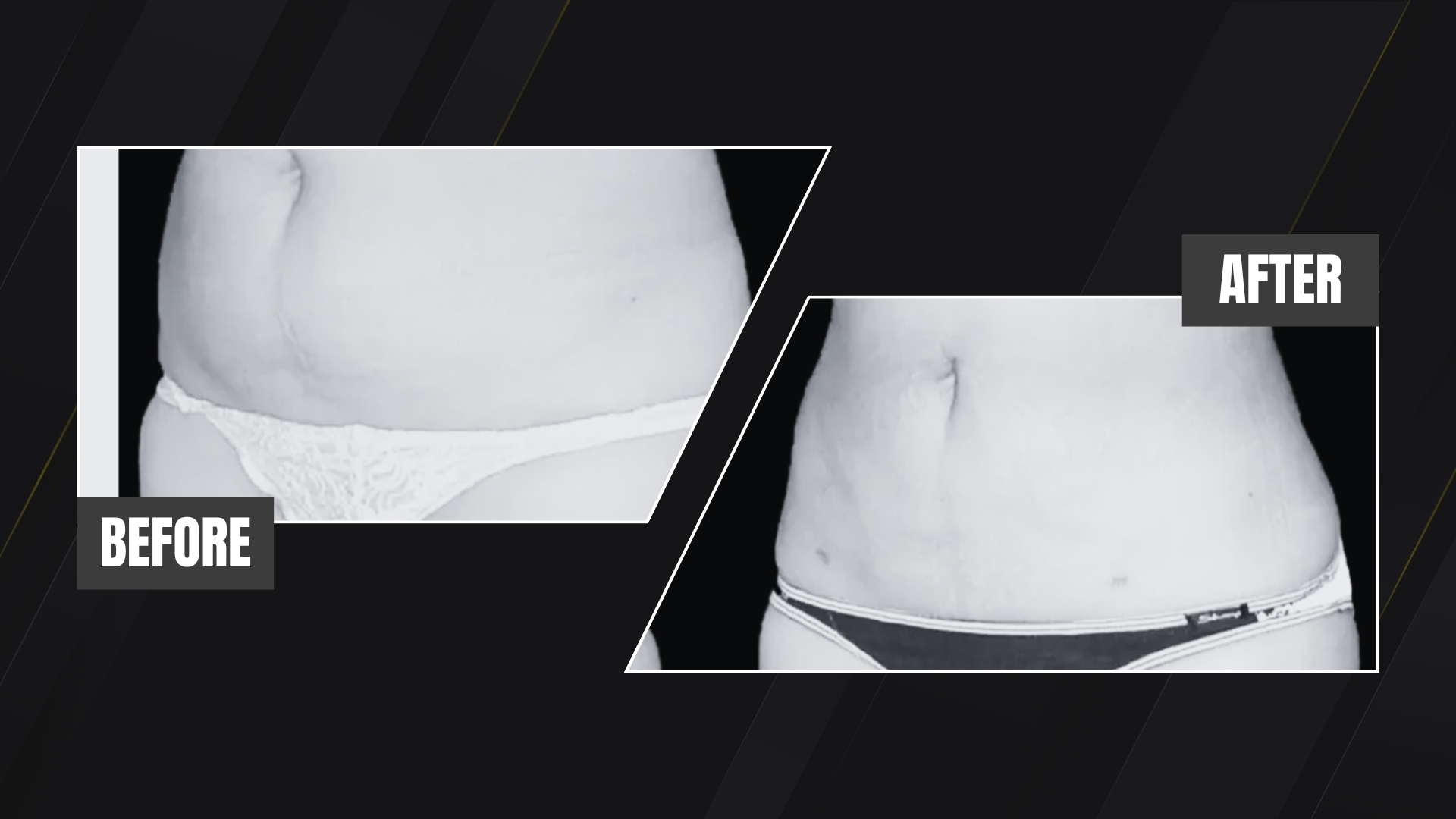
A tummy tuck scar is real, it’s permanent, and it requires commitment — both from your surgeon in the operating room and from you in the months that follow. But in the context of a tummy tuck before and after transformation, it’s almost always the last thing patients regret.
Because what they gain — a flatter stomach, improved contour, restored confidence, and a silhouette that finally reflects the work they’ve put into their body — is worth far more than a thin line hidden beneath their waistband.
If you’re considering tummy tuck surgery in Dubai, VASER liposuction Dubai, body contouring Dubai, or a mommy makeover Dubai, and want a surgeon who thinks as carefully about scar placement and healing as the final shape itself, I’d love to hear from you.
About the Author
Dr. Hardik Ganatra | Body Contouring Specialist | Plastic Surgeon | Dubai, UAE
10+ years experience. Specialties: High Definition Liposuction, Tummy Tuck, Body Contouring for weight loss patients, Brazilian Butt Lift, and VASER liposuction Dubai. Philosophy: every transformation should be life-changing, artistic, and natural. Works with patients regionally and globally.