Expert VASER Liposuction in Dubai
Transform Your Body with VASER Liposuction in Dubai
VASER liposuction adds an ultrasound step before fat removal — softening dense and fibrous fat so extraction is smoother and contouring is more precise. It’s a tool that earns its place in the right case. The surgery still depends on the plan and the hands behind it.
VASER liposuction is one of the most requested body contouring procedures in Dubai — and also one of the most misunderstood.
Many patients think VASER is the surgery. It isn’t. VASER is a tool used during liposuction. The surgery is still planned by the surgeon, marked by the surgeon, and executed by the surgeon. VASER adds one step — ultrasound emulsification — before the fat is removed.
In my practice, I use VASER when it genuinely adds value. Not because the name sounds advanced. Not because patients ask for it by name. Because in the right area, with the right patient, it makes fat removal smoother, less mechanically aggressive, and more controlled.
Technique always beats technology. A machine can soften fat. The surgeon still has to create the shape.
What Is Liposuction?
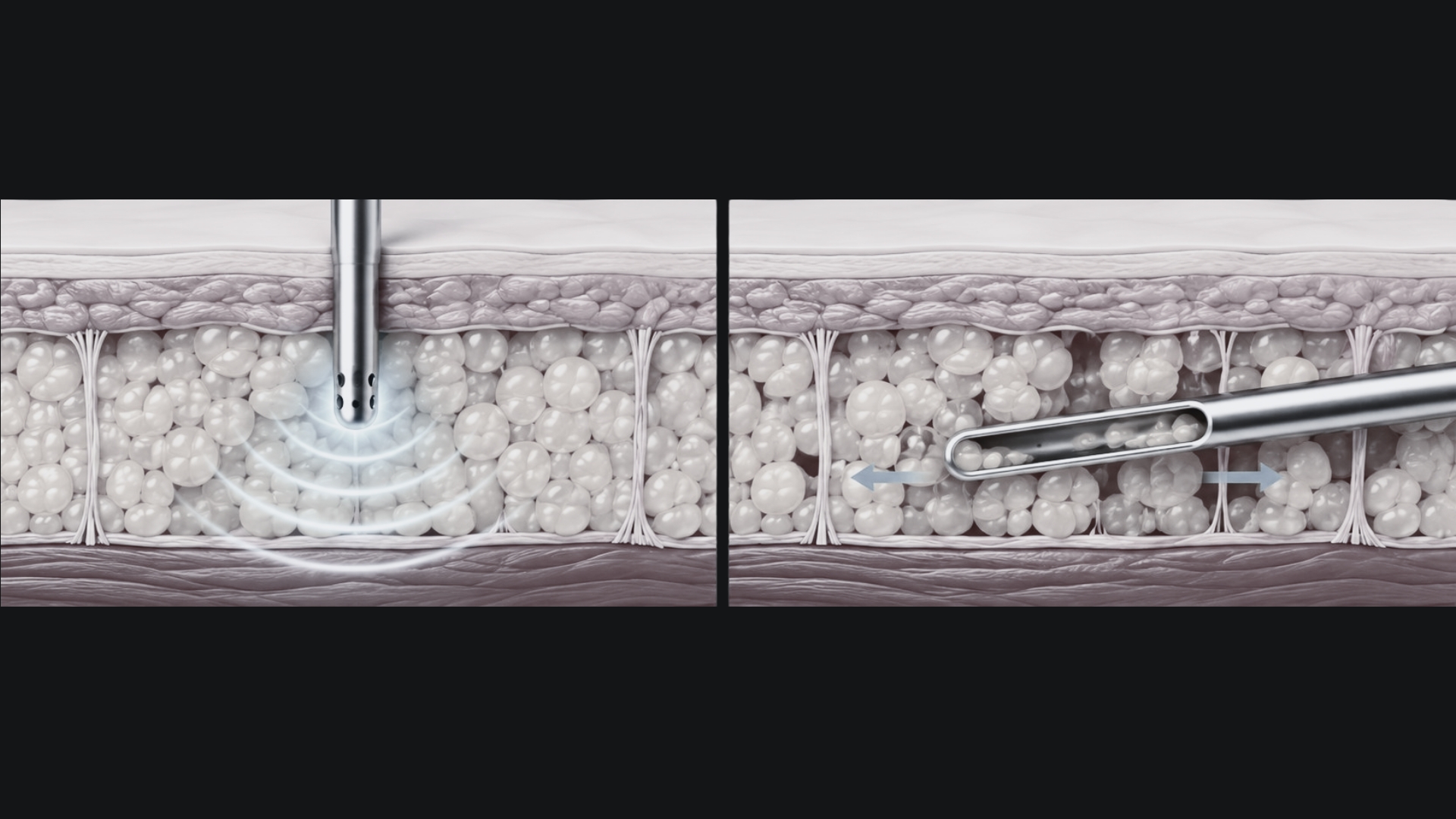
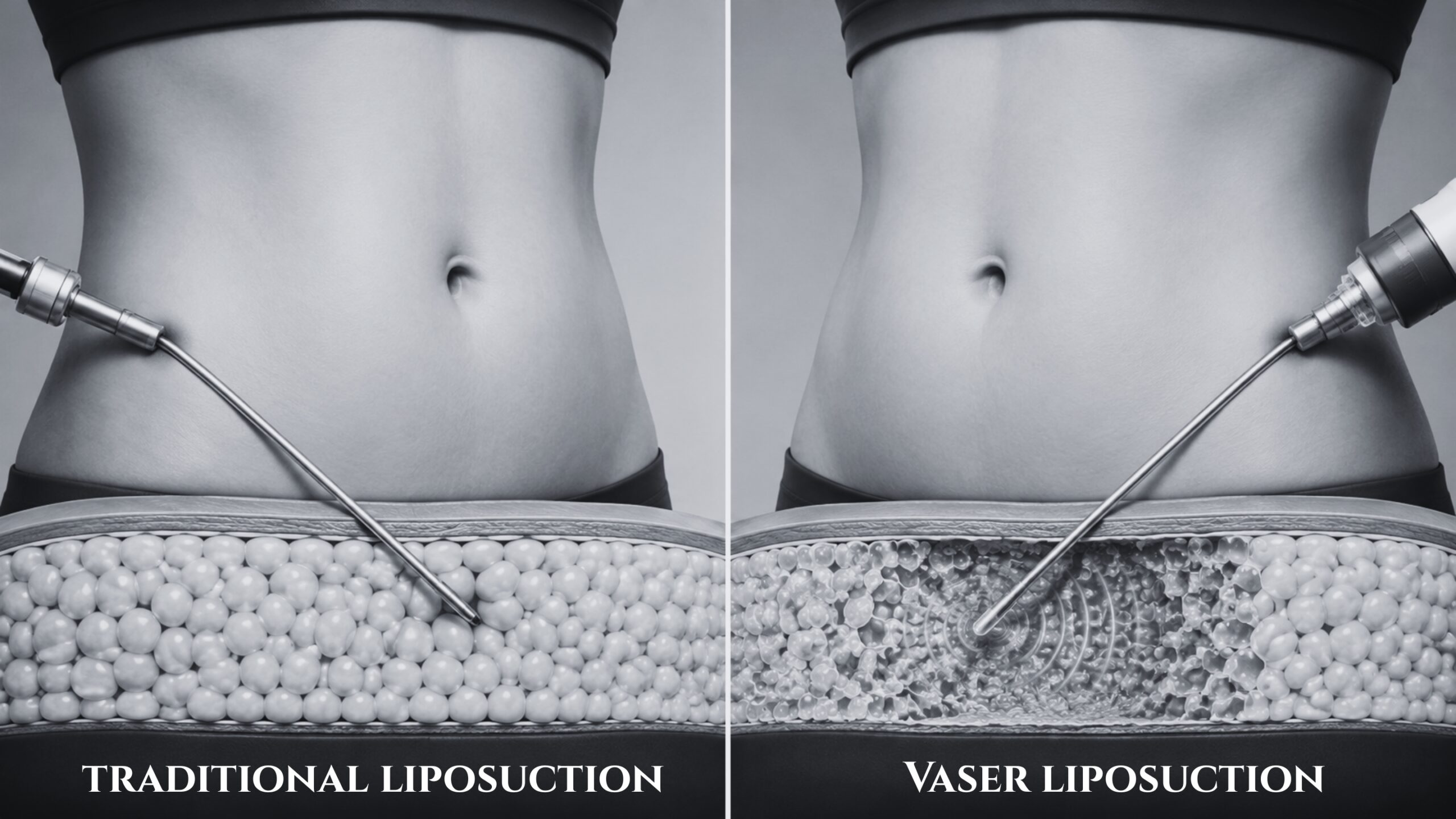
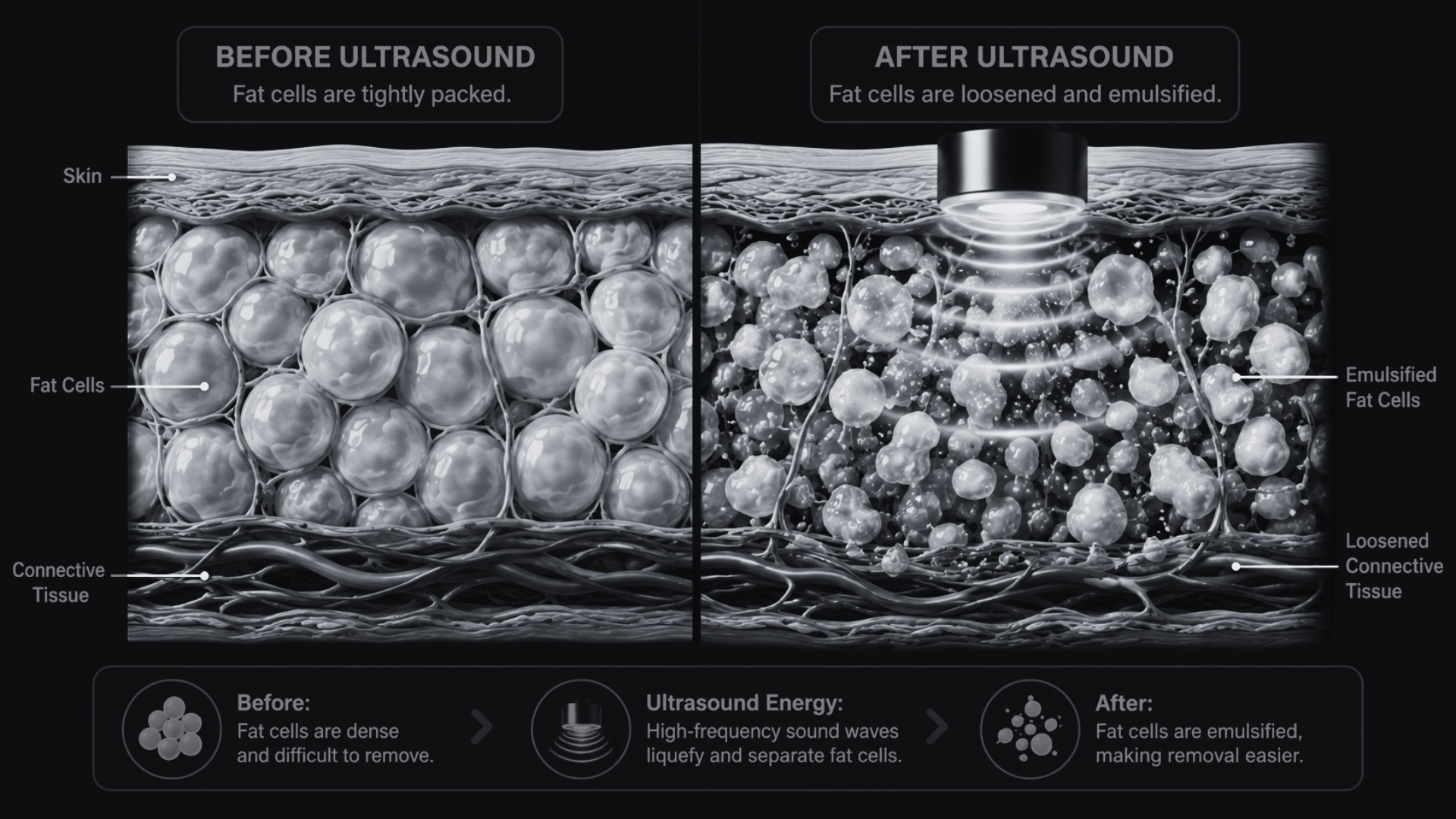
VASER liposuction is ultrasound-assisted liposuction. During the procedure, ultrasound energy is used to loosen and emulsify the fat before it is removed. The fat cells are separated from the surrounding connective tissue, which makes extraction smoother and more controlled in selected areas.
Patients sometimes describe this as “melting fat.” I understand why they say that, but medically I prefer a more accurate framing: VASER loosens fat cells from the tissue around them. It doesn’t dissolve them. They still come out through cannulas, like any other liposuction.
Once the fat has been loosened, thin cannulas are used to extract it and contour the treated area. This is where surgical skill, planning, and judgment determine the result. VASER makes one step of the process smoother. The surgeon still controls everything else.
VASER can be used for many body contouring procedures, including Lipo 360, back liposuction, arm liposuction, male chest liposuction, high-definition liposuction, thigh liposuction, and revision cases.
Why Choose VASER Liposuction?
I add VASER to many of my liposuction procedures because it can make fat removal smoother and less aggressive in the right situation. The fibroseptal network — the connective tissue under the skin — is better preserved with VASER than with mechanical cannula work alone. That matters for skin retraction after surgery.
VASER is particularly useful for:
- Dense or compact fat
- Fibrous areas such as the back, flanks, male chest, and revision zones
- High-definition liposuction where muscle borders need to be revealed carefully
- Lipo 360 and full torso contouring
- Arm liposuction where skin retraction matters
- Revision or correction liposuction where scar tissue is present
- Fat harvesting for fat transfer in selected cases
But I don’t use VASER as a gimmick or a selling point. I use it when it earns its place in the plan.
Technology helps. Technique decides.
VASER Liposuction vs Traditional Liposuction
Modern liposuction is not one machine doing one thing. Different technologies exist to make fat removal smoother, sculpting more precise, and skin contraction better. Which one you need depends on your fat distribution, skin quality, fibrosis, previous surgery, and the result you’re actually after.
That difference matters most in areas where fat is dense, fibrous, or needs more careful contouring. Back fat, for example, is often more compact than abdominal fat. Arm fat may need gentler handling to protect skin retraction. In revision cases, fat can be mixed with scar tissue that doesn’t respond well to blunt cannula work alone.
But VASER isn’t automatically better in every case. Straightforward abdominal liposuction in a patient with soft, easily removed fat doesn’t necessarily benefit from VASER. The decision is always case-specific.
VASER doesn’t replace liposuction. It adds a fat-softening step before it.
What VASER Actually Does to the Fat
VASER uses ultrasound energy to separate and loosen fat cells from the surrounding connective tissue. This makes fat easier to extract, and it tends to spare the fibroseptal network — the scaffolding beneath the skin that supports retraction after surgery.
The goal isn’t to destroy the tissue with aggressive suction. The goal is to make fat removal smoother, especially in areas where fat is fibrous, dense, or close to structures that need protecting.
This is why VASER earns its place in the back, arms, male chest, flanks, Lipo 360, and revision liposuction. In areas where fat has a tougher consistency, loosening it first changes how extraction feels and how controlled the shaping can be.
When fat comes out more smoothly, the surgery can often be less mechanically aggressive. That can help with recovery, swelling, and the quality of the result — particularly in areas where fine contouring matters.
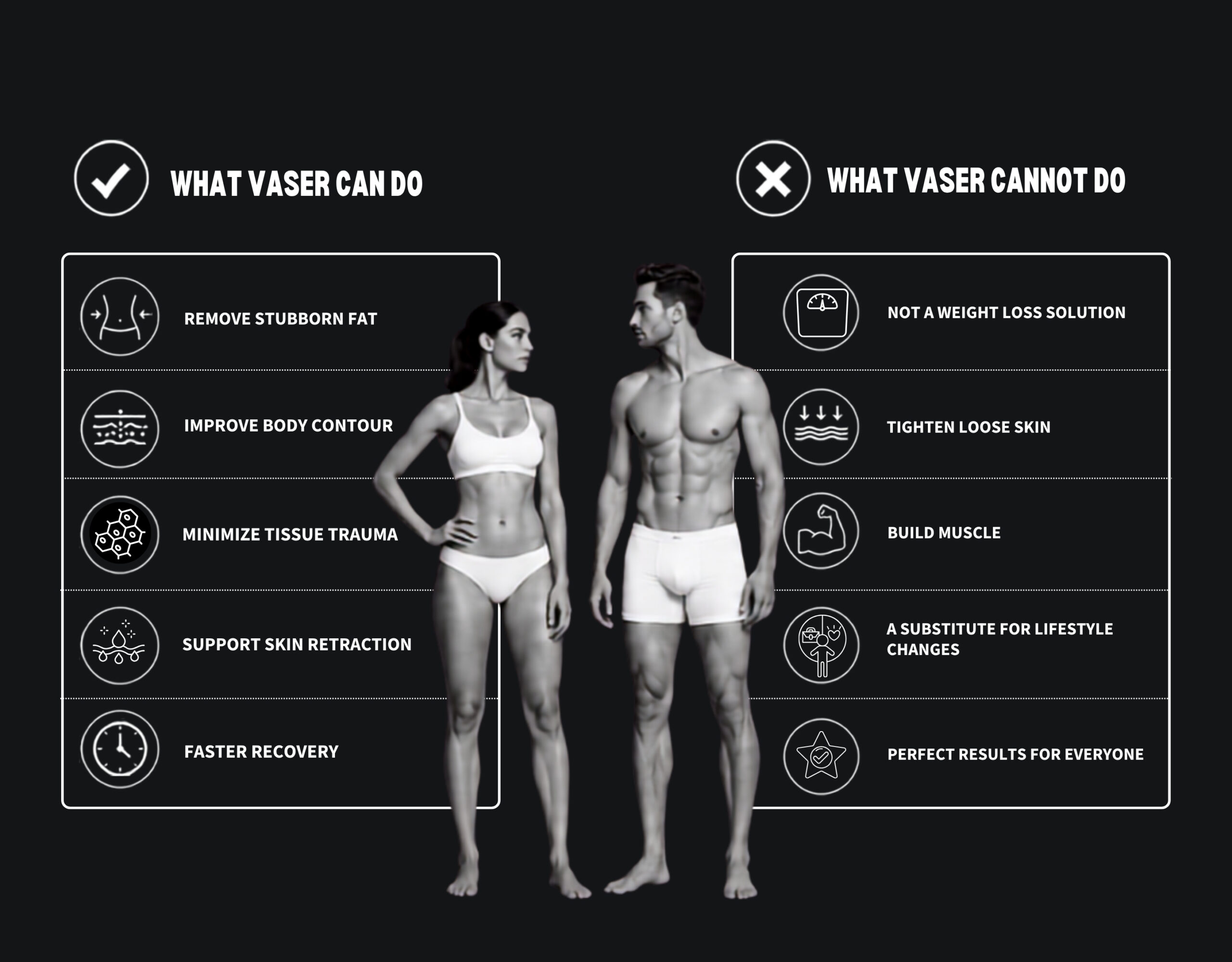
What VASER Cannot Do!
Just as important as knowing what VASER adds is knowing what it doesn’t do.
VASER cannot:
- Remove visceral fat around the organs
- Replace diet, exercise, or weight loss
- Remove significant loose skin
- Repair diastasis recti or muscle separation
- Replace a tummy tuck when a tummy tuck is clearly indicated
- Treat cellulite properly
- Guarantee skin tightening in poor-quality skin
- Fix the wrong diagnosis
- Protect a patient from poor surgical technique
If the main problem is visceral fat, weight loss comes first. If the main problem is loose skin, the conversation shifts to J-Plasma, BodyTite, or a lifting procedure. VASER is a fat-softening tool. It works when the plan is correct. It can’t rescue the wrong plan.
Does VASER Tighten Skin?
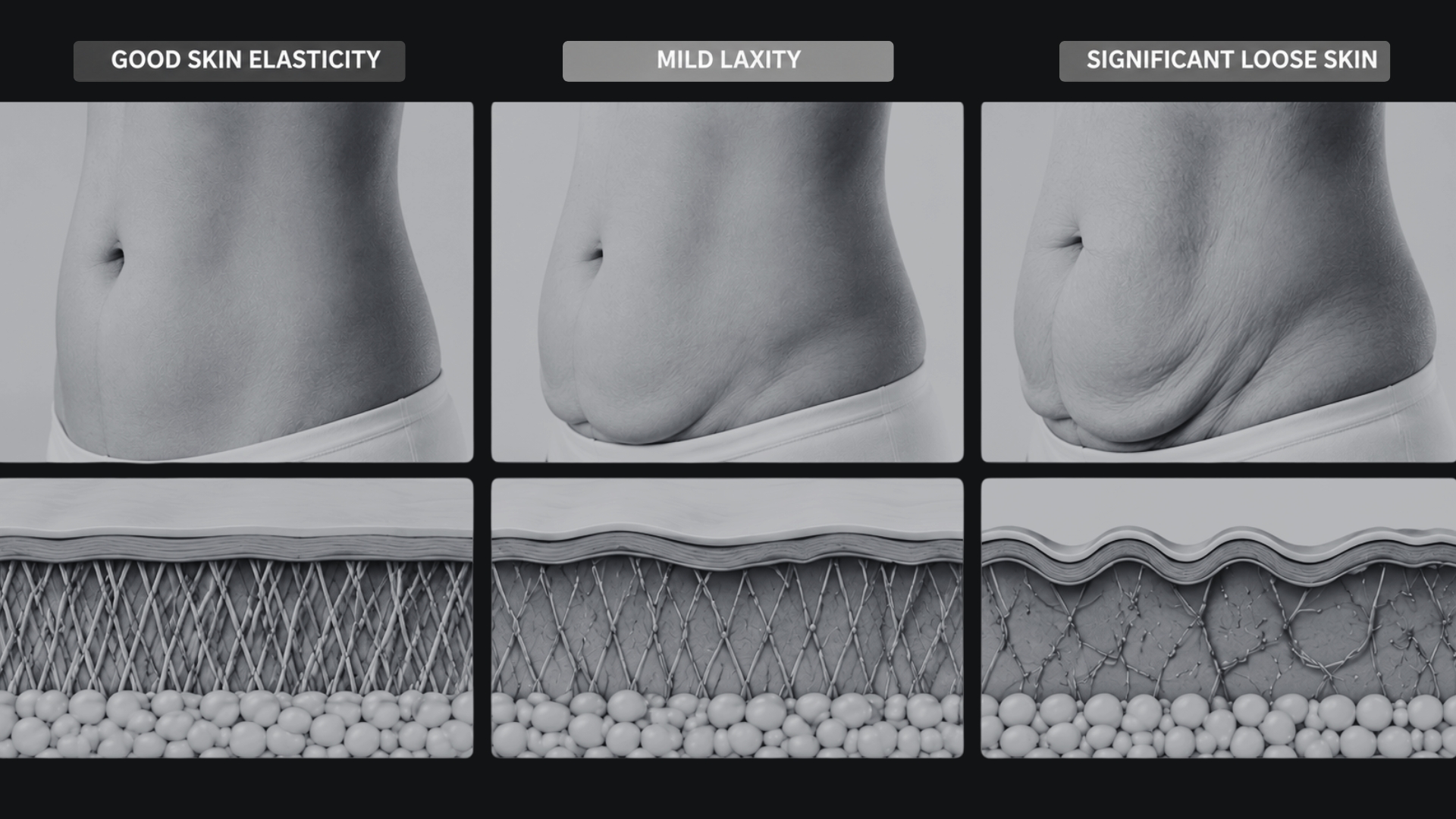
Not directly — not the way J-Plasma or BodyTite do. What VASER can do is help preserve the fibroseptal network beneath the skin, which is the connective tissue responsible for skin retraction after fat removal. Preserving that network gives the skin a better chance of settling well after surgery.
That’s why, in selected patients with good skin quality, VASER may support better skin settling compared to more aggressive mechanical liposuction.
But that has real limits. If the skin is loose, thin, stretched after weight loss, or significantly damaged, VASER alone won’t tighten it. The skin envelope needs either a device that actively contracts it — J-Plasma, BodyTite — or surgical removal when laxity is significant.
Skin quality still gets a vote.
VASER vs BodyTite vs Renuvion (J‑Plasma) vs Endolift vs Tummy Tuck: What's the Difference?
Patients often confuse fat-removal technologies with skin-tightening procedures. They solve different problems.
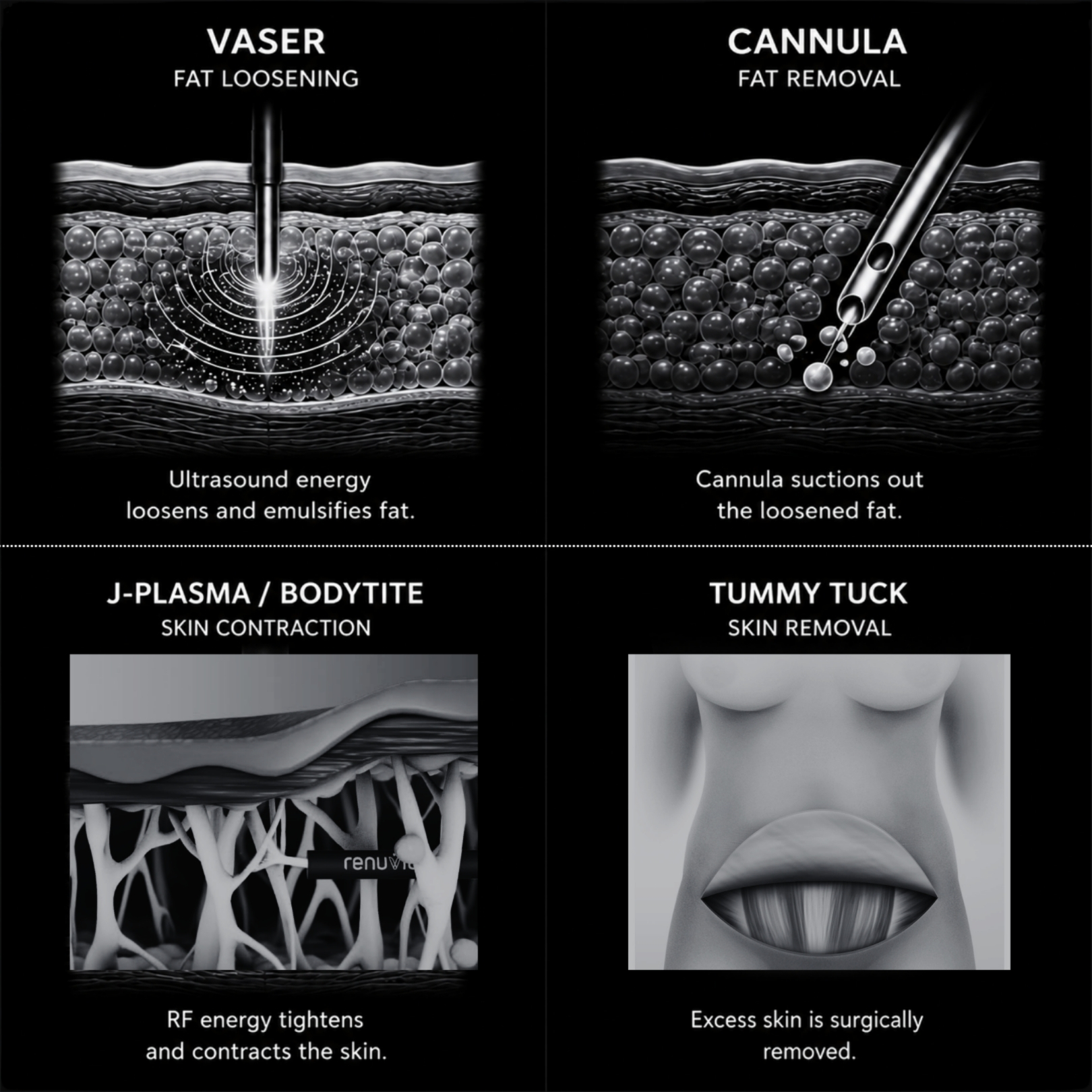
- VASER — softens and emulsifies fat before extraction. It is a fat tool, not a skin tool.
- J-Plasma / Renuvion — applied under the skin after fat removal to help the skin contract. Best for mild to moderate skin laxity.
- BodyTite — radiofrequency-assisted liposuction that combines fat removal with skin tightening in selected patients.
- Endolift — minimally invasive laser-based skin tightening for smaller areas with mild laxity. Not the same as liposuction.
- Tummy tuck — surgical removal of loose skin and, when needed, repair of muscle separation. No device or technology replaces it when skin removal is what’s actually needed.
Mixing these up leads to wrong expectations. A patient who needs a tummy tuck and chooses VASER because it sounds less invasive is setting themselves up for disappointment — and sometimes a worse result than they started with.
When Do I Choose VASER?
I choose VASER when I genuinely feel it improves the surgery. Not because the name sounds impressive. Not because a patient asked for it by brand. Because the anatomy of that particular case benefits from having the fat loosened before it’s removed.
In my practice, VASER is commonly useful for:
- Lipo 360 and full torso contouring
- Back liposuction, especially dense bra-roll and lower-back fat
- liposuction, where skin support and smoothness matter
- Male chest liposuction and gynecomastia contouring
- High-definition liposuction
- Revision liposuction and correction cases
- Fibrous fat or previously operated areas
- Areas where fat extraction needs to be smoother and less mechanically aggressive
The consultation decides this. Not the brochure, not the trend, not the machine name.
VASER for High-Definition Liposuction
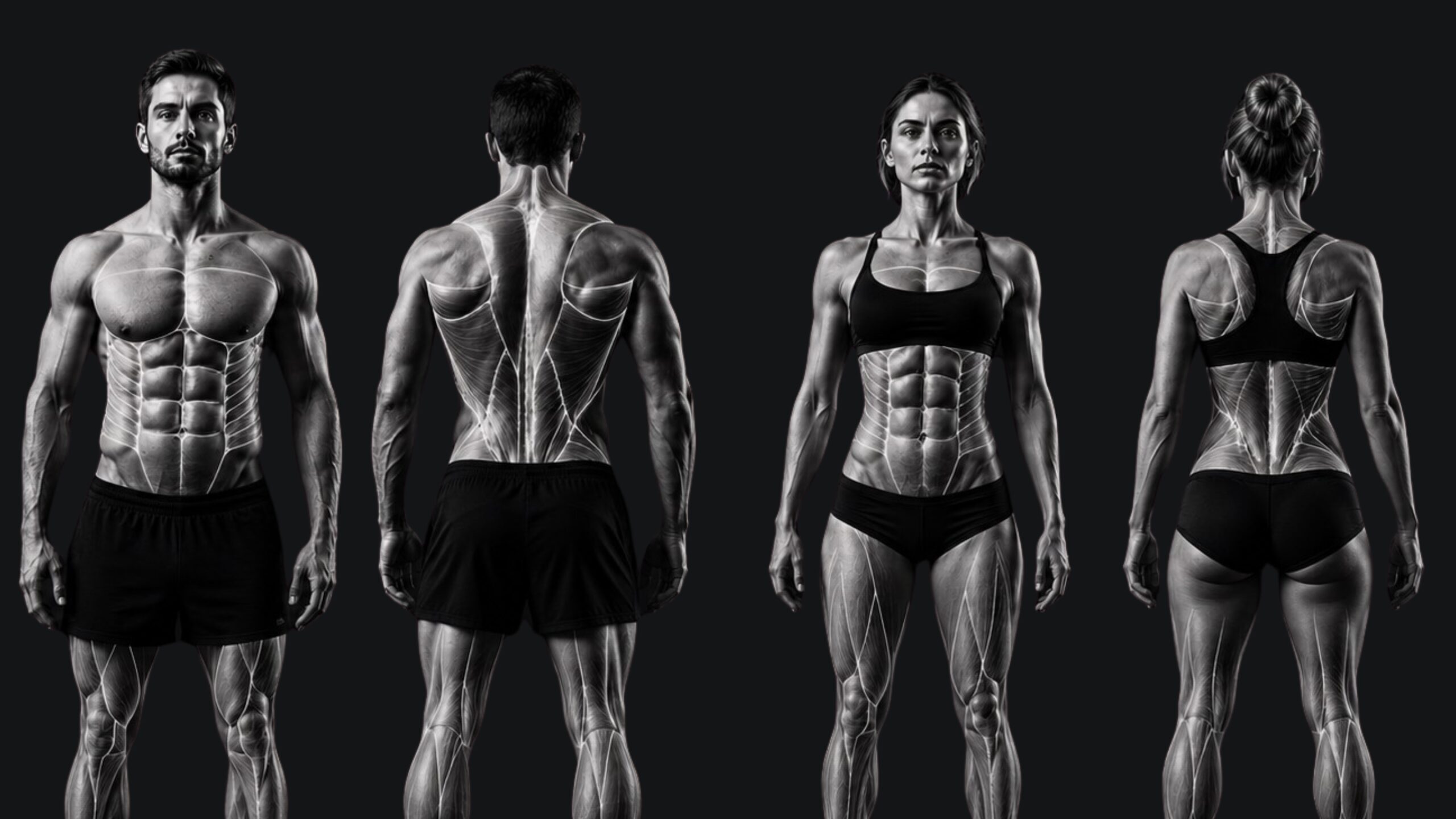
VASER is helpful in high-definition liposuction because it can loosen fat around muscle borders — the areas where definition needs to be revealed rather than simply removed. Having softened fat in those zones makes precise shaping more controlled and the transition between defined and smooth areas cleaner.
But high-definition liposuction isn’t just VASER. It’s markings, anatomy, surgical planning, controlled fat removal, and an understanding of how the body should look from every angle. VASER helps with one step of that. The rest comes from experience and aesthetic judgment.
Having been involved in bodybuilding and fitness for many years, I look at the body in terms of muscle lines, shadows, proportions, and symmetry before I ever pick up a cannula. High-definition liposuction is not about drawing lines. It is about revealing anatomy.
VASER for Revision Liposuction
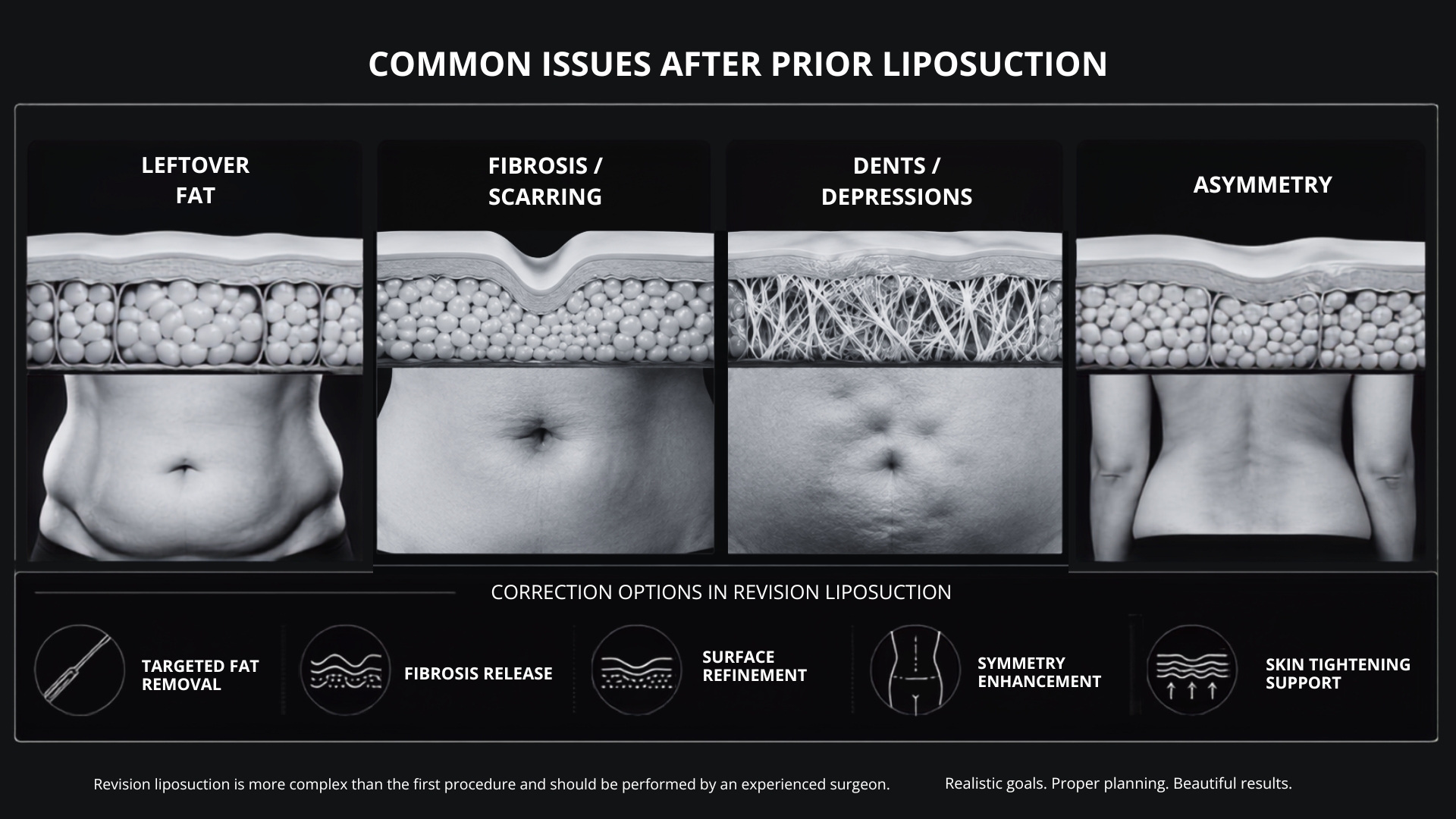
VASER earns a particularly useful place in revision liposuction because previously operated tissue doesn’t behave like untouched tissue. There may be scar tissue, fibrosis, adhesions, or areas where fat was removed unevenly. Standard mechanical liposuction in these areas can be rougher than the tissue tolerates well.
VASER can help separate leftover fat from scarred tissue, making extraction smoother and more controlled in correction cases. It can also help break up areas of fibrosis that are causing irregularity.
But revision is never just “do more liposuction.” Sometimes the answer is fat removal. Sometimes it’s release of fibrosis. Sometimes it’s fat grafting into dents. Sometimes a combination. VASER is a helpful tool in that process — the plan is what determines the outcome.
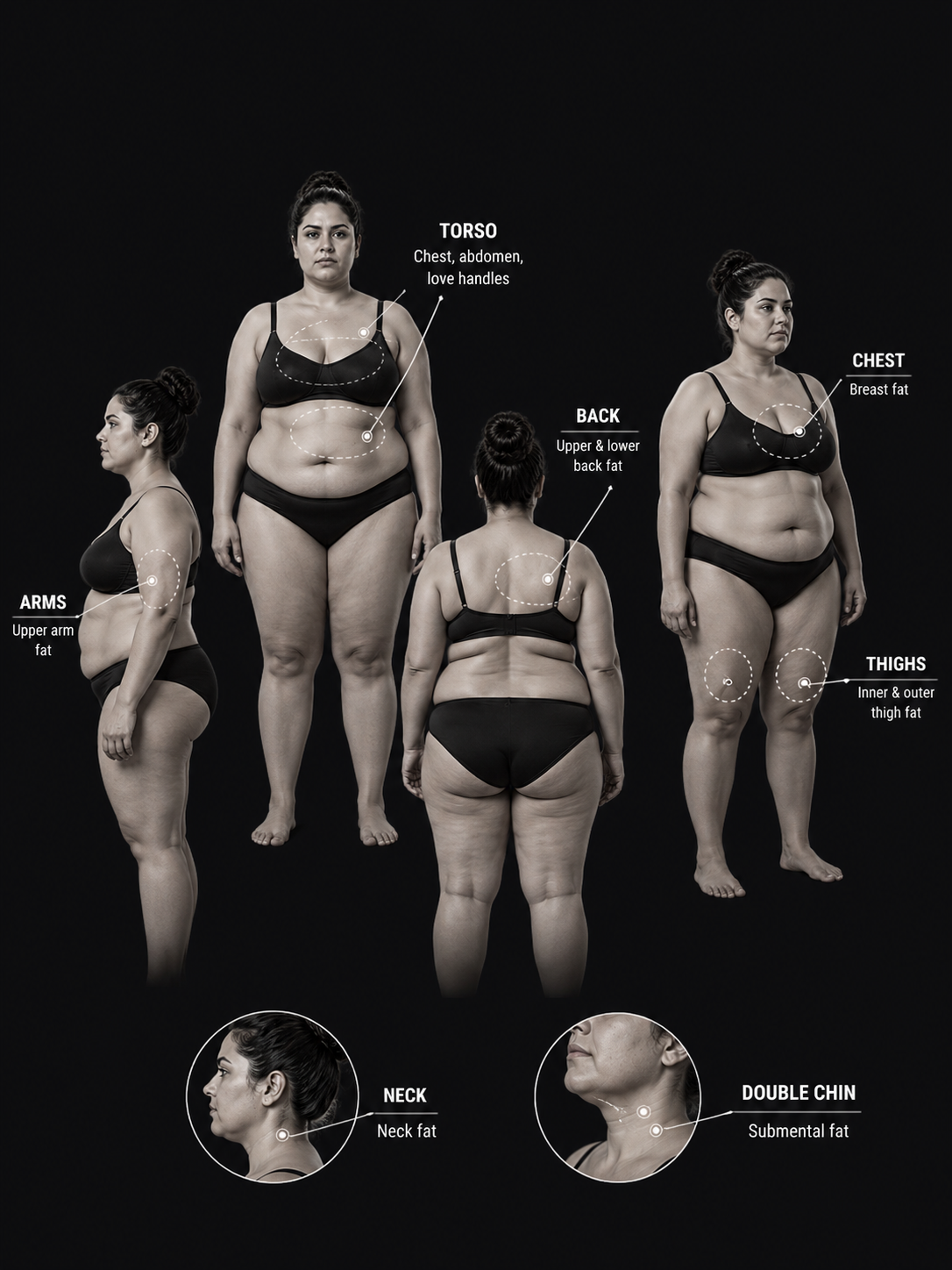
VASER Liposuction Areas Treated
VASER can be used in many areas, but each area has its own rules. Arms are not treated like the back. The neck is not treated like the abdomen. The approach, depth, and technique change based on the anatomy.
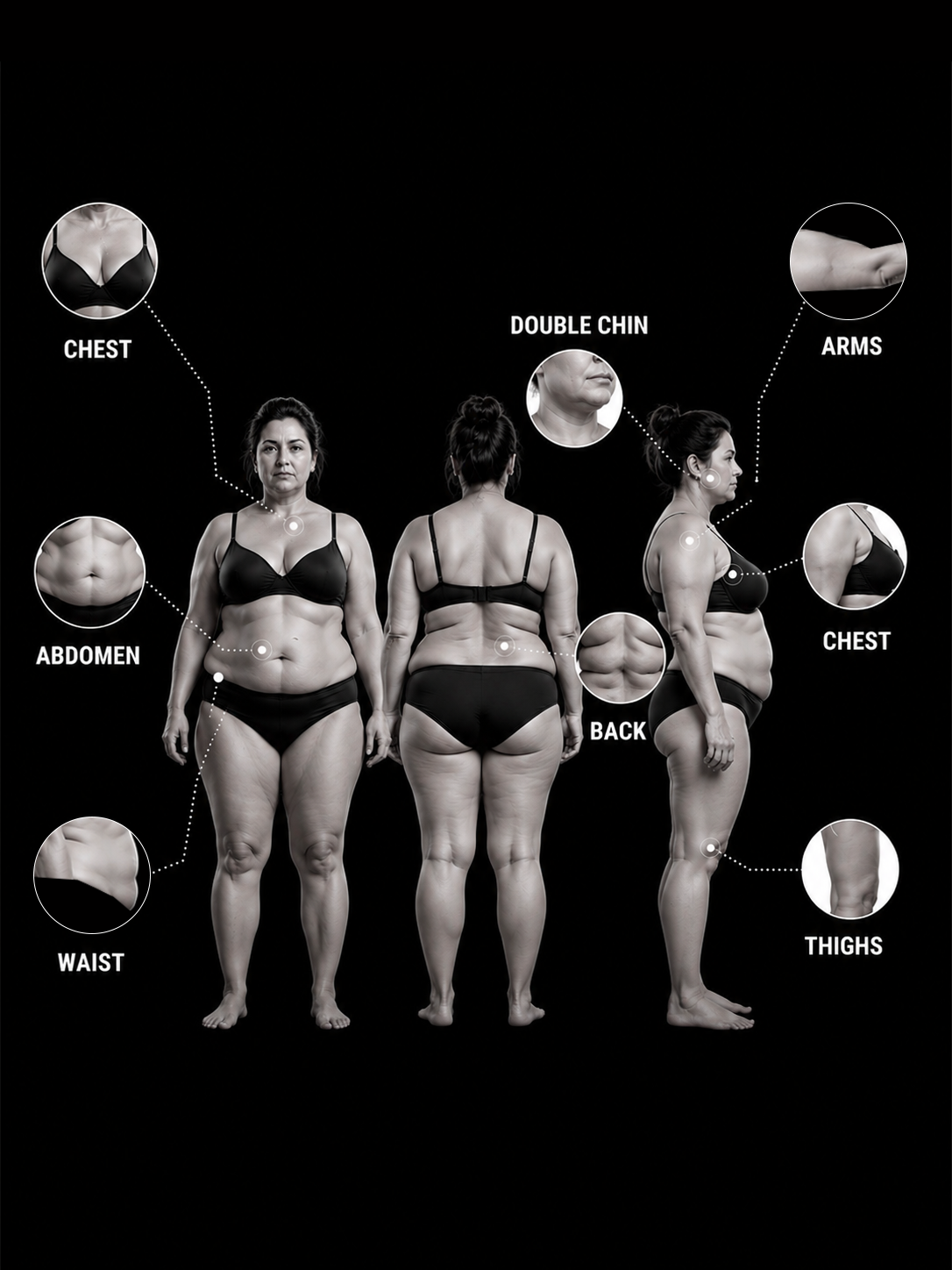
Common VASER liposuction areas include:
- VASER arm liposuction
- VASER Lipo 360
- VASER back liposuction
- VASER abdomen and waist liposuction
- VASER male chest liposuction with gland removal when needed
- VASER thigh liposuction
- VASER double chin liposuction
- VASER revision liposuction
The exact plan depends on fat thickness, skin quality, previous surgeries, body goals, and whether skin tightening or skin removal is part of the picture. That assessment happens at consultation, not from a list.
How Is VASER Liposuction Performed?
VASER liposuction follows a structured surgical sequence. The exact details shift depending on the area, but the basic steps are consistent.
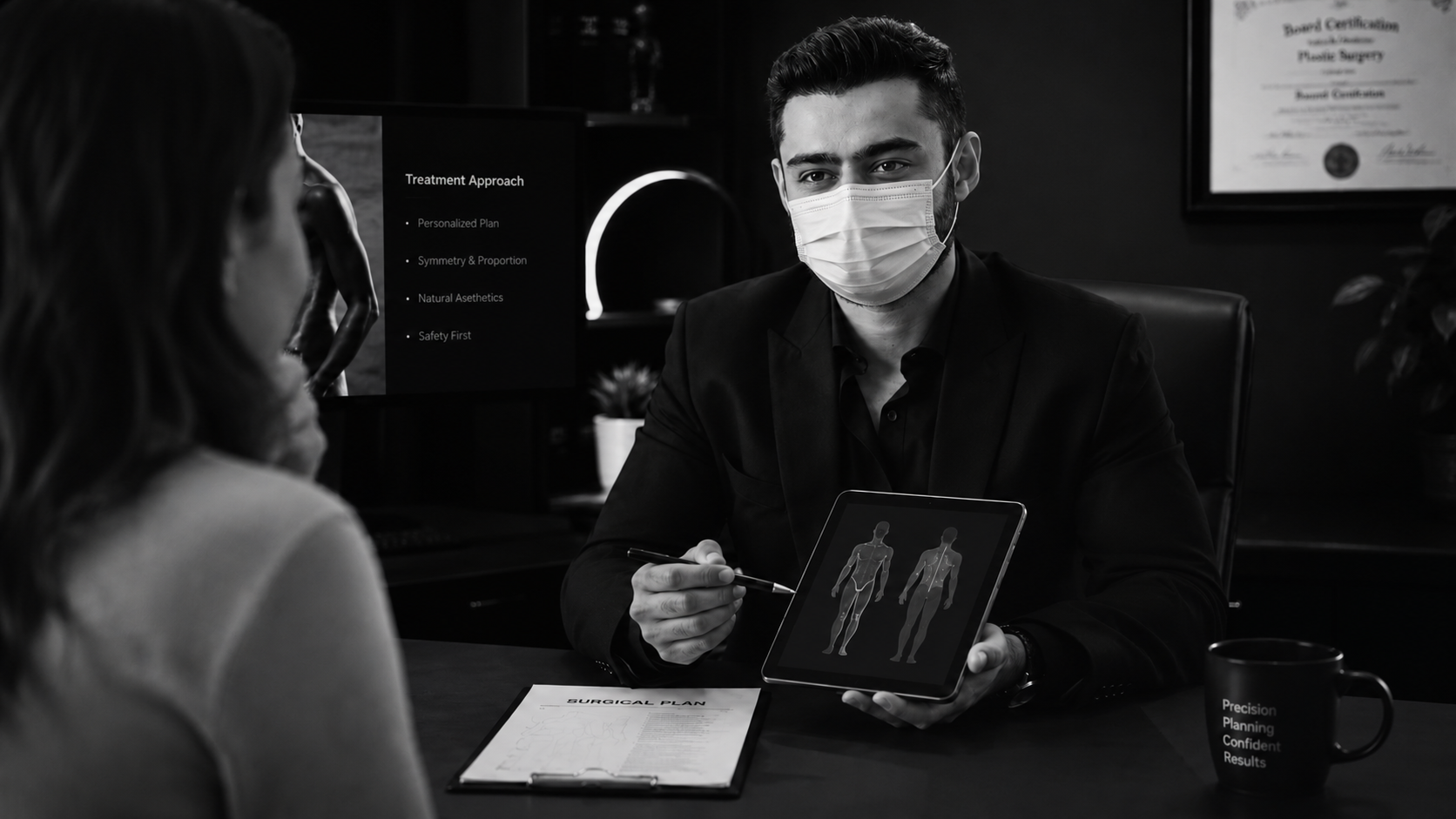
Step 1: Consultation and Diagnosis
Before anything else, I assess whether the problem is fat, loose skin, visceral fat, muscle separation, fibrosis, or a combination. VASER is added to the plan only if it makes sense for the anatomy — not as a default.
Step 2: Standing Markings
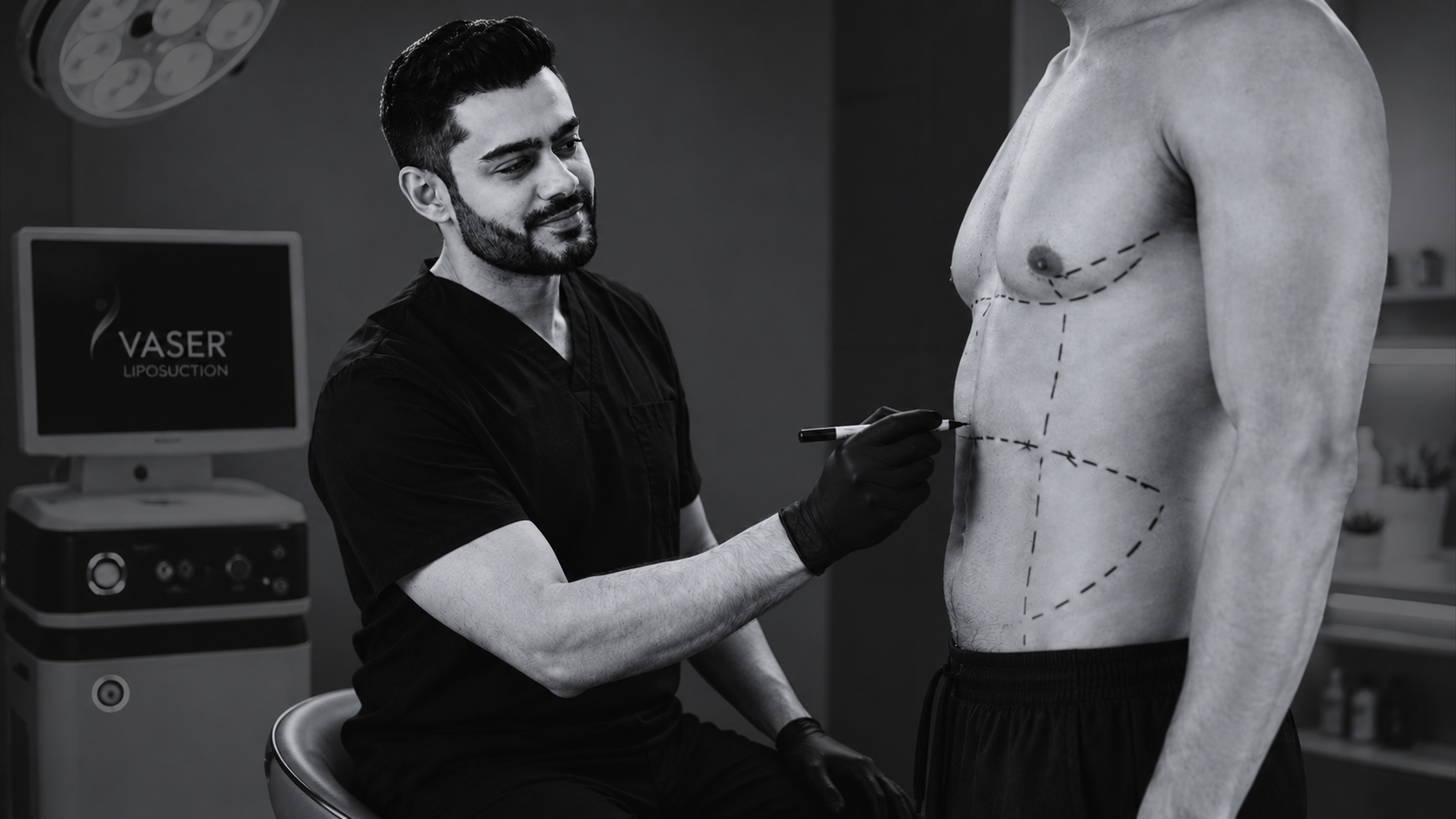
The treated areas are marked while the patient is standing. Fat pockets, body shadows, asymmetries, muscle borders, and transition zones are all mapped before surgery begins. Markings are where the result is first designed.
Step 3: Anaesthesia
Small areas may be done under local anaesthesia or sedation. Larger cases — Lipo 360, high-definition liposuction, multi-area procedures — are done under general anaesthesia in a hospital setting. The anaesthesia decision is made during consultation based on the extent of the plan and patient preference.
Step 4: Fluid Infiltration
A special fluid is infiltrated into the fat layer. It helps reduce bleeding and bruising, contains lidocaine for pain control and adrenaline to limit blood loss. This step makes surgery safer and recovery more comfortable.
Step 5: VASER Ultrasound Emulsification
VASER energy is then used to loosen and emulsify the fat. This step usually adds around 15 to 30 minutes to a standard liposuction procedure. The energy is applied at the correct depth and power for the specific area — not uniformly, not blindly.
Step 6: Fat Aspiration
After the fat is loosened, cannulas are used to remove it and create the contour. This is where the actual shaping happens. VASER prepared the fat. The surgeon still decides what comes out, what stays, and what the final shape will be.
Step 7: Skin Tightening When Needed
If skin laxity is present, J-Plasma or BodyTite may be added in selected patients at this stage. If skin is significantly loose, a lift or tummy tuck may be the more appropriate answer — and that conversation should have happened at consultation, not in the operating room.
Step 8: Incisions, Drainage, Garments, and Massage
Incisions are kept small and hidden wherever possible. Some dependent incisions may be left open temporarily for drainage in the first day or two — this is planned, not a complication. Compression garments are applied immediately after surgery.
Recovery After VASER Liposuction
VASER can make the surgery smoother in selected cases, but recovery still needs to be respected. The body has had surgery. Swelling, bruising, soreness, and tightness are all normal parts of the process.
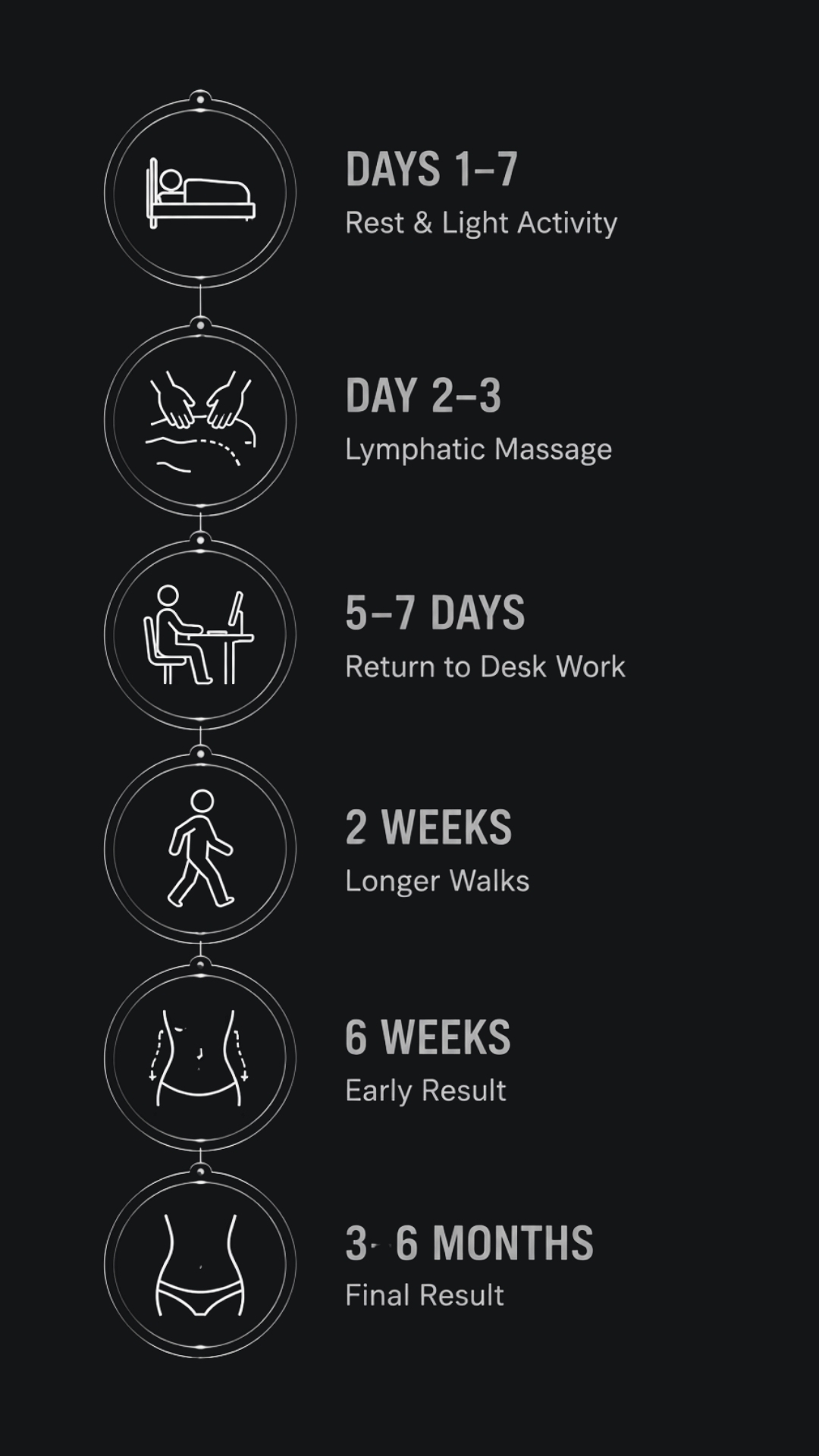
Most patients rest and stick to light activity for the first week. Walking, showering, eating normally, and moving around the house is fine. Most patients can return to desk work or work from home within 5 to 7 days depending on the area treated.
Around two weeks in, I usually advise longer walks or light treadmill use so patients start feeling more active. Gym workouts and more physical activity resume gradually with clearance at follow-up — usually around two to three weeks.
A good visible result is usually seen around 6 weeks. Final results take around 3 to 6 months, sometimes longer in high-definition cases, revision surgery, or when J-Plasma was added.
- Garments After VASER Liposuction — I usually advise compression garments full-time for 4 to 6 weeks. After that, garment use may continue for another 2 to 4 weeks depending on swelling, the area treated, and how the tissue is settling. Garments are not glamorous, but they matter.
- Lymphatic Massage After VASER Liposuction — I strongly recommend lymphatic massages after VASER liposuction. They usually start from day 2 or day 3, and I advise at least 10 to 15 sessions on an alternate-day basis. They help with swelling, stiffness, and comfort — and they genuinely make the recovery more manageable.
How Long Does VASER Liposuction Take?
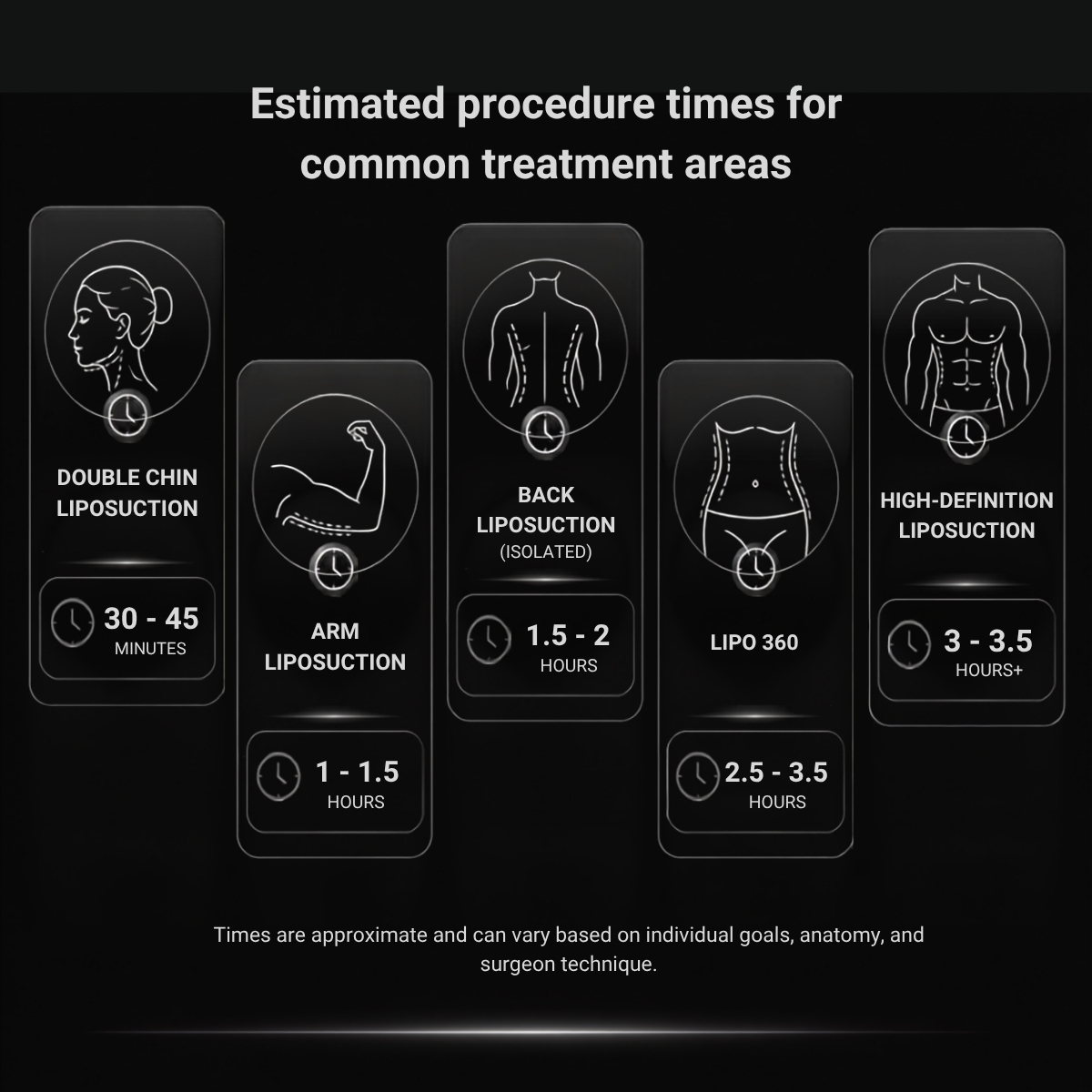
VASER usually adds around 15 to 30 minutes to a traditional liposuction procedure. The total time depends on the area, the number of zones, the amount of fat, and whether skin tightening or other procedures are combined.
- Double chin liposuction: approximately 30 to 45 minutes
- Back liposuction (isolated): 1.5 to 2 hours
- Lipo 360: 2.5 to 3.5 hours
- High-definition liposuction: 3 to 3.5 hours, sometimes longer for extensive multi-area cases
Larger or combined cases require general anaesthesia and often a one-night hospital stay, with review before discharge the following morning.
VASER Liposuction Cost in Dubai
The cost depends on the area treated, the number of areas, anaesthesia, hospital setup, and whether J-Plasma or other additions are part of the plan. All prices below are starting-from figures in AED — your exact quote is confirmed after consultation, once the full plan is clear.
| VASER arm liposuction |
|
| VASER Lipo 360 |
|
| VASER back liposuction |
|
| VASER Double Chin Liposuction |
|
| VASER face and neck liposuction |
|
| VASER Thigh Liposuction | Starting from AED 30,000 |
Final pricing is always confirmed after consultation because no two cases are the same. The plan drives the price, and the plan depends on the anatomy.
Risks and Side Effects of VASER Liposuction
VASER liposuction is generally safe when performed by an experienced surgeon in a proper medical facility — but it’s still surgery, and every surgery carries risks that should be understood before proceeding.
Common temporary effects include swelling, bruising, soreness, tightness, numbness, fluid leakage, temporary hardness, temporary lumpiness, and temporary asymmetry during healing.
Possible risks include infection, bleeding, seroma, fibrosis, contour irregularities, loose skin, asymmetry, pigmentation changes, scarring, delayed healing, and the need for revision surgery.
VASER can cause burns if it is used incorrectly or too aggressively. Burns can happen near the incision site or away from it, and they can lead to scarring, pigmentation, or irregularity. This is why the energy settings, technique, and speed of application matter. VASER is powerful. It has to be controlled.
Risk is reduced with careful patient selection, correct technique, conservative energy use, proper compression, lymphatic massage, and close follow-up. The surgeon still has to think at every step.
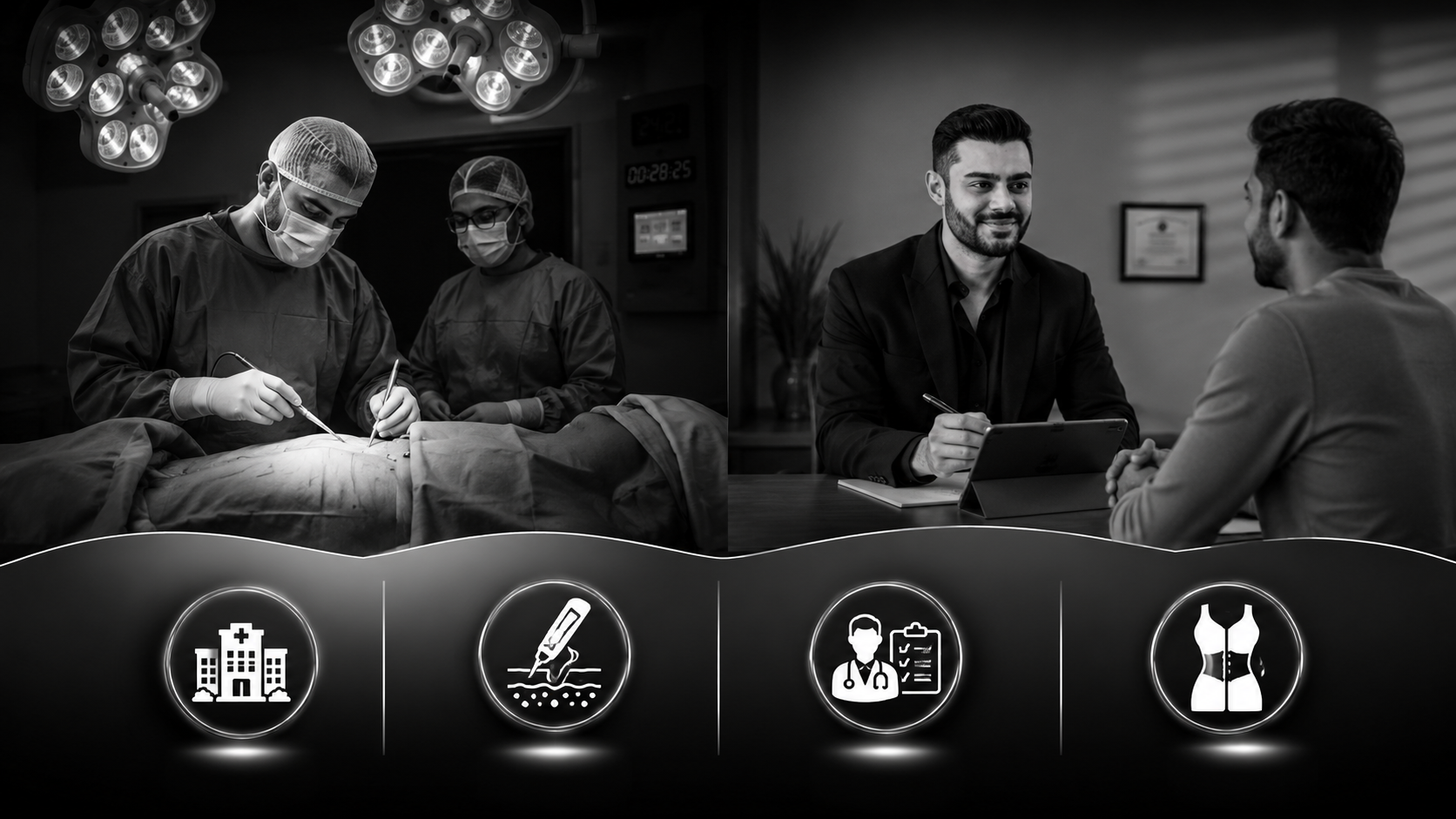
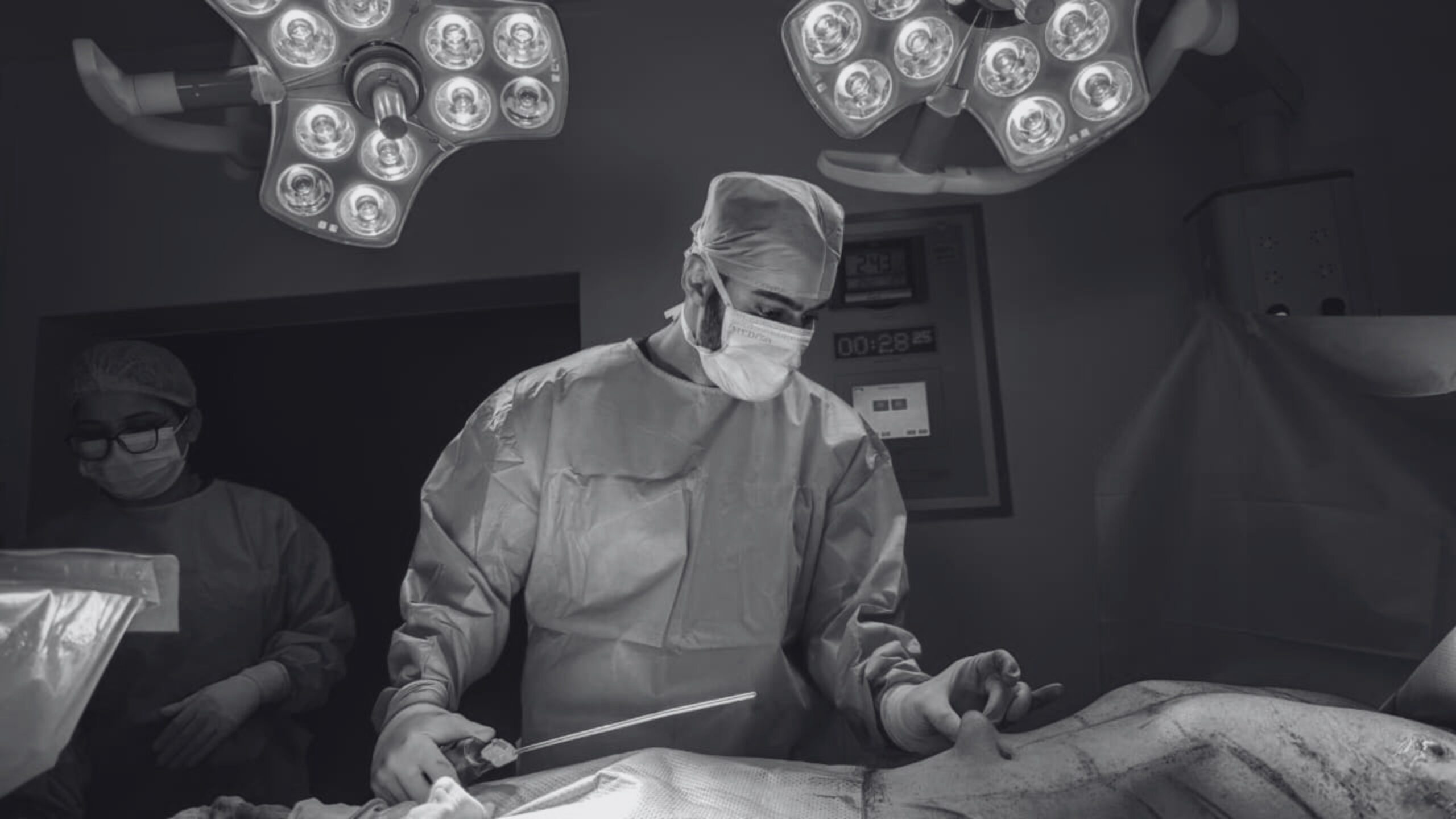
Why Choose Dr. Hardik Ganatra for VASER Liposuction in Dubai?
Body contouring isn’t one of the things I do. It’s the thing I do.
- Exclusive focus on body contouring — VASER liposuction, Lipo 360, high-definition liposuction, back liposuction, arm liposuction, male chest liposuction, revision liposuction, J-Plasma, and post-weight-loss body contouring. That’s the entire practice.
- Background in fitness and bodybuilding — I assess the body in terms of muscle lines, waistline, proportion, shape, and balance. That perspective changes how high-definition and body contouring cases are planned.
- VASER is a tool, not the hero — the plan is. The markings are. The judgment is. The anatomy drives the decision, not the machine name or what a patient read online.
- Over 50% of cases are revision or correction — patients come to me after previous surgeries with lumps, dents, asymmetry, fibrosis, or results that didn’t match expectations. That experience shapes how first-time cases are planned.
- Hospital-based surgery — all procedures are performed in a proper hospital setup. Patient safety is not negotiable regardless of procedure size.
Technique always beats technology. Not overdone. Not artificial. Just better.
Liposuction
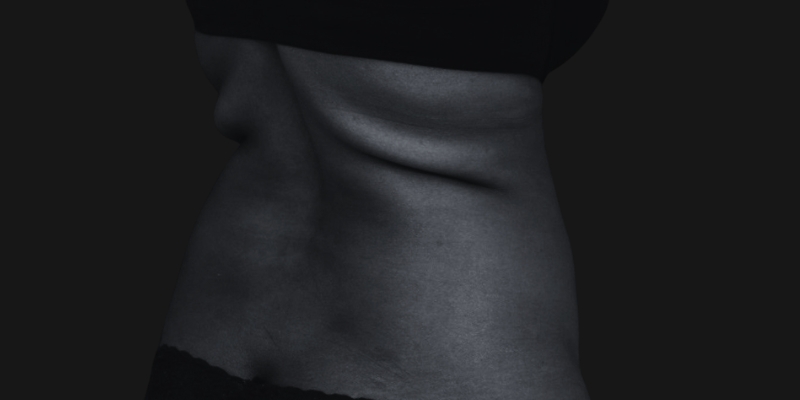
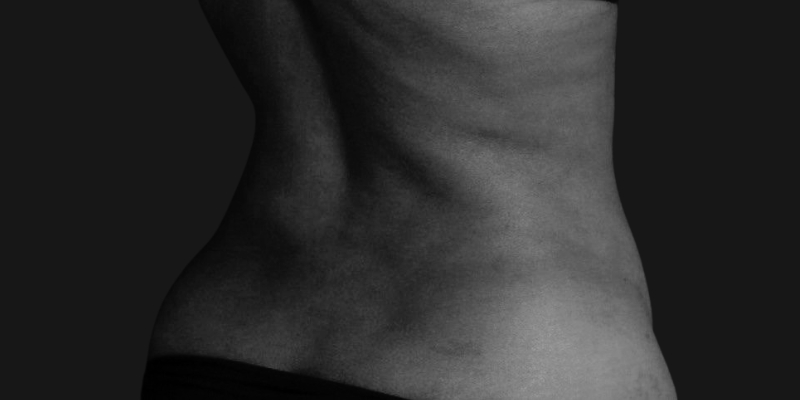
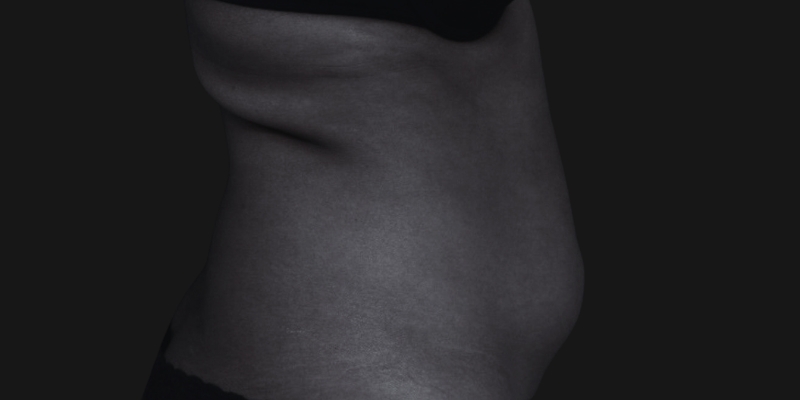
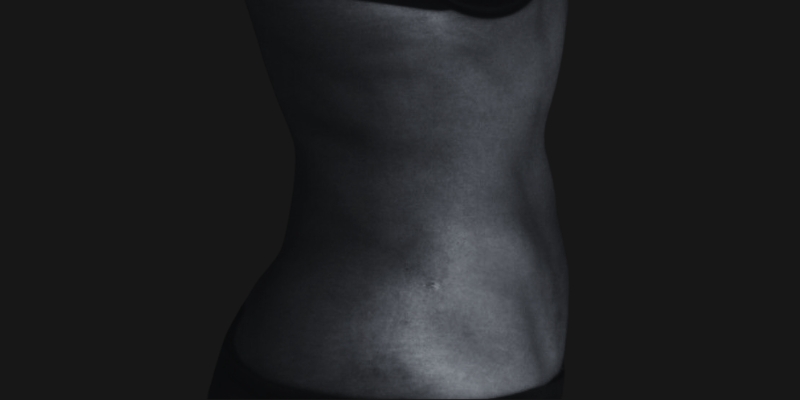
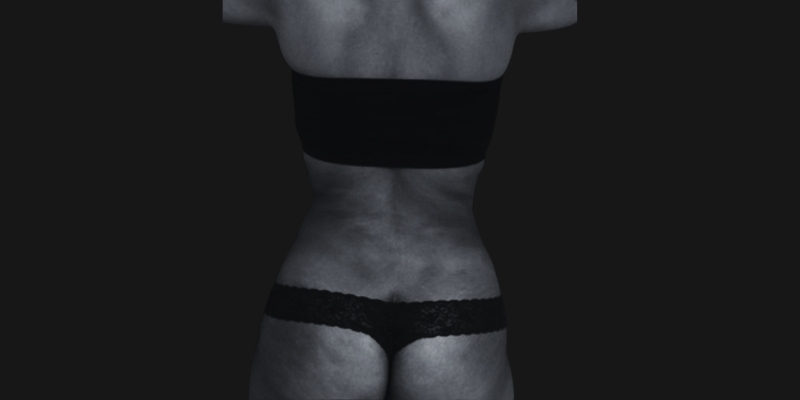
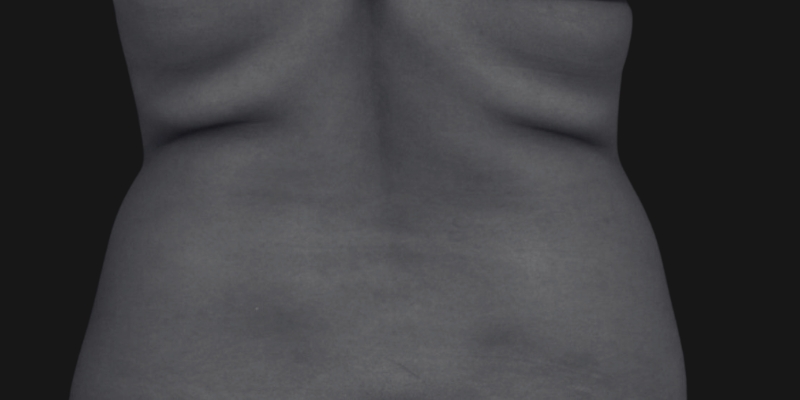
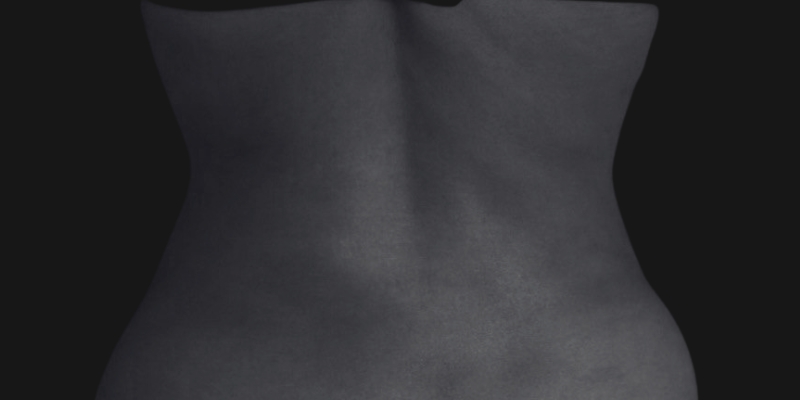
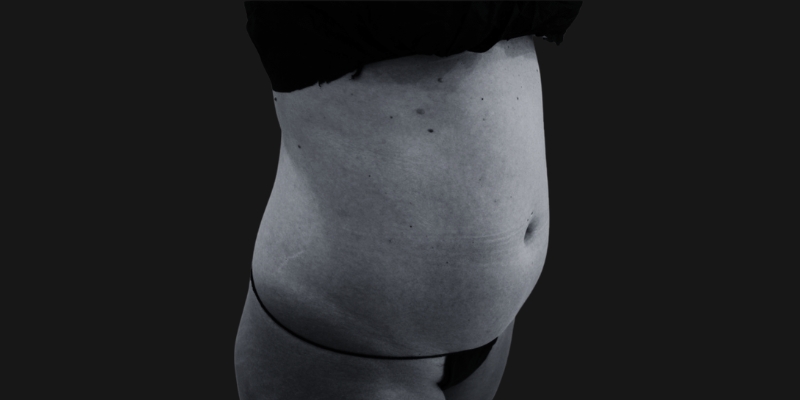
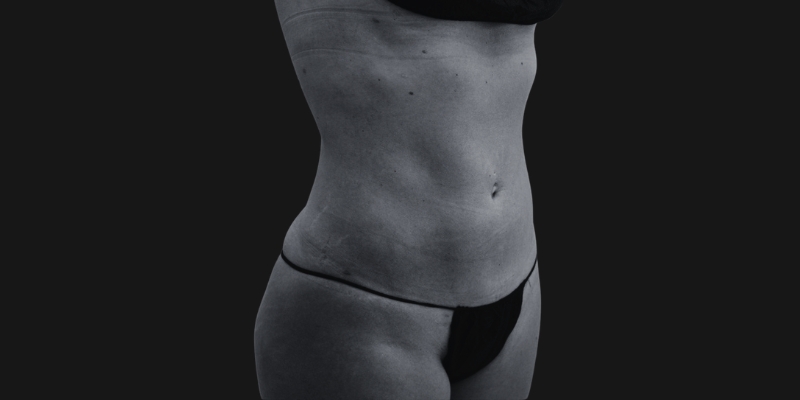
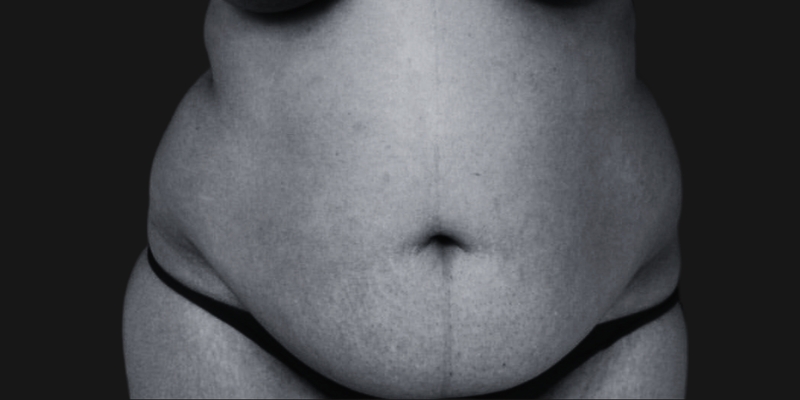
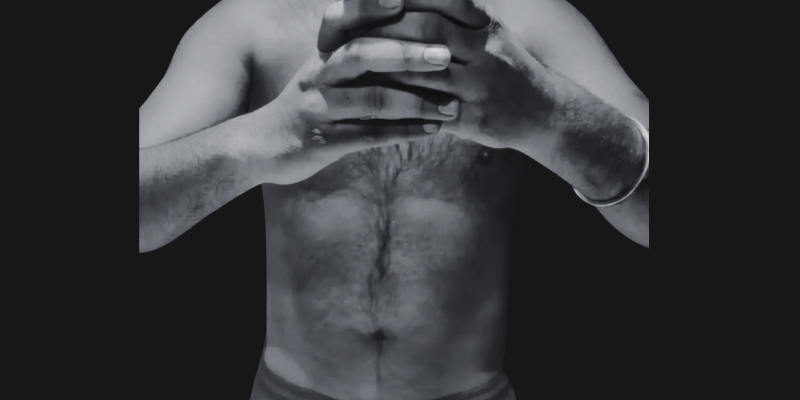
Before & After
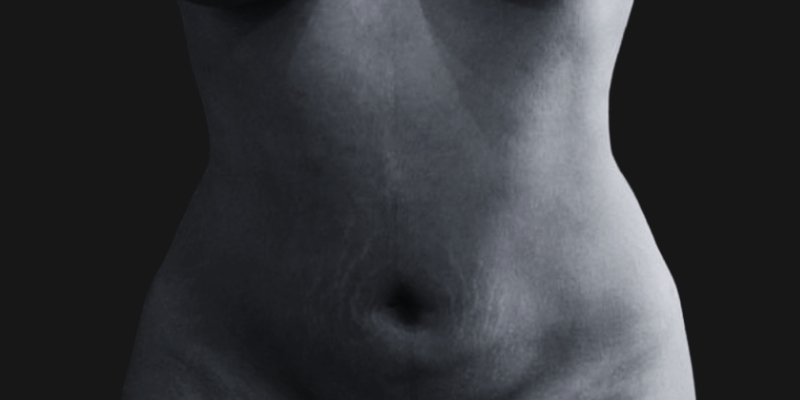
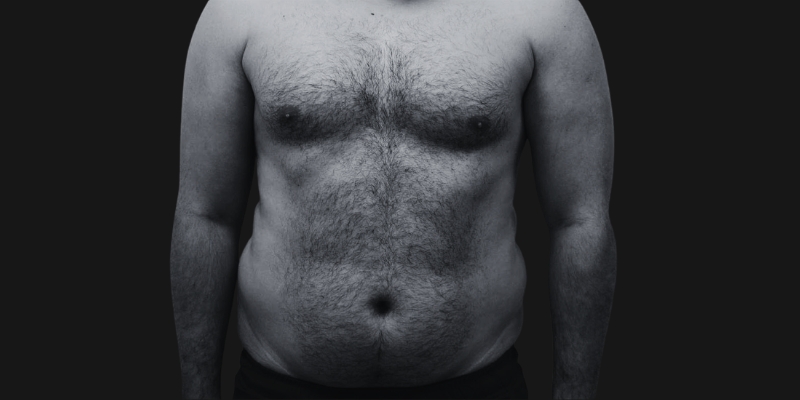
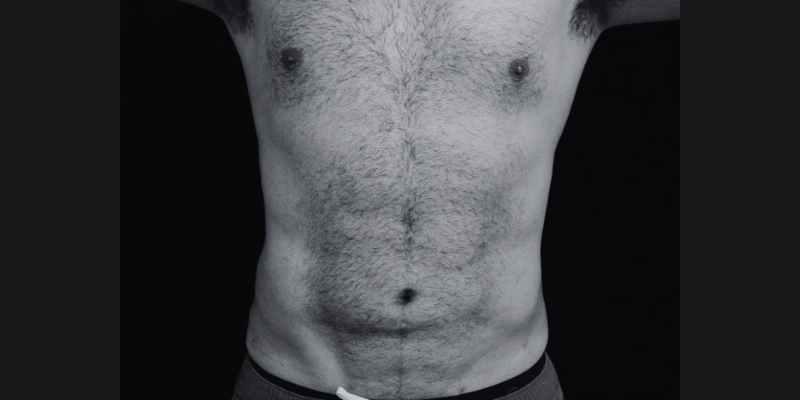
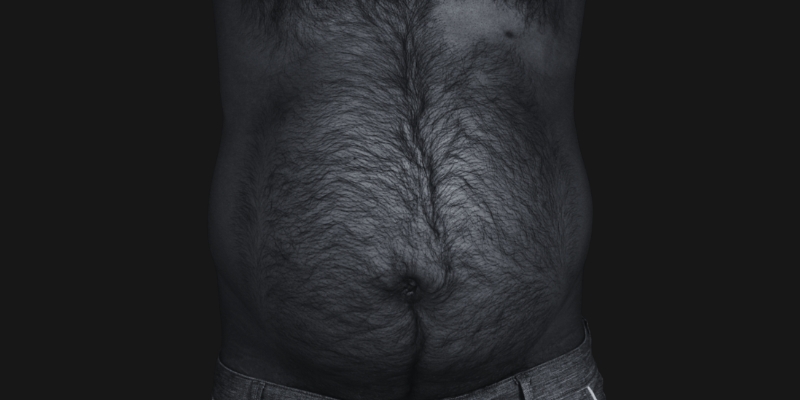
View real transformations that showcase natural definition and proportionate shape enhancement. Each result represents thoughtful contouring, not overcorrection.

Frequently Asked Questions About VASER Liposuction in Dubai
Is liposuction a weight-loss surgery?
No. I explain this very clearly during consultation. Liposuction is for contouring, not weight loss. It removes fat under the skin and improves shape; it does not replace diet, exercise, or medical weight management.
Who is a good candidate for liposuction?
I look for stubborn fat deposits, reasonable skin quality, stable weight, good health, and realistic expectations. If the problem is loose skin or visceral fat, liposuction alone may not be the right answer.
Can liposuction remove visceral belly fat?
No. Liposuction removes subcutaneous fat — the fat under the skin. Visceral fat sits deeper, around the organs, and needs weight loss and lifestyle management.
What is VASER liposuction?
VASER uses ultrasound energy to soften fat before removal. I use it when it genuinely helps — especially in fibrous areas, high-definition cases, revision liposuction, and body sculpting.
Does VASER liposuction tighten skin?
VASER may support skin retraction in selected patients, but it is not a skin removal procedure. If the skin is loose, I may discuss J-Plasma, BodyTite, or skin removal surgery.
What is J-Plasma liposuction?
J-Plasma is used after fat removal to help the skin contract in selected patients. I usually consider it when there is mild to moderate skin laxity.
Is J-Plasma or BodyTite worth adding to liposuction?
It can be, if the patient has fat plus mild skin looseness. I don’t use these devices as magic solutions. If the skin is significantly loose, a lift or tummy tuck is the more honest answer.
Can liposuction replace a tummy tuck?
No. Liposuction removes fat. A tummy tuck removes loose skin and repairs muscle separation when needed. If the abdomen has hanging skin or diastasis, liposuction alone will disappoint.
Can liposuction make loose skin worse?
VASER (Vibration Amplification of Sound Energy at Resonance) is an ultrasound-assisted liposuction technique. The ultrasound energy helps loosen fat cells so they can be removed more smoothly through small cannulas.
What is slim-down liposuction?
VASER (Vibration Amplification of Sound Energy at Resonance) is an ultrasound-assisted liposuction technique. The ultrasound energy helps loosen fat cells so they can be removed more smoothly through small cannulas.
What is high-definition liposuction?
VASER (Vibration Amplification of Sound Energy at Resonance) is an ultrasound-assisted liposuction technique. The ultrasound energy helps loosen fat cells so they can be removed more smoothly through small cannulas.
What is Lipo 360?
VASER (Vibration Amplification of Sound Energy at Resonance) is an ultrasound-assisted liposuction technique. The ultrasound energy helps loosen fat cells so they can be removed more smoothly through small cannulas.
How much does liposuction cost in Dubai?
VASER (Vibration Amplification of Sound Energy at Resonance) is an ultrasound-assisted liposuction technique. The ultrasound energy helps loosen fat cells so they can be removed more smoothly through small cannulas.
How much fat can be removed with liposuction?
VASER (Vibration Amplification of Sound Energy at Resonance) is an ultrasound-assisted liposuction technique. The ultrasound energy helps loosen fat cells so they can be removed more smoothly through small cannulas.
Can fat come back after liposuction?
VASER (Vibration Amplification of Sound Energy at Resonance) is an ultrasound-assisted liposuction technique. The ultrasound energy helps loosen fat cells so they can be removed more smoothly through small cannulas.
Why do I look swollen after liposuction?
VASER (Vibration Amplification of Sound Energy at Resonance) is an ultrasound-assisted liposuction technique. The ultrasound energy helps loosen fat cells so they can be removed more smoothly through small cannulas.
When will I see my final liposuction result?
VASER (Vibration Amplification of Sound Energy at Resonance) is an ultrasound-assisted liposuction technique. The ultrasound energy helps loosen fat cells so they can be removed more smoothly through small cannulas.
Is liposuction painful?
VASER (Vibration Amplification of Sound Energy at Resonance) is an ultrasound-assisted liposuction technique. The ultrasound energy helps loosen fat cells so they can be removed more smoothly through small cannulas.
What is the downtime after liposuction?
VASER (Vibration Amplification of Sound Energy at Resonance) is an ultrasound-assisted liposuction technique. The ultrasound energy helps loosen fat cells so they can be removed more smoothly through small cannulas.
How long do I need to wear compression garments after liposuction?
VASER (Vibration Amplification of Sound Energy at Resonance) is an ultrasound-assisted liposuction technique. The ultrasound energy helps loosen fat cells so they can be removed more smoothly through small cannulas.
Are lymphatic massages necessary after liposuction?
VASER (Vibration Amplification of Sound Energy at Resonance) is an ultrasound-assisted liposuction technique. The ultrasound energy helps loosen fat cells so they can be removed more smoothly through small cannulas.
Is it normal to have hard lumps after liposuction?
VASER (Vibration Amplification of Sound Energy at Resonance) is an ultrasound-assisted liposuction technique. The ultrasound energy helps loosen fat cells so they can be removed more smoothly through small cannulas.
What is fibrosis after liposuction?
VASER (Vibration Amplification of Sound Energy at Resonance) is an ultrasound-assisted liposuction technique. The ultrasound energy helps loosen fat cells so they can be removed more smoothly through small cannulas.
Can liposuction cause dents or irregularities?
VASER (Vibration Amplification of Sound Energy at Resonance) is an ultrasound-assisted liposuction technique. The ultrasound energy helps loosen fat cells so they can be removed more smoothly through small cannulas.
Can botched liposuction be fixed?
VASER (Vibration Amplification of Sound Energy at Resonance) is an ultrasound-assisted liposuction technique. The ultrasound energy helps loosen fat cells so they can be removed more smoothly through small cannulas.
When should I consider revision liposuction?
VASER (Vibration Amplification of Sound Energy at Resonance) is an ultrasound-assisted liposuction technique. The ultrasound energy helps loosen fat cells so they can be removed more smoothly through small cannulas.
Can liposuction treat cellulite?
VASER (Vibration Amplification of Sound Energy at Resonance) is an ultrasound-assisted liposuction technique. The ultrasound energy helps loosen fat cells so they can be removed more smoothly through small cannulas.
Can liposuction be done on the arms?
VASER (Vibration Amplification of Sound Energy at Resonance) is an ultrasound-assisted liposuction technique. The ultrasound energy helps loosen fat cells so they can be removed more smoothly through small cannulas.
Can liposuction be done on the thighs?
VASER (Vibration Amplification of Sound Energy at Resonance) is an ultrasound-assisted liposuction technique. The ultrasound energy helps loosen fat cells so they can be removed more smoothly through small cannulas.
Can liposuction be done for lipedema?
VASER (Vibration Amplification of Sound Energy at Resonance) is an ultrasound-assisted liposuction technique. The ultrasound energy helps loosen fat cells so they can be removed more smoothly through small cannulas.
Can liposuction be combined with fat transfer?
VASER (Vibration Amplification of Sound Energy at Resonance) is an ultrasound-assisted liposuction technique. The ultrasound energy helps loosen fat cells so they can be removed more smoothly through small cannulas.
Is BBL fat injected into the muscle?
VASER (Vibration Amplification of Sound Energy at Resonance) is an ultrasound-assisted liposuction technique. The ultrasound energy helps loosen fat cells so they can be removed more smoothly through small cannulas.
Are liposuction scars visible?
VASER (Vibration Amplification of Sound Energy at Resonance) is an ultrasound-assisted liposuction technique. The ultrasound energy helps loosen fat cells so they can be removed more smoothly through small cannulas.
Why is fluid leaking after liposuction?
VASER (Vibration Amplification of Sound Energy at Resonance) is an ultrasound-assisted liposuction technique. The ultrasound energy helps loosen fat cells so they can be removed more smoothly through small cannulas.
When can I return to work after liposuction?
VASER (Vibration Amplification of Sound Energy at Resonance) is an ultrasound-assisted liposuction technique. The ultrasound energy helps loosen fat cells so they can be removed more smoothly through small cannulas.
When can I exercise after liposuction?
VASER (Vibration Amplification of Sound Energy at Resonance) is an ultrasound-assisted liposuction technique. The ultrasound energy helps loosen fat cells so they can be removed more smoothly through small cannulas.
Why do some people regret liposuction?
VASER (Vibration Amplification of Sound Energy at Resonance) is an ultrasound-assisted liposuction technique. The ultrasound energy helps loosen fat cells so they can be removed more smoothly through small cannulas.
How do I maintain liposuction results?
VASER (Vibration Amplification of Sound Energy at Resonance) is an ultrasound-assisted liposuction technique. The ultrasound energy helps loosen fat cells so they can be removed more smoothly through small cannulas.
How do I know which liposuction technique is right for me?
VASER (Vibration Amplification of Sound Energy at Resonance) is an ultrasound-assisted liposuction technique. The ultrasound energy helps loosen fat cells so they can be removed more smoothly through small cannulas.
Book a Consultation for VASER Liposuction in Dubai
If you’re considering VASER liposuction in Dubai, the first step is a proper consultation — not choosing a machine name or a procedure off a trending list.
During the consultation, I assess fat distribution, skin quality, body goals, previous surgeries, fibrosis, and whether VASER genuinely makes sense for your anatomy. The plan is built around what your body actually needs. The technology follows the plan — not the other way around.
Book a consultation with Dr. Hardik Ganatra to understand whether VASER liposuction is the right option for your anatomy and goals.
Medical Disclaimer
The information on this page is for general educational purposes only and should not be taken as personal medical advice. Every patient has a different anatomy, medical history, and set of goals.
A consultation with Dr. Hardik Ganatra is necessary before deciding whether VASER liposuction is suitable for you. The final treatment plan is determined after a full in-person assessment.
Results vary from patient to patient. No surgical or non-surgical procedure can guarantee a specific result.